Leopard Gecko Daily Care Routine: Checklist & Schedule (2026)
A complete daily, weekly, and monthly care checklist for leopard geckos, including the best time of day for each task and a fast health check routine.
Leopard Geckos Reptiles Team
Published
infoDisclosure: This post contains affiliate links. As an Amazon Associate we earn from qualifying purchases, at no extra cost to you.
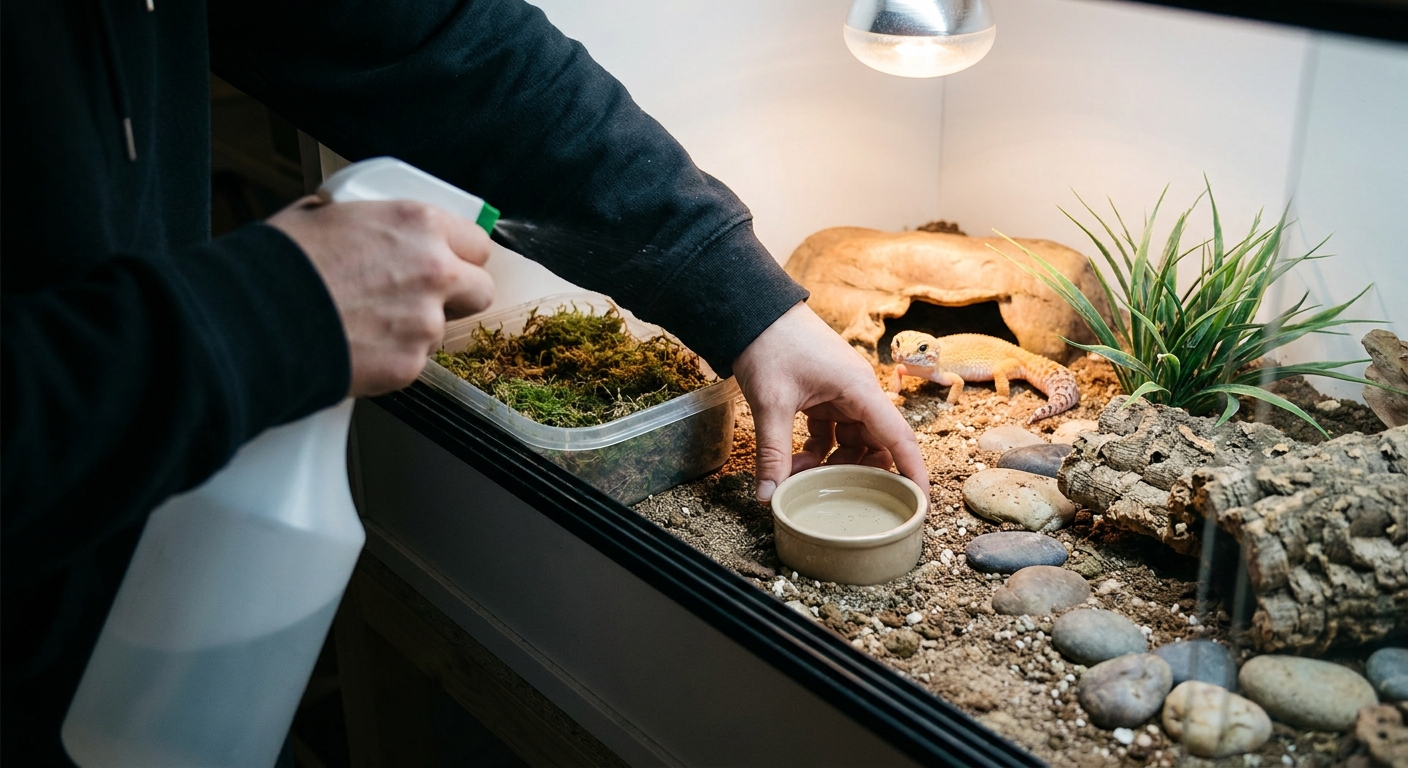
Leopard gecko daily care takes about 5-10 minutes per day. You check temperatures, refresh the water dish, spot clean droppings, glance over your gecko for signs of trouble, and confirm the humid hide is still damp. Feeding is not even a daily task for adults, since most adult leopard geckos eat every two to three days. That low time commitment is a big part of why leopard geckos rank among the easiest pet reptiles to keep.
infoQuick Answer
Daily leopard gecko care takes 5-10 minutes: check temperatures, change the water, spot clean, do a quick visual health check, and re-moisten the humid hide if needed. Adults eat every 2-3 days, juveniles eat 5-7 insects daily. Weekly tasks add about 20-30 minutes, and a monthly deep clean takes roughly an hour.
infoAffiliate Disclosure
This article contains affiliate links. We may earn a commission if you purchase through our links, at no extra cost to you. This helps support our content.
What Does Daily Care Involve?
A leopard gecko care routine is built around five small daily tasks. None of them take more than a minute or two once you have done them a few times. The goal is consistency, not intensity. A quick check every single day catches problems early, when they are cheap and easy to fix.
- check_circleTemperature check: Confirm the warm side surface reads 88-92°F (31-33°C) and the cool side stays around 75-80°F (24-27°C). Glance at your thermostat display or use an infrared temp gun on the basking surface.
- check_circleWater change: Empty, rinse, and refill the water dish with fresh dechlorinated water. Standing water grows bacteria fast in a warm enclosure.
- check_circleSpot clean: Remove any droppings or shed skin. Leopard geckos usually pick one bathroom corner, so this often takes 30 seconds.
- check_circleVisual health check: Look at your gecko's eyes, tail thickness, skin, and posture. You are looking for changes from yesterday, not perfection.
- check_circleHumid hide moisture: Press a finger into the humid hide substrate. It should feel damp, not soggy. Add a spray of water if it has dried out.
Feeding slots into this routine on scheduled days rather than every day. Adult leopard geckos over 12 months old do well on meals every two to three days, while juveniles under 12 months need 5-7 appropriately sized insects daily. Dust feeders with calcium at nearly every meal and add a multivitamin with D3 about once or twice per week, following the label on your specific supplement.
If you are asking how much work a leopard gecko really is, the honest answer is less than a dog, a cat, or most fish tanks. The total weekly time commitment for one gecko is usually under two hours, including feeding days. The trade-off is that the small tasks are non-negotiable. Skipping water changes or temperature checks for a week is how most preventable problems start.
Weekly Tasks
Once a week, set aside 20-30 minutes for a slightly deeper pass on the enclosure. Pick a consistent day so it becomes automatic. Many keepers pair weekly tasks with a feeding day since they are already at the enclosure with supplies out.
- check_circleFull substrate spot clean: Go beyond the bathroom corner. Stir or sift loose substrate, wipe down soiled tile or paper towel areas, and replace any paper substrate that looks dirty.
- check_circleWeigh your gecko: Use a digital kitchen scale that reads in grams. Healthy adults typically weigh 45-80 grams. A loss of more than 10 percent of body weight over a few weeks warrants a vet visit.
- check_circleRefresh humid hide substrate: Swap out the sphagnum moss or paper towel inside the humid hide. Damp material that sits too long grows mold and bacteria.
- check_circleClean water and food dishes: Wash both dishes with a reptile-safe disinfectant, such as chlorhexidine solution or F10, then rinse thoroughly and dry before returning them.
The weekly weigh-in is the single most valuable habit on this list. Weight change is often the first measurable sign of illness in reptiles, appearing before obvious symptoms. A gecko can hide lethargy, but it cannot hide a falling number on the scale. Weigh at the same time each week, ideally before a feeding day, so the numbers stay comparable.
Monthly Tasks
Once a month, plan for roughly an hour of maintenance. This is the session where you reset the enclosure to a clean baseline and confirm that your equipment is still doing its job. Move your gecko to a secure temporary container, such as a ventilated plastic tub with a hide, before you start.
- check_circleDeep clean the enclosure: Remove all decor and hides, scrub surfaces with reptile-safe disinfectant, rinse well, and let everything dry completely before reassembly.
- check_circleEquipment check: Inspect thermostat probes for correct placement, look for frayed cords, and confirm the thermometer and hygrometer still give sensible readings.
- check_circleVerify lamp and heat mat function: Confirm the heat source actually cycles on and off with the thermostat and that basking surfaces reach 88-92°F (31-33°C) after warm-up. Replace UVB bulbs on schedule, typically every 6-12 months, since output fades long before the light burns out.
Full substrate replacement fits into this monthly slot for paper towel and similar setups. Bioactive and deep loose-substrate enclosures follow different schedules, but the equipment checks still apply every month regardless of substrate style.
Morning vs Evening: When Should You Do Care Tasks?
Leopard geckos are crepuscular, meaning they are most active at dawn and dusk. During the middle of the day, your gecko is usually asleep in a hide. That schedule should shape your care routine, because tasks are easier and less stressful when they match your gecko's natural rhythm.
Morning is the best time for quiet tasks that do not involve the gecko directly. Check temperatures, refill the water dish, and spot clean while your gecko sleeps. Keep it brief and avoid pulling hides off a sleeping animal unless you have a reason to.
Evening is the best time for feeding and the hands-on health check. A gecko that is naturally awake at dusk will hunt more eagerly, digest on a full night of warm temperatures, and tolerate observation better. Offering food in the early evening, roughly 30-60 minutes after the lights dim, matches the time wild leopard geckos begin hunting.
If your schedule only allows one visit per day, choose the evening. You can bundle every daily task into a single 10-minute session while your gecko is awake: swap the water, spot clean, check the thermostat readout, mist the humid hide, and watch your gecko move around for a minute. Consistency at the same hour each day also helps your gecko settle into a predictable rhythm, which makes shy animals bolder over time.
How Do You Keep Temperatures on Track Every Day?
Temperature is the one husbandry variable that can drift dangerously in a single day. A failed heat mat, a heat lamp stuck on, or a probe that slipped out of place can push the enclosure well outside the safe range before you notice. That is why every heat source needs a thermostat, with the probe fixed on the warmest surface your gecko can touch.
Warm side surface
88-92°F (31-33°C)
Cool side
75-80°F (24-27°C)
Night minimum
65-70°F (18-21°C)

BN-LINK Digital Heat Mat Thermostat
Simple on/off probe thermostat that keeps heat mats in the safe range. An inexpensive safeguard every heat source needs.
- check_circleDigital display with day and night settings
- check_circle40-108°F (4-42°C) control range
- check_circleRemote probe sensor
With a thermostat in place, the daily temperature check becomes a five-second glance at the display instead of a guessing game. Pair it with a digital thermometer on the cool side and an infrared temp gun for occasional surface checks, and you will catch drift the same day it happens.
lightbulbKeep a Care Log
Write down feeding dates, weekly weights, sheds, and droppings in a notebook or phone app. A care log turns vague worries into clear data. If your gecko refuses three meals in a row or drops five grams in two weeks, the log shows you exactly when the change started, which is the first thing a reptile vet will ask.
The 60-Second Daily Health Check
Every day, ideally in the evening when your gecko is awake, run a quick head-to-tail scan. You are not diagnosing anything. You are building a mental baseline of what normal looks like for your animal so changes stand out immediately.
- check_circleEyes: Clear, open, and free of discharge or stuck shed. Sunken eyes can indicate dehydration.
- check_circleWeight and tail: The tail should look plump and roughly as wide as the neck. A rapidly thinning tail means your gecko is burning fat reserves.
- check_circleSkin: Look for retained shed on the toes and tail tip, wounds, or unusual discoloration. Stuck toe shed can cut off circulation if ignored.
- check_circleDroppings: A normal dropping has a brown fecal portion and a white urate. Runny, bloody, or absent droppings for more than a week are worth noting.
- check_circleBehavior: Alert posture, steady walking, and normal hunting interest. Persistent lethargy, wobbling, or dragging limbs justifies a vet call.
If your leopard gecko shows signs of illness, consult a reptile veterinarian. This guide is for informational purposes and does not replace professional veterinary advice.
Leopard Gecko Daily Care FAQ
How much work is a leopard gecko each day?expand_more
Do leopard geckos need to be fed every day?expand_more
Can I skip a day of leopard gecko care?expand_more
How often should I clean the whole enclosure?expand_more
What time of day should I handle my leopard gecko?expand_more
Building a Routine That Sticks
Good leopard gecko daily care is small and boring by design. Five short checks each day, a 20-30 minute session each week, and one deep clean each month cover everything a healthy gecko needs. Anchor the daily checks to something you already do, like your own dinner time, and the routine runs itself within a couple of weeks.
The payoff for that consistency is a gecko that can live 15-20 years or more in your care. Start the checklist tonight, keep the care log honest, and let the daily five minutes do the heavy lifting.