What Do Leopard Geckos Eat? Complete Diet & Feeding Guide
A comprehensive guide to leopard gecko diet including best feeder insects, feeding schedules, and supplementation.
Leopard Geckos Reptiles Team
Published · Last updated
infoDisclosure: This post contains affiliate links. As an Amazon Associate we earn from qualifying purchases, at no extra cost to you.
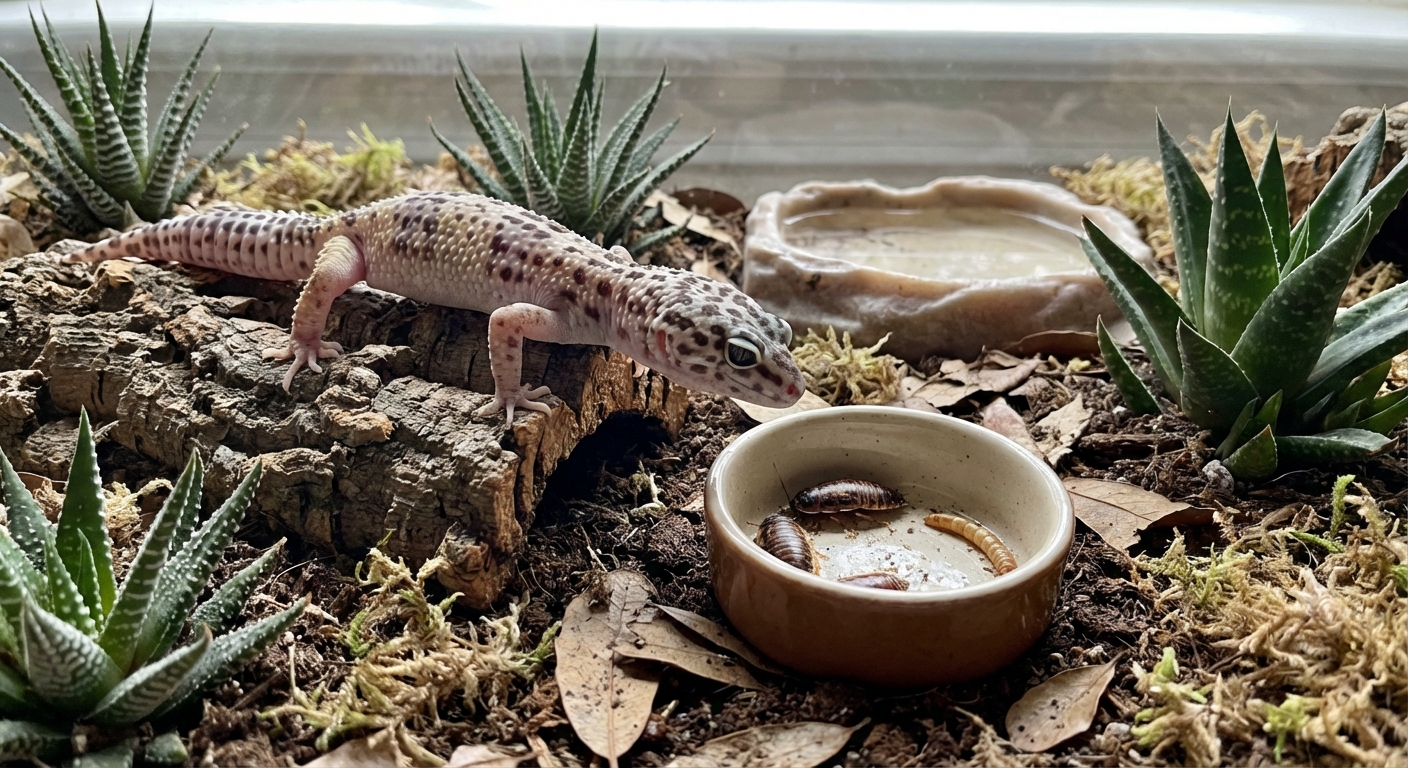
Understanding what leopard geckos eat is fundamental to keeping them healthy. As strict insectivores, leopard geckos require a diet of live insects to thrive. But not all insects are created equal, and proper supplementation is critical to prevent nutritional deficiencies. This guide covers everything you need to know about feeding your leopard gecko.
infoQuick Answer
Leopard geckos eat live insects including dubia roaches, crickets, mealworms, and black soldier fly larvae. Feed juveniles daily and adults every 2-3 days. Always dust insects with calcium powder and gut-load feeders 24-48 hours before feeding.
Leopard Gecko Diet Overview
Leopard geckos are obligate insectivores, meaning they must eat insects to survive. They cannot digest plant matter and should never be offered fruits, vegetables, or commercial gecko diets designed for frugivorous species. In the wild, they hunt a variety of insects and invertebrates, and replicating this variety in captivity promotes optimal health.
Best Feeder Insects for Leopard Geckos
Primary Feeders (Staple Diet)

Live Dubia Roaches (Medium)
High-protein, low-fat staple feeder insects. Quiet, odorless, easy to gut load, and they cannot climb smooth surfaces or jump.
- check_circleStrong protein-to-fat nutrition profile
- check_circleNo noise and minimal smell
- check_circleEasy to gut load before feeding
These insects can form the foundation of your gecko's diet and be fed regularly:
- check_circleDubia Roaches: Best overall choice. High protein, low fat, easy to digest, no odor, and easy to gut-load. The gold standard for leopard gecko nutrition.
- check_circleCrickets: Widely available and nutritious. More active which stimulates hunting behavior. Can be noisy and smelly if not maintained properly.
- check_circleBlack Soldier Fly Larvae (BSFL/Calciworms): Naturally high in calcium, reducing supplementation needs. Excellent for variety.
- check_circleSilkworms: High protein, soft-bodied, and readily accepted. Excellent but can be harder to source.
Occasional Feeders (Treats)
These insects should be fed sparingly due to higher fat content or other considerations:
- check_circleMealworms: Higher in fat and chitin. Good as treats, not as staple. Easy to keep.
- check_circleSuperworms: Large, fatty, and have harder exoskeletons. For adult geckos only, as occasional treats.
- check_circleWaxworms: Very high fat content. Use sparingly as treats or for underweight geckos.
- check_circleHornworms: Hydrating and nutritious but grow large quickly. Feed small sizes as occasional treats.
warningInsects to Avoid
Never feed wild-caught insects (may contain pesticides or parasites), fireflies (toxic), or any insects larger than the space between your gecko's eyes.
Feeding Schedule by Age
Feeding frequency depends on your gecko's age. Younger geckos need more frequent feeding to support rapid growth, while adults need less frequent meals to prevent obesity.
- check_circleHatchlings (0-2 months): Feed daily, 5-7 small insects per feeding
- check_circleJuveniles (2-6 months): Feed daily, 5-8 appropriately-sized insects
- check_circleSub-adults (6-12 months): Feed every other day, 5-7 insects
- check_circleAdults (12+ months): Feed every 2-3 days, 5-7 insects per feeding
- check_circleSeniors (15+ years): May eat less frequently, adjust based on body condition
Gut-Loading: The Secret to Nutrition
Gut-loading means feeding nutritious foods to feeder insects 24-48 hours before offering them to your gecko. The nutrients in the insect's gut transfer to your gecko. Without gut-loading, feeder insects are nutritionally incomplete.
Best Gut-Load Foods
- check_circleDark leafy greens: Collard greens, mustard greens, dandelion greens
- check_circleVegetables: Carrots, squash, sweet potato
- check_circleCommercial gut-loads: Repashy Bug Burger, Mazuri High Calcium Gut Load
- check_circleFruits (sparingly): Apple, mango, papaya
Calcium and Vitamin Supplementation

Repashy Calcium Plus
All-in-one calcium and vitamin supplement that simplifies your supplementation routine.
- check_circleCalcium and vitamins combined
- check_circleCorrect Ca:P ratio
- check_circleIncludes vitamin D3
Supplementation prevents metabolic bone disease (MBD) and other deficiencies. Even with gut-loading, captive diets lack sufficient calcium and vitamins without supplementation.
Supplementation Schedule
- check_circleCalcium with D3: Every feeding if no UVB lighting
- check_circleCalcium without D3: Every feeding if using UVB lighting
- check_circleMultivitamin: Once or twice per week
- check_circleLeave a small dish of plain calcium in the enclosure for self-regulation
lightbulbDusting Method
Place a few insects in a plastic bag or container with supplement powder. Shake gently to coat, then immediately offer to your gecko. Do not over-dust; a light coating is sufficient.
Foods Leopard Geckos Should Never Eat
- check_circleFruits and vegetables: They cannot digest plant matter
- check_circleCommercial crested gecko diet: Made for frugivorous species
- check_circleWild-caught insects: Risk of pesticides and parasites
- check_circleFireflies/lightning bugs: Toxic and potentially fatal
- check_circleCentipedes or spiders: Can bite back and may be toxic
- check_circleDead insects: Can cause bacterial infection
Frequently Asked Questions
Can leopard geckos eat fruit?expand_more
How do I know if my gecko is eating enough?expand_more
Why is my leopard gecko not eating?expand_more
Can I feed my gecko only mealworms?expand_more
Feeding for a Healthy Life
A proper diet is one of the most important aspects of leopard gecko care. By offering varied, gut-loaded insects with appropriate supplementation, you provide the foundation for a long, healthy life. Pay attention to your gecko's body condition, adjust feeding amounts as needed, and never hesitate to consult a reptile veterinarian if you have concerns about nutrition or eating habits.