Leopard Gecko Feeding Schedule: How Often to Feed by Age (2026)
Master leopard gecko feeding schedules with our age-based guide covering frequency, portion sizes, and timing for optimal nutrition.
Leopard Geckos Reptiles Team
Published
infoDisclosure: This post contains affiliate links. As an Amazon Associate we earn from qualifying purchases, at no extra cost to you.
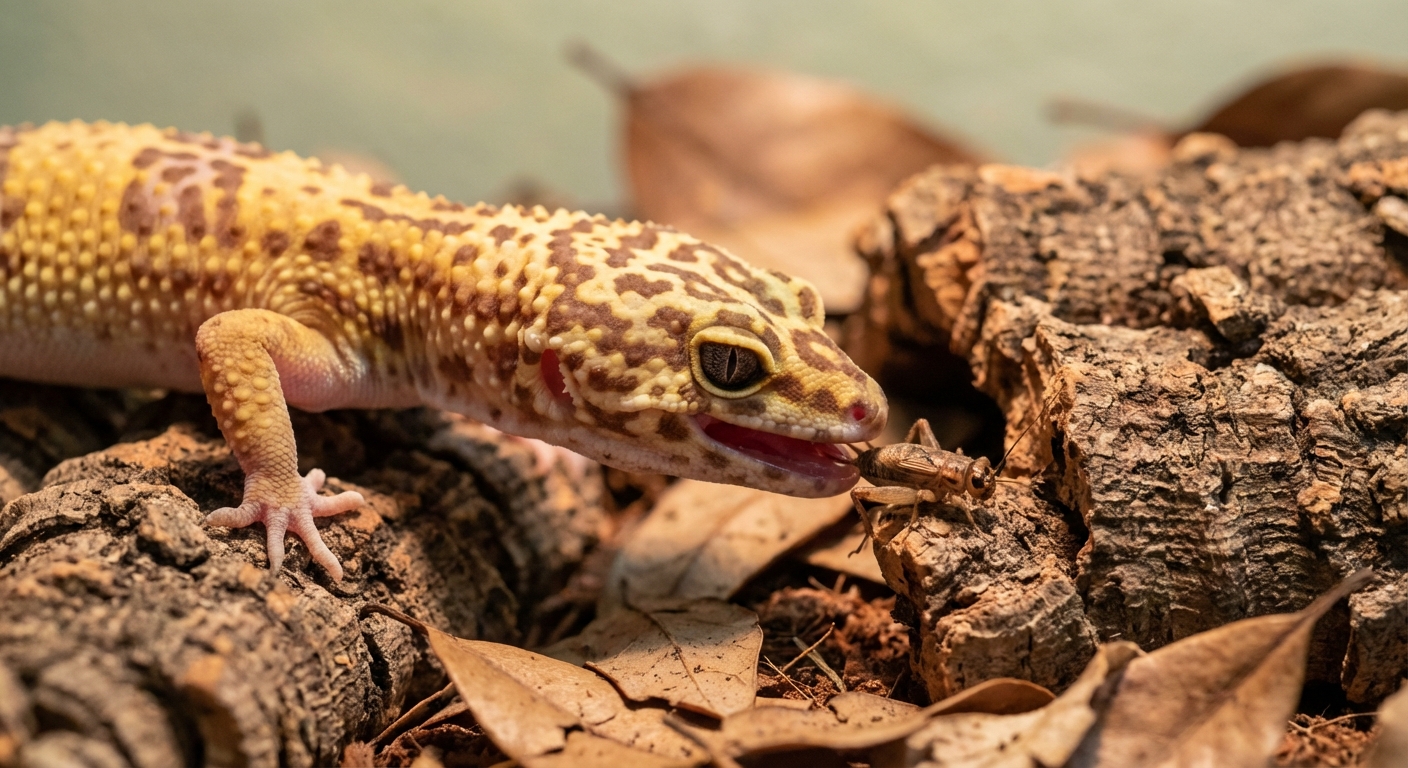
Feeding frequency is one of the most common questions new leopard gecko owners have. Unlike mammals that eat daily, reptile feeding schedules vary by age, size, and individual metabolism. This guide provides clear feeding schedules for every life stage, plus guidance on portion sizes and timing.
infoQuick Feeding Schedule
Hatchlings (0-4 months): Daily, 5-7 small insects. Juveniles (4-12 months): Every other day, 5-7 medium insects. Adults (12+ months): Every 2-3 days, 5-10 large insects. Always dust with calcium and remove uneaten insects after 15-20 minutes.
Feeding Schedule by Age
Hatchlings (0-4 months)
Hatchling leopard geckos are growing rapidly and have high metabolic demands. Feed daily with 5-7 appropriately sized insects per feeding. Insects should be no larger than the space between the gecko eyes. Dust with calcium at every feeding.
- check_circleFrequency: Once daily
- check_circleAmount: 5-7 small insects
- check_circleBest feeders: Small crickets, small dubia roaches
- check_circleSupplements: Calcium with D3 every feeding
- check_circleTime: Evening, when becoming active
Juveniles (4-12 months)
As growth slows, feeding frequency decreases. Juveniles should be fed every other day. Continue offering 5-7 insects per feeding, increasing size as the gecko grows. Maintain calcium supplementation at most feedings.
- check_circleFrequency: Every other day (3-4 times per week)
- check_circleAmount: 5-7 medium insects
- check_circleBest feeders: Medium crickets, medium dubia, mealworms
- check_circleSupplements: Calcium with D3 at most feedings, multivitamin weekly
- check_circleTime: Evening
Adults (12+ months)
Adult leopard geckos have slower metabolisms and risk obesity from overfeeding. Feed every 2-3 days with 5-10 insects per feeding. Adjust based on body condition. Well-fed adults may only need feeding twice weekly.
- check_circleFrequency: Every 2-3 days (2-3 times per week)
- check_circleAmount: 5-10 large insects
- check_circleBest feeders: Adult crickets, adult dubia, superworms as treats
- check_circleSupplements: Calcium with D3 at most feedings, multivitamin weekly
- check_circleTime: Evening, though adults are flexible
How Much to Feed Per Session
A common guideline is to offer as many insects as your gecko will eat in 15-20 minutes. However, this can lead to overfeeding in eager eaters. A more precise approach is counting insects.
- check_circleHatchlings: 5-7 small insects
- check_circleJuveniles: 5-7 medium insects
- check_circleAdults: 5-10 large insects
- check_circleAdjust based on body condition: fat tail = reduce, thin tail = increase
- check_circleRemove uneaten insects: Do not leave crickets overnight as they stress geckos
lightbulbBody Condition Indicator: The Tail
A healthy leopard gecko tail should be plump and rounded, about as wide as the body. A pencil-thin tail indicates underfeeding. An extremely fat tail (wider than the body) suggests overfeeding. Adjust portions accordingly.
Best Time of Day to Feed
Leopard geckos are crepuscular, most active at dawn and dusk. The ideal feeding time is early evening as they wake up and become active. This aligns with their natural hunting instincts and allows them to bask after eating for proper digestion.
Consistency matters more than exact timing. Pick a time that works with your schedule and stick to it. Your gecko will learn the routine and become active in anticipation of feeding time.
Supplement Schedule

Repashy Calcium Plus
All-in-one calcium and vitamin supplement that simplifies your supplementation routine.
- check_circleCalcium and vitamins combined
- check_circleCorrect Ca:P ratio
- check_circleIncludes vitamin D3
Proper supplementation prevents metabolic bone disease and other deficiencies. Coordinate supplements with your feeding schedule.
- check_circleCalcium with D3: Dust insects at every feeding for geckos without UVB, or every other feeding with UVB
- check_circleCalcium without D3: Provide in a small dish for self-regulation
- check_circleMultivitamin: Once weekly, dust insects
- check_circleAll-in-one products: Follow product instructions, typically every feeding
When to Adjust the Schedule
Reduce Feeding If:
- check_circleTail is extremely fat (wider than body)
- check_circleGecko refuses food regularly (may be overfed)
- check_circleDuring brumation (winter cooldown)
- check_circleAfter ovulation in females (temporary appetite decrease)
Increase Feeding If:
- check_circleTail is thin (narrower than body)
- check_circleVisible hip bones or spine (underweight)
- check_circleRecovering from illness
- check_circleBreeding females (need extra nutrition)
- check_circleGrowing juveniles showing constant hunger
Frequently Asked Questions
Can I feed my leopard gecko every day?expand_more
My gecko always seems hungry. Should I feed more?expand_more
How long can a leopard gecko go without food?expand_more
Should I leave insects in the tank overnight?expand_more
My leopard gecko only wants one type of feeder. Is that okay?expand_more
Establishing Your Feeding Routine
A consistent feeding schedule keeps your leopard gecko healthy and makes monitoring appetite changes easier. Start with the age-appropriate guidelines in this article, then adjust based on your gecko individual body condition and appetite. Remember that tail condition is your best indicator of proper nutrition. With the right schedule and quality feeders, your gecko will maintain ideal weight and health for years to come.