Best Feeder Insects for Leopard Geckos: Complete Comparison
Find the best feeder insects for your leopard gecko with our comprehensive comparison of nutrition, convenience, and cost.
Leopard Geckos Reptiles Team
Published
infoDisclosure: This post contains affiliate links. As an Amazon Associate we earn from qualifying purchases, at no extra cost to you.
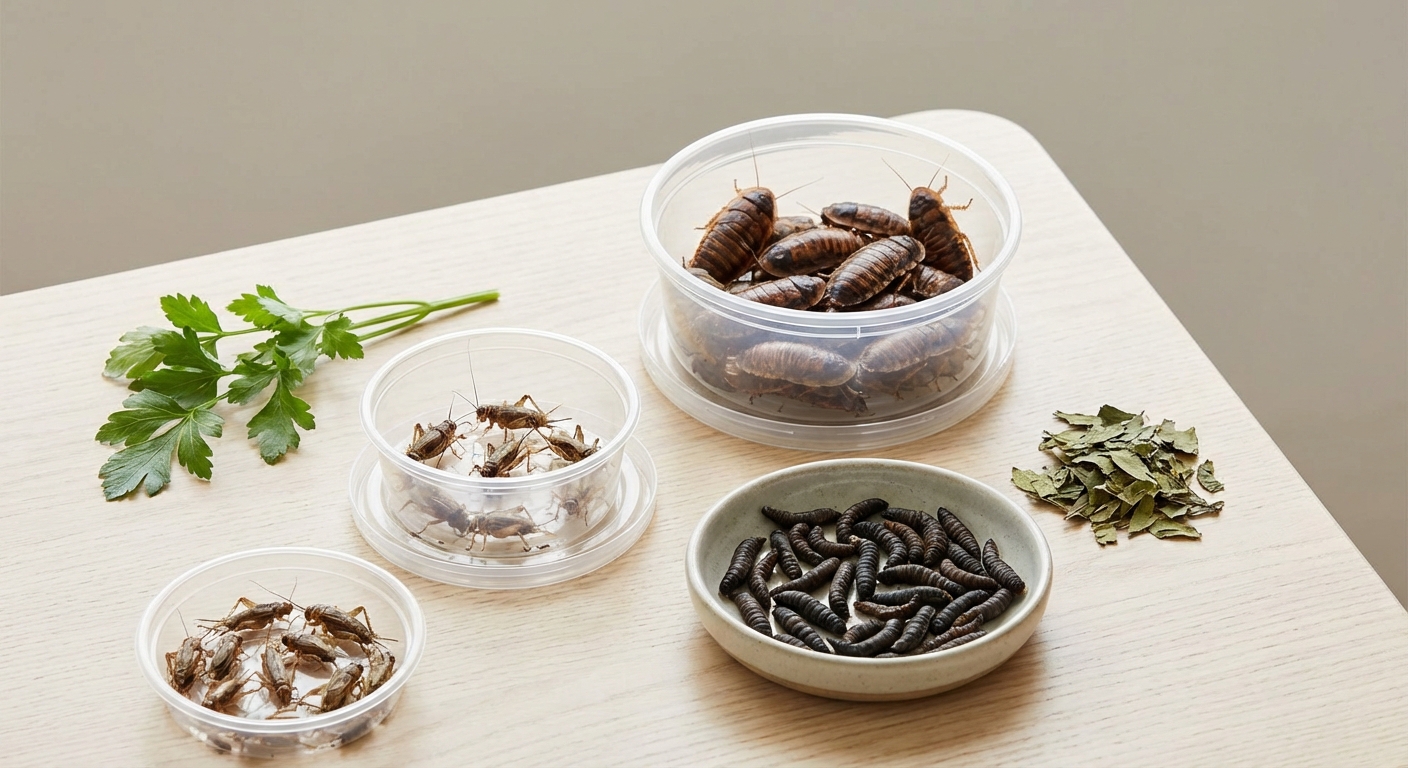
Choosing the right feeder insects significantly impacts your leopard gecko health and longevity. Not all feeders are created equal in terms of nutrition, digestibility, and convenience. This guide compares the most common feeder insects to help you make the best choice for your gecko.
infoOur Top Recommendations
Best overall: Dubia roaches (excellent nutrition, easy to keep, low odor). Best budget: Crickets (widely available, affordable, nutritious). Best treats: Black soldier fly larvae (high calcium), hornworms (hydration). Avoid as staples: Mealworms and waxworms (too fatty for regular use).
Dubia Roaches (Top Choice)

Live Dubia Roaches (Medium)
High-protein, low-fat staple feeder insects. Quiet, odorless, easy to gut load, and they cannot climb smooth surfaces or jump.
- check_circleStrong protein-to-fat nutrition profile
- check_circleNo noise and minimal smell
- check_circleEasy to gut load before feeding
Dubia roaches have become the gold standard feeder insect for leopard geckos. They offer excellent nutrition, are easy to keep, and most geckos love them.
Nutrition Profile
- check_circleProtein: 23%
- check_circleFat: 7%
- check_circleFiber: 3%
- check_circleCalcium: 0.8%
- check_circleExcellent protein-to-fat ratio
Pros
- check_circleHighest quality nutrition of common feeders
- check_circleCannot climb smooth surfaces or fly
- check_circleLong lifespan (easy to maintain colony)
- check_circleLow odor compared to crickets
- check_circleSoft body, easy to digest
- check_circleAvailable in many sizes
Cons
- check_circleIllegal in some states (FL, HI, and others)
- check_circleLess movement than crickets (less hunting stimulation)
- check_circleInitial cost higher than crickets
- check_circleNeed warmth to breed efficiently
Crickets (Budget Choice)
Crickets remain the most common feeder insect due to wide availability and low cost. They are nutritious and stimulate natural hunting behavior.
Nutrition Profile
- check_circleProtein: 21%
- check_circleFat: 6%
- check_circleFiber: 3%
- check_circleCalcium: 0.14%
- check_circleGood overall nutrition
Pros
- check_circleWidely available at all pet stores
- check_circleVery affordable
- check_circleActive movement stimulates hunting
- check_circleGood nutrition when gut-loaded
Cons
- check_circleLoud chirping noise
- check_circleStrong odor, especially in large quantities
- check_circleShort lifespan (die-offs common)
- check_circleCan bite sleeping geckos if left in tank
- check_circleEscape artists
- check_circleHigher maintenance than roaches
Mealworms (Occasional Use)
Mealworms are convenient and inexpensive but should not be the primary feeder due to their tough exoskeleton and higher fat content.
Nutrition Profile
- check_circleProtein: 20%
- check_circleFat: 13% (higher than ideal)
- check_circleFiber: 2%
- check_circleHard chitin exoskeleton
Pros
- check_circleVery affordable
- check_circleEasy to store (refrigerate to slow growth)
- check_circleNo noise, no odor
- check_circleCannot escape smooth containers
- check_circleLong shelf life
Cons
- check_circleHard exoskeleton can cause impaction risk
- check_circleHigher fat content (obesity risk if overfed)
- check_circleLess nutritious than roaches or crickets
- check_circleLow movement (less hunting stimulation)
- check_circleNot ideal for juveniles
Black Soldier Fly Larvae (Calciworms)
Black soldier fly larvae (BSFL), sold as Calciworms, Phoenix Worms, or Nutrigrubs, are excellent high-calcium treats that require no dusting.
Nutrition Profile
- check_circleProtein: 17%
- check_circleFat: 14%
- check_circleCalcium: 1.5% (highest of common feeders)
- check_circleExcellent calcium-to-phosphorus ratio
Pros and Cons
BSFL are excellent as treats or supplemental feeders. Their high calcium content means no dusting required. However, they are small, somewhat fatty, and should not be the sole diet. Great for variety and calcium boosting.
Occasional Treats
Hornworms
Hornworms are soft, hydrating, and irresistible to geckos. They are excellent for sick or dehydrated geckos but too low in nutrients for regular feeding. Offer 1-2 per week as treats.
Waxworms
Waxworms are extremely high in fat (22%) and should be offered sparingly as treats only. Geckos find them addictive and may refuse other feeders if given too many. Limit to 1-2 per week maximum.
Superworms
Superworms are large mealworm-like larvae suitable for adult geckos only. Their strong mandibles mean they should be crushed or offered via tongs, not left loose in the tank. Use as occasional variety, not staples.
Frequently Asked Questions
Can I feed only one type of feeder insect?expand_more
What size feeder insects should I use?expand_more
Do I need to gut-load feeder insects?expand_more
How do I store feeder insects?expand_more
Building the Best Feeder Rotation
For most keepers, dubia roaches as the primary staple with occasional crickets for variety provides excellent nutrition and convenience. Add BSFL or hornworms as treats, and save waxworms for rare special occasions. Whatever feeders you choose, consistent gut-loading and calcium supplementation are the keys to a healthy diet.