Best Calcium & Supplements for Leopard Geckos (2026)
Find the right calcium and vitamin supplements for your leopard gecko, with a clear dusting schedule and honest reviews of the top powders.
Leopard Geckos Reptiles Team
Published
infoDisclosure: This post contains affiliate links. As an Amazon Associate we earn from qualifying purchases, at no extra cost to you.
medical_servicesVeterinary Disclaimer: This article is for educational purposes only and is not a substitute for professional veterinary advice. If your leopard gecko shows signs of illness, consult a qualified reptile veterinarian.
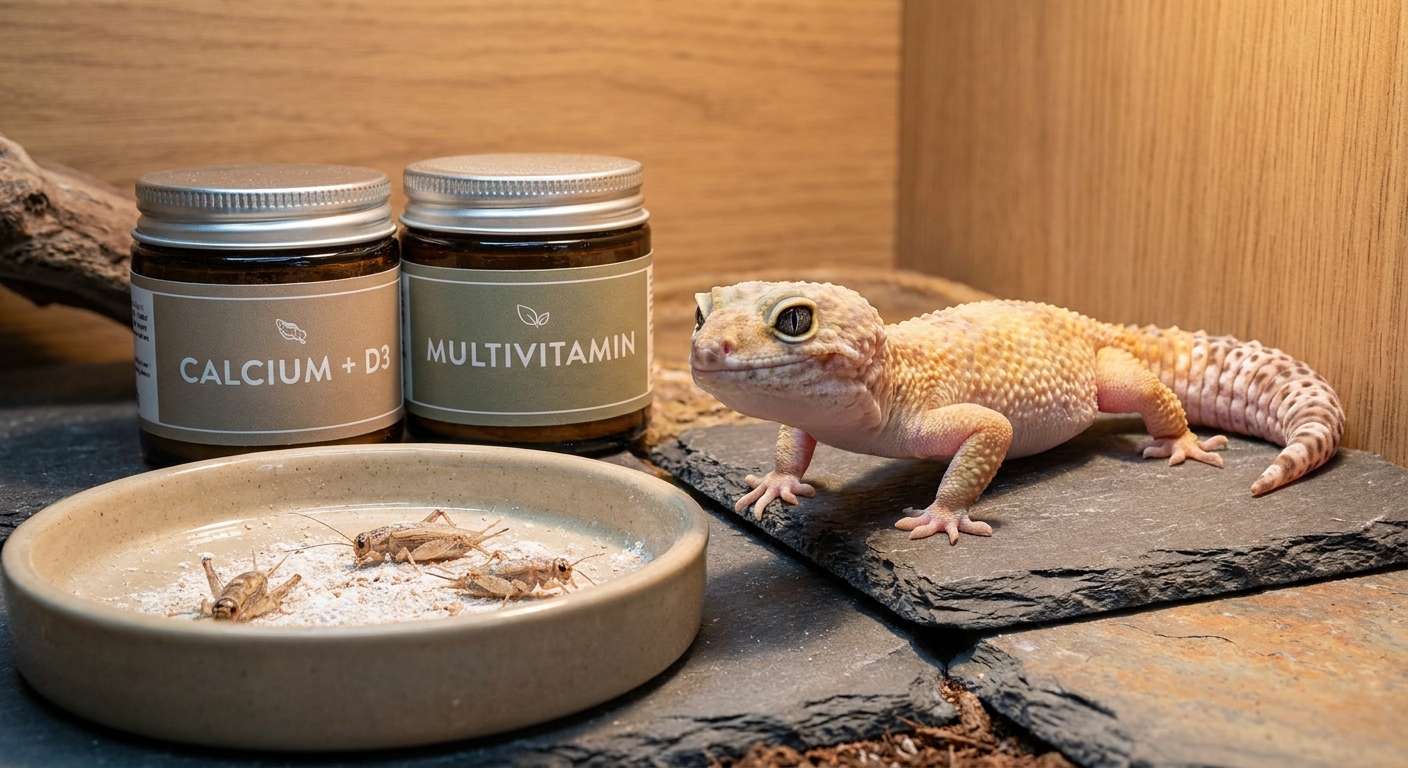
Every leopard gecko needs calcium and vitamin supplementation to prevent metabolic bone disease (MBD), one of the most common preventable illnesses in captive reptiles. The best calcium for leopard geckos depends on your setup. Repashy Calcium Plus is the best all-in-one choice because it combines calcium, vitamin D3, and a complete multivitamin in a single powder, while Zoo Med Repti Calcium with D3 is the best budget pick when paired with a separate weekly multivitamin. The core schedule is simple: dust insects at most feedings for juveniles, two to three times weekly for adults, and provide a multivitamin once weekly.
infoQuick Answer
Repashy Calcium Plus is the best all-in-one supplement for leopard geckos, covering calcium, D3, and vitamins in one powder. Zoo Med Repti Calcium with D3 is the best budget option. Dust feeders at most meals for juveniles, 2-3 times weekly for adults, and add a multivitamin once weekly. If your enclosure has proper UVB lighting, switch to a low-D3 or D3-free routine.
Why Do Leopard Geckos Need Calcium Supplements?
Captive feeder insects are naturally poor sources of calcium. Reptiles need dietary calcium and phosphorus at a ratio of roughly 2:1, but unsupplemented crickets sit closer to 1:9 calcium to phosphorus. That is an inverted ratio, meaning every undusted cricket actually works against your gecko's calcium balance. Mealworms, dubia roaches, and other common feeders have the same problem to varying degrees.
When a leopard gecko cannot get enough usable calcium from food, its body pulls the mineral from its own skeleton. Over weeks and months this leads to metabolic bone disease, which is among the most common preventable diseases in captive leopard geckos. MBD softens the jaw, bows the limbs, and can eventually leave a gecko unable to walk or eat. The condition is far easier to prevent than to treat.
Supplementation solves the problem two ways. Dusting coats each insect in a fine layer of calcium powder that corrects the calcium to phosphorus ratio, and vitamin D3 (from the powder or from UVB lighting) allows the gecko to absorb that calcium in the first place. Without D3 from one of those sources, even heavily dusted insects provide little usable calcium.
Best All-in-One: Repashy Calcium Plus

Repashy Calcium Plus
All-in-one calcium and vitamin supplement that simplifies your supplementation routine.
- check_circleCalcium and vitamins combined
- check_circleCorrect Ca:P ratio
- check_circleIncludes vitamin D3
Repashy Calcium Plus takes the guesswork out of supplementation by combining calcium, vitamin D3, and a full multivitamin profile in one powder. Instead of juggling two or three containers and tracking which day calls for which product, you use the same powder at every dusted feeding. For beginners, and for anyone who has ever forgotten whether this week's feeding was the vitamin day, that simplicity is the main selling point. It is formulated to be used as the sole supplement at an appropriate dusting frequency, so it fits keepers running a standard setup without UVB lighting.
The all-in-one approach does have limits. Because the D3 and vitamins are built in, Calcium Plus is not the right everyday powder for enclosures with strong UVB lighting, where a plain calcium would be the better daily choice. Repashy addresses this with lower-D3 variants for UVB setups, but if you already own the standard version, simply reduce how often you use it and lean on plain calcium instead. A single container typically costs around $10-15 and lasts one gecko several months, so the convenience premium over plain calcium is small in practice.
Dusting technique matters as much as the powder you choose. Place a small pinch of Calcium Plus in a plastic bag or tall cup, add the feeders, and gently shake or swirl until each insect has a light, even coating. Feed the dusted insects right away, because crickets and roaches start grooming the powder off within minutes. A thin coat that still shows the insect's color underneath is enough. Caked-on powder does not add benefit and can put some geckos off their food.
Best Budget: Zoo Med Repti Calcium with D3

Zoo Med Repti Calcium with D3
Phosphorus-free calcium supplement with vitamin D3 for geckos kept without UVB lighting. A trusted staple for dusting feeder insects.
- check_circlePhosphorus-free precipitated calcium carbonate
- check_circleIncludes vitamin D3 for non-UVB setups
- check_circleUltra-fine powder adheres well to insects
Zoo Med Repti Calcium with D3 is the budget route, typically costing just a few dollars for a container that lasts a single gecko many months. It is a phosphorus-free calcium carbonate powder with added vitamin D3, and its ultra-fine particle size clings to feeders well. The tradeoff is that it is calcium and D3 only. You still need a separate multivitamin, such as Zoo Med Reptivite or Repashy Supervite, dusted once weekly to cover vitamin A and the rest of the micronutrient profile.
One important note: Zoo Med also sells this product in a D3-free version in a blue-labeled container. If your enclosure has proper UVB lighting, choose the D3-free version for most feedings so your gecko is not getting concentrated D3 from two sources at once. Keeping both versions on hand costs little and lets you match the powder to your lighting setup.
Do You Need D3 With or Without UVB?
Vitamin D3 is what allows a leopard gecko to absorb calcium from its gut. In the wild, geckos synthesize D3 in their skin from UVB exposure, even as crepuscular animals that mostly catch low-angle morning and evening sun. In captivity, D3 has to come from either supplement powder or a UVB bulb. Which source you rely on determines which powders to buy.
If your setup has no UVB lighting, dietary D3 is essential. Use a supplement that includes D3, such as Repashy Calcium Plus or Zoo Med Repti Calcium with D3, at the standard dusting frequency. If you provide appropriate low-output UVB over the warm side of the enclosure, your gecko produces much of its own D3 while basking, so shift most dustings to plain calcium without D3 and reserve a D3-containing powder for roughly one feeding per week.
More is not better here. Vitamin D3 is fat-soluble and builds up in the body, and chronic oversupplementation can lead to hypervitaminosis D, with calcium deposits forming in soft tissues and organs. That is why you should not combine strong UVB with heavy D3 dusting, and why all-in-one powders are designed for a set schedule rather than every single feeding for adults. A warm side of 88-92°F (31-33°C) also supports proper digestion, which helps your gecko actually use the nutrients you provide.
What Supplement Schedule Should You Follow?
The right leopard gecko vitamin schedule depends on age and life stage, because growing juveniles and egg-producing females burn through calcium far faster than adult males. The schedules below assume a setup without UVB and an all-in-one powder or a calcium plus separate multivitamin combination. If you run UVB, swap most calcium-with-D3 dustings for plain calcium.
- check_circleJuveniles (0-12 months): dust with calcium and D3 at most feedings, roughly 4-5 feedings per week, plus a multivitamin once weekly (skip the extra multivitamin if using an all-in-one powder)
- check_circleAdults (12+ months): dust with calcium and D3 at 2-3 feedings per week, plus a multivitamin once weekly
- check_circleBreeding and ovulating females: dust with calcium at nearly every feeding while producing eggs, keep the weekly multivitamin, and monitor body condition closely
- check_circleWith UVB lighting: use plain calcium without D3 for most dustings and a D3-containing powder about once weekly
A written schedule on the enclosure or a note in your phone helps more than it sounds like it would. Missed vitamin days are the most common supplementation mistake, and doubling up later does not fix a missed dose. If you use two or three separate powders, label the lids clearly, because calcium with D3, plain calcium, and multivitamin containers often look nearly identical at a glance.
Many keepers also leave a small dish or bottle cap of plain calcium in the enclosure so ovulating females can self-regulate their intake between feedings. This practice is debated. Some keepers report geckos overeating powder, while others consider it a useful safety net during egg production. If you offer a dish, use plain calcium without D3, since a gecko licking freely from a D3-containing powder could overdose on the vitamin. Keep the dish small, refresh it regularly, and remove it if your gecko gorges on it.
How Do You Gut Load Feeder Insects?
Dusting handles the outside of the insect, while gut loading improves what is inside it. Gut loading means feeding your feeder insects a nutrient-dense diet for 24-48 hours before offering them to your gecko, so each insect arrives packed with vitamins and minerals rather than an empty gut. A dusted, gut-loaded insect delivers meaningfully better nutrition than a dusted insect alone, and the two practices work best together rather than as substitutes.
- check_circleTiming: feed insects a quality diet for 24-48 hours before they go to your gecko
- check_circleFresh foods: dark leafy greens, carrots, sweet potato, and squash work well
- check_circleCommercial gut loads: a dry formulated gut load ensures consistent nutrition alongside fresh vegetables
- check_circleHydration: offer water through vegetables or a water gel rather than open dishes that drown insects
- check_circleAvoid: high-phosphorus fillers like plain bran or dog food as the main diet
warningKnow the Signs of Metabolic Bone Disease
A rubbery or soft jaw, kinked or bowed limbs, a wavy or kinked tail, tremors, difficulty walking, and lethargy are all warning signs of MBD. If you notice any of these, schedule a visit with a reptile veterinarian promptly. Supplements can help prevent MBD, but they do not reverse advanced bone deformities, and a vet can assess severity and guide treatment. This guide is for informational purposes and does not replace professional veterinary advice.
Frequently Asked Questions
How often should I give my leopard gecko calcium?expand_more
Do leopard geckos need calcium with or without D3?expand_more
Can a leopard gecko get too much calcium or D3?expand_more
Should I leave a dish of calcium in the enclosure?expand_more
Is Repashy Calcium Plus worth it over plain calcium?expand_more
What happens if I never dust my leopard gecko's food?expand_more
Final Verdict: Which Supplement Should You Buy?
For most leopard gecko keepers, Repashy Calcium Plus is the easiest path to correct supplementation. One powder, one schedule, and calcium, D3, and vitamins are all covered. If you prefer to spend less or want finer control, Zoo Med Repti Calcium with D3 paired with a weekly multivitamin does the same job for a lower price. Keepers running UVB lighting should build their routine around plain calcium without D3, with a D3 powder or all-in-one used about once weekly.
Whichever product you choose, consistency matters more than brand. A modest powder applied on a reliable schedule, combined with gut-loaded feeders for 24-48 hours before feeding and a warm side of 88-92°F (31-33°C), prevents the vast majority of calcium-related problems. If your leopard gecko shows signs of illness or possible MBD, consult a reptile veterinarian rather than adjusting supplements on your own.