How Big Do Leopard Geckos Get? Size & Growth Chart
Adult leopard geckos measure 7-10 inches (18-25 cm) and weigh 45-80 grams. See how fast they grow, when they stop, and how big giant morphs get.
Leopard Geckos Reptiles Team
Published
infoDisclosure: This post contains affiliate links. As an Amazon Associate we earn from qualifying purchases, at no extra cost to you.
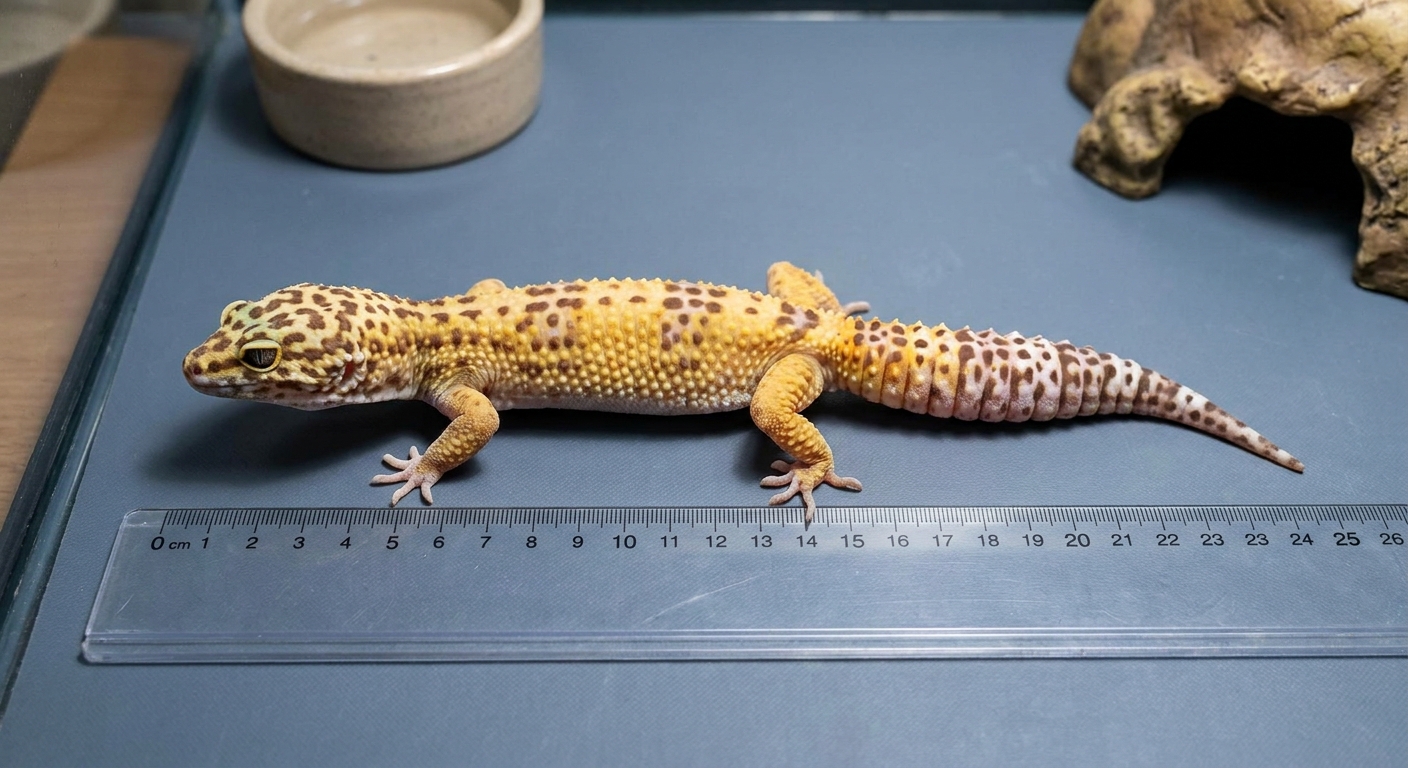
Adult leopard geckos reach 7-10 inches (18-25 cm) from nose to tail tip and weigh 45-80 grams. Males run larger than females, and most leopard geckos hit their full adult size between 12 and 18 months of age. Giant bloodlines are the exception, with some individuals passing 12 inches (30 cm) and 110 grams.
infoQuick Answer
Leopard geckos grow to 7-10 inches (18-25 cm) and 45-80 grams as adults. Males average 8-10 inches (20-25 cm), females 7-8 inches (18-20 cm). Hatchlings start at just 3-4 inches (8-10 cm) and 2-5 grams, then reach full size by 12-18 months.
Leopard Gecko Growth Chart by Age
Leopard geckos do most of their growing in the first year. Growth is fastest between hatching and six months, then slows steadily until it stops. The figures below are typical ranges for healthy, well-fed geckos. Individual animals vary, so treat the chart as a guide rather than a pass-fail test.
- check_circleHatchling (0-1 month): 3-4 inches (8-10 cm), 2-5 grams
- check_circle3 months: 4-5 inches (10-13 cm), 10-20 grams
- check_circle6 months: 5-7 inches (13-18 cm), 25-40 grams
- check_circle12 months: 7-9 inches (18-23 cm), 40-60 grams
- check_circleAdult (12-18+ months): 7-10 inches (18-25 cm), 45-80 grams
A juvenile that tracks below these ranges is not automatically in trouble. Steady gains matter more than hitting exact numbers. If your gecko stops gaining for a month during its first year, or loses weight at any age, review feeding and temperatures and consider a vet check.
Male vs Female Leopard Gecko Size
Males are the larger sex. A typical adult male measures 8-10 inches (20-25 cm) and weighs 60-80 grams, with a broader head and a thicker tail base. Adult females usually measure 7-8 inches (18-20 cm) and weigh 45-70 grams.
The size gap becomes obvious around 8-12 months of age, when males bulk up noticeably. Size alone is not a reliable way to sex a leopard gecko, though. Confirmed sexing relies on the V-shaped row of pre-anal pores and paired hemipenal bulges that males develop, which are visible from around six months.
How Big Do Giant and Super Giant Leopard Geckos Get?
Giant and Super Giant are size morphs from the Tremper giant line, first established in the early 2000s. Giants typically reach 10-11 inches (25-28 cm) and 80-110 grams. Super Giants can pass 12 inches (30 cm) and 110+ grams, and the largest documented individuals have approached 150 grams.
Genetics set the ceiling here, not feeding. You cannot turn a normal leopard gecko into a giant with extra food, you can only make it overweight. If you want a larger gecko, buy from a breeder who works with proven giant bloodlines and can show the parents' weights.
Is My Leopard Gecko Underweight or Overweight?
The tail tells you most of what you need to know. A healthy leopard gecko stores fat in its tail, so the tail base should be roughly as wide as the neck. A tail noticeably thinner than the neck suggests an underweight gecko, while a tail wider than the neck plus visible fat rolls behind the front legs, armpit bubbles, or a rounded belly that touches the ground at rest points to excess weight.
Weigh your gecko weekly on a gram scale and track the trend. Adults should hold a stable weight within a few grams. If your leopard gecko loses more than 10 percent of its body weight, or shows a thin tail with lethargy, consult a reptile veterinarian. This guide is for informational purposes and does not replace professional veterinary advice.
Common Mistakes That Affect Growth
- check_circleKeeping temperatures too cool: Without a 88-92°F (31-33°C) warm surface, geckos cannot digest properly and growth stalls.
- check_circleUnderfeeding juveniles: Geckos under 12 months need 5-7 appropriately sized insects daily, not the every-other-day adult schedule.
- check_circleSkipping calcium and vitamin D3: Deficient geckos grow slowly and risk metabolic bone disease, which can deform the jaw and limbs.
- check_circleHousing multiple geckos together: Cohabitation leads to competition and stress, and the smaller gecko often gets outcompeted for food. House leopard geckos alone.
- check_circlePower-feeding for size: Pushing extra fatty feeders like waxworms creates an obese gecko, not a bigger one.
Leopard Gecko Size FAQ
At what age is a leopard gecko full grown?expand_more
How much should a leopard gecko weigh?expand_more
How fast do leopard geckos grow?expand_more
Does tank size affect how big a leopard gecko gets?expand_more
Why is my leopard gecko so small?expand_more
The Bottom Line
Expect an adult leopard gecko to measure 7-10 inches (18-25 cm) and weigh 45-80 grams, with males larger than females and giant morphs pushing past 12 inches (30 cm). Track weekly weights during the first 18 months, keep the warm side at 88-92°F (31-33°C), and feed on an age-appropriate schedule. Do that, and your gecko will reach whatever size its genetics intended.