Tangerine Leopard Gecko: Morph Guide & Care (2026)
Tangerine leopard geckos carry line-bred orange coloration that ranges from soft peach to deep sunset orange. Here is how the morph works and what to look for when buying.
Leopard Geckos Reptiles Team
Published
infoDisclosure: This post contains affiliate links. As an Amazon Associate we earn from qualifying purchases, at no extra cost to you.
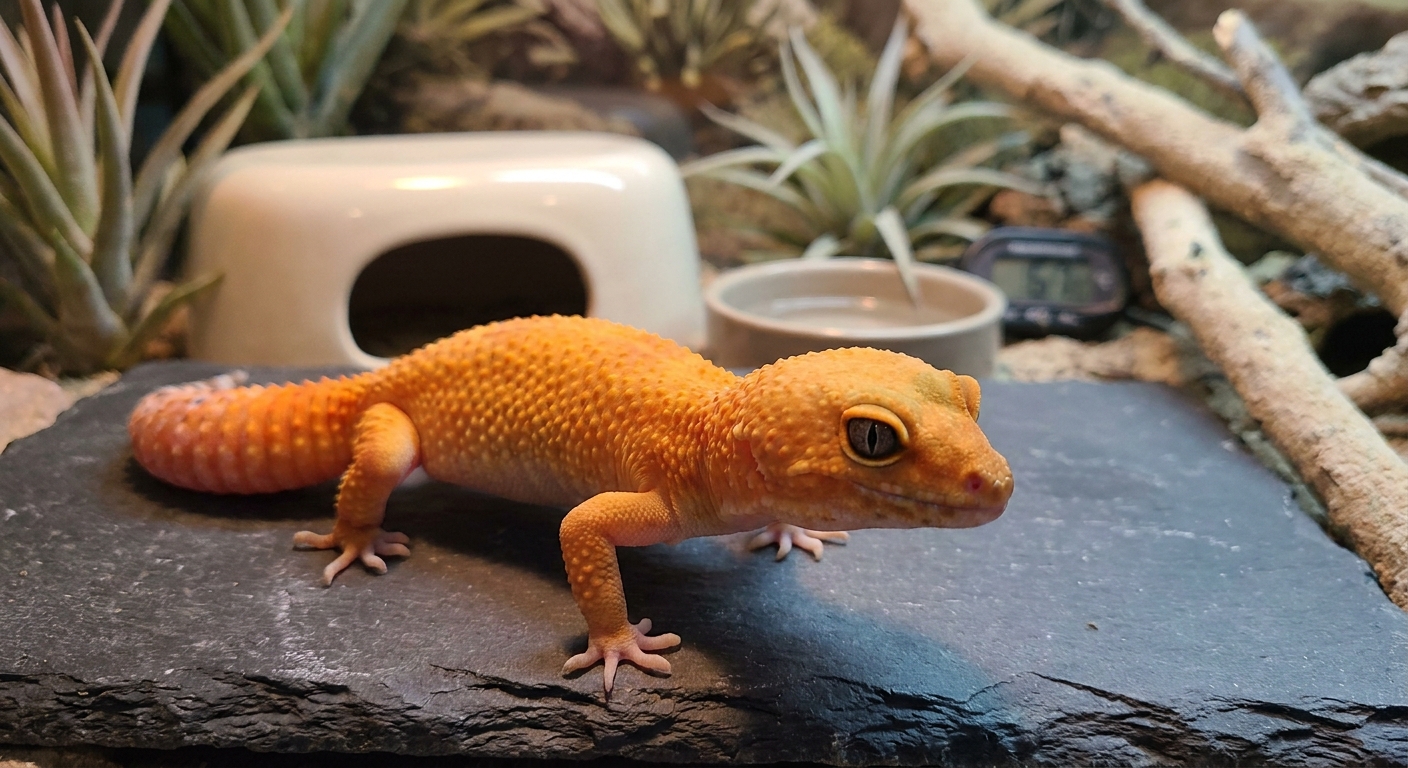
A tangerine leopard gecko is a line-bred morph selected over many generations for orange body coloration, ranging from soft peach to deep sunset orange. Unlike albino or blizzard morphs, tangerine is not a simple recessive gene. It is polygenic, meaning many genes contribute to the trait, and the intensity of the orange depends on the quality of the breeding line behind the individual gecko. Tangerines typically cost $100-$400 and need exactly the same care as a normal leopard gecko.
infoQuick Answer
Tangerine is a line-bred, polygenic trait, not a single recessive gene, so orange intensity varies widely between individuals and breeding lines. Expect to pay typically $100-$400 depending on line quality and combos like super hypo tangerine carrot tail. Care is identical to a standard leopard gecko: 88-92°F (31-33°C) warm side, 72-78°F (22-26°C) cool side, and a 15-20 year lifespan.
What Is a Tangerine Leopard Gecko?
Tangerine describes any leopard gecko selectively bred to display orange coloration across the body, tail, or both. The trait first appeared as unusually warm-toned individuals in normal clutches, and breeders paired the most orange animals together generation after generation. Over roughly three decades of this selection, the hobby developed lines where hatchlings reliably show strong orange from birth.
The genetics matter when you are shopping. Recessive morphs like the three albino strains follow predictable inheritance: pair two carriers and about 25 percent of offspring show the trait. Tangerine does not work that way. Because it is polygenic, two average tangerines can produce dull offspring, and a top-quality line can throw a range from pale orange to intense red-orange within a single clutch. Line quality, not a single gene test, determines what you get.
This is also why the label alone tells you little. One breeder's "tangerine" may be a lightly peach-toned normal, while another's is a saturated orange animal from a proven line. Photos of the actual gecko, plus photos of its parents, are the honest way to judge a tangerine before buying.
Where Do the Famous Tangerine Lines Come From?
Several named tangerine lines became well known in the hobby because their founders consistently produced deep orange offspring. You will see names like Blood, Electric, and Inferno attached to animals for sale. These are breeder-established bloodlines rather than distinct genes, so the name signals lineage and selection history, not a guaranteed trait.
- check_circleBlood lines: known for deep, saturated red-orange body color that holds into adulthood
- check_circleElectric lines: selected for bright, high-contrast orange with clean coloration
- check_circleInferno lines: bred for intense orange combined with heavy carrot tail coverage
- check_circleCrosses between lines: many modern tangerines mix two or more named lines, which is fine as long as the seller discloses the pairing
A line name adds value only when the seller can show the lineage behind it. An animal labeled with a famous line name but no parent photos or pairing records should be priced like an ordinary tangerine.
It also helps to know how tangerine relates to other warm-colored labels. Hyper xanthic describes line-bred intensification of yellow rather than orange, and some breeders work both directions from similar stock. If a listing mixes several of these terms, judge the photos first and the vocabulary second. The animal in front of you is the product, and with polygenic traits the words on the label carry far less weight than they do for a proven recessive gene.
Hypo, Super Hypo, Carrot Tail, and Baldy Explained
Tangerine rarely appears alone in sale listings. It is usually stacked with other line-bred traits that reduce black spotting and extend the orange, and the combination names can look like alphabet soup at first. Each piece has a specific meaning.
- check_circleHypo (hypomelanistic): reduced black spotting, defined in the hobby as 10 or fewer spots on the body (head and tail not counted)
- check_circleSuper hypo: zero black spots on the body, producing a clean orange or yellow torso
- check_circleCarrot tail: orange coloration covering at least 15 percent of the tail, measured from the base; high-end animals show 50 percent or more
- check_circleBaldy: a super hypo with no spots on the head either, giving a completely clean orange head
Put them together and you get the classic label SHTCTB: super hypo tangerine carrot tail baldy. An animal earning that full label has a spotless orange body and head plus significant orange tail coverage. Because every element is line-bred, the label reflects what the animal actually looks like rather than a genetic certificate, so always confirm the traits against clear photos.
How Much Does a Tangerine Leopard Gecko Cost?
Tangerine leopard geckos typically cost $100-$400. The spread comes almost entirely from line quality and how many supporting traits the animal carries. A lightly orange tangerine without hypo traits sits at the bottom of the range, while a well-bred super hypo tangerine carrot tail baldy from a documented line sits at or above the top.
- check_circleBasic tangerine (visible orange, some spotting): typically $100-$175
- check_circleHypo tangerine with partial carrot tail: typically $150-$250
- check_circleSuper hypo tangerine carrot tail: typically $200-$350
- check_circleSHTCTB from a named, documented line: typically $300-$400, sometimes higher for exceptional animals
Females of equal quality often cost slightly more than males because breeders keep them back. Prices also drift seasonally, with more availability in late summer after hatching season. Treat any price far below these ranges as a prompt for extra questions, not a bargain.
Factor in the setup cost as well. A proper enclosure, heating, thermostat, hides, and supplements typically add $200-$400 on top of the animal itself, and that equipment matters far more to the gecko's health than the morph does. A modest tangerine in an excellent setup is a better purchase than a top-line animal in a bare tank.
Does a Tangerine Morph Need Special Care?
No. A tangerine leopard gecko needs exactly the same husbandry as a normal morph. Provide a warm side of 88-92°F (31-33°C), a cool side of 72-78°F (22-26°C), ambient humidity of 30-40 percent with a humid hide, and a varied insect diet dusted with calcium and vitamin D3. Lifespan is the standard 15-20 years, and temperament matches any other leopard gecko.
One quirk worth knowing: the displayed intensity of orange can shift with conditions. Leopard geckos darken or lighten slightly with temperature, so a cool gecko often looks duller than the same animal fully warmed up. Substrate color has a similar effect over time, since geckos adjust their tone modestly toward their background. A tangerine kept on pale substrate at proper temperatures usually displays its best color.
Shedding cycles matter too. In the days before a shed, the gecko turns dusty and gray and its orange looks washed out. Judge color only on a recently shed, warm, settled animal. None of these shifts indicate a health problem, and none of them require special products to manage.
How to Pick a Healthy Tangerine Leopard Gecko
Because tangerine quality varies so much, buying well means checking both health and color honestly. A healthy animal from a careful breeder will outlast and outshine a poorly started one regardless of how orange it looks on arrival. Use this checklist when evaluating a breeder's available animals.
- check_circleAsk for current, unedited photos of the exact animal in neutral lighting, plus photos of both parents
- check_circleLook for a thick, carrot-shaped tail; a thin tail signals poor feeding history or health issues
- check_circleCheck that eyes are clear, open, and free of discharge or retained shed
- check_circleConfirm the gecko is eating readily and ask what insects it is currently taking
- check_circleInspect toes and tail tip for retained shed, which points to inadequate humidity in the seller's setup
- check_circleAsk the animal's hatch date and weight; a healthy juvenile should be growing steadily toward the adult range of 45-65 grams
- check_circleRequest the lineage or pairing information if a named line is part of the asking price
warningBeware Color-Enhancing Claims and Photo-Only Purchases
No diet, supplement, or "color-boosting" product will turn an average tangerine into a deep orange animal, and sellers who promise otherwise are overreaching. Genetics set the ceiling; good husbandry only lets the gecko display what it already carries. Be equally careful with photos. Warm-toned lighting and saturation editing can make a pale gecko look intensely orange. Ask for photos in natural or neutral light, ideally next to a plain white object for reference, before paying for high-end color.
Frequently Asked Questions
Is tangerine a genetic morph or just selective breeding?expand_more
What does carrot tail mean on a tangerine leopard gecko?expand_more
How much does a tangerine leopard gecko cost?expand_more
Will my tangerine leopard gecko lose its color as it ages?expand_more
Do tangerine leopard geckos need different food or lighting?expand_more
A Warm-Toned Morph That Rewards Careful Buying
The tangerine leopard gecko offers some of the richest coloration in the hobby without any added care burden. Because the trait is line-bred and polygenic, the buying stage is where all the real decisions happen: judge the individual animal in honest photos, weigh the line behind it, and match the price to visible quality rather than to a label. Do that, and a $150-$350 tangerine will look good and live the same healthy 15-20 years as any well-kept leopard gecko.