Leopard Gecko Starter Kit: Complete Shopping List (2026)
A complete leopard gecko starter kit checklist covering all eight essential equipment categories, with honest recommendations and realistic budget numbers for every item.
Leopard Geckos Reptiles Team
Published
infoDisclosure: This post contains affiliate links. As an Amazon Associate we earn from qualifying purchases, at no extra cost to you.
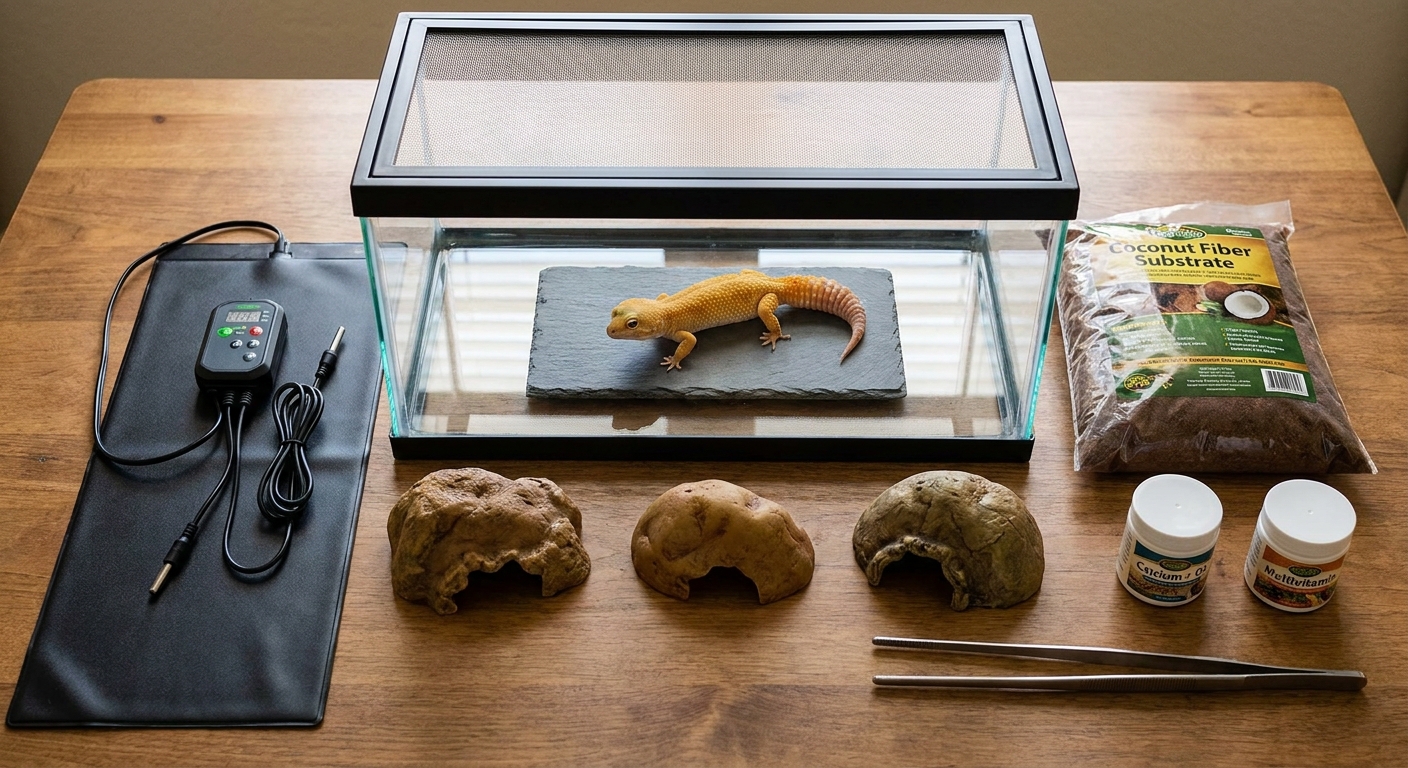
A complete leopard gecko starter kit typically costs $250-450 up front and covers eight essential categories: an enclosure, a heat source, a thermostat, a thermometer, three hides, substrate, supplements, and feeding supplies. Buy all of it before your gecko comes home, not after. The single most expensive item is the enclosure at roughly $100-250, while the single most important item is the $20-35 thermostat that keeps your heat source from running dangerously hot. This shopping list walks through every category with a specific recommendation, a realistic budget, and honest notes on where you can save money and where you should not.
This article contains affiliate links. We may earn a commission if you purchase through our links, at no extra cost to you. This helps support our content.
infoQuick Answer
A leopard gecko starter kit needs eight things: a 20-gallon or larger enclosure, an under-tank heat mat, a thermostat, a digital thermometer, three hides (warm, cool, humid), safe substrate, calcium with D3, and feeder insects with dishes and tongs. Expect to spend $250-450 total, with a budget setup landing near $250 and a buy-it-once setup near $400-450. Set everything up 1-2 weeks before bringing your gecko home.
Complete Leopard Gecko Shopping List
Here are the eight equipment categories every new keeper needs, with a rough budget for each. The ranges below assume you are buying new. Secondhand tanks and repurposed household items can cut these numbers further, and we flag where that is safe to do.
- check_circleEnclosure: typically around $100-250 (20-gallon minimum, 36 inches long is better)
- check_circleHeat source (under-tank heat mat): typically around $20-40
- check_circleThermostat: typically around $20-35 (not optional)
- check_circleDigital thermometer and hygrometer: typically around $10-20
- check_circleHides, three total (warm, cool, humid): typically around $30-60
- check_circleSubstrate (paper towel to start, coconut fiber for the humid hide): typically around $10-20
- check_circleSupplements (calcium with D3, multivitamin): typically around $10-20
- check_circleFeeding supplies (insects, dishes, tongs): typically around $25-45
Which Enclosure Should You Buy First?

Zoo Med ReptiHabitat Leopard Gecko Kit (20 Gallon)
All-in-one boxed kit with a 20-gallon tank, heat mat, carpet, hides, and starter supplies. A convenient first setup for a juvenile leopard gecko.
- check_circle20-gallon long glass tank with screen top
- check_circleIncludes heat mat and analog thermometer
- check_circleTwo hides and water dish included
The boxed-kit route gets you started fastest. The Zoo Med ReptiHabitat 20-gallon kit bundles a tank, screen top, and several accessories in one purchase, which removes a lot of guesswork for a first-time keeper. Be aware of what the kit does and does not solve, though. A 20-gallon tank meets the minimum for one adult leopard gecko, but it fits a juvenile far more comfortably than a full-grown adult, and boxed kits rarely include a thermostat or a proper humid hide. Treat the kit as a foundation, not a complete setup.

Exo Terra All Glass Terrarium (36x18x12)
Classic front-opening glass terrarium sized well for a single adult leopard gecko, with dual doors and a secure screen top.
- check_circleDual front-opening doors
- check_circleRaised bottom frame fits a heat mat
- check_circleFull metal screen top for ventilation
The buy-it-once route is a 36-inch enclosure like the Exo Terra 36x18x12. Front-opening doors make feeding and cleaning easier, and the extra floor space makes it much simpler to build a proper temperature gradient from the warm side to the cool side. An adult leopard gecko will use every inch of it.
Our honest take: if your budget allows, skip the upgrade cycle and buy the 36-inch tank now. Keepers who start with a 20-gallon kit often replace it within the first year, which means paying for two enclosures instead of one. The kit route makes sense if you are starting with a juvenile and money is tight today.
Heating: The Under-Tank Heat Mat
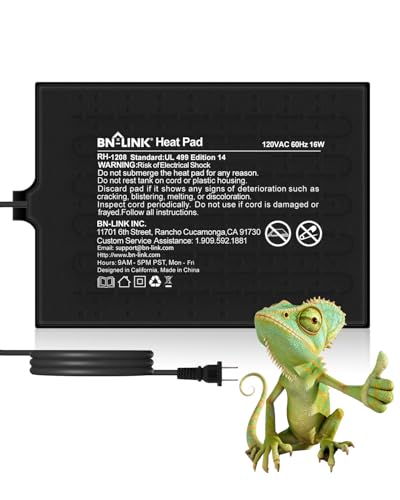
BN-LINK Reptile Heat Pad (8 x 12 in, 16W)
Adhesive under-tank heat pad from the same maker as the BN-LINK thermostat. It provides the belly heat leopard geckos use for digestion and draws only 16 watts, so it must run on a thermostat rather than straight from the wall.
- check_circle8 x 12 inch pad, 16 watts, 120 volts
- check_circleAdhesive back sticks to the underside of a glass tank
- check_circleWater-resistant surface wipes clean
Leopard geckos absorb heat through their bellies, so an under-tank heat mat is the standard primary heat source. A 16 watt, 8 x 12 inch pad like the BN-LINK sticks to the underside of the glass and gives no light, so it can run day and night on a thermostat. Place it under one end of the tank, covering roughly one third of the floor, so your gecko can move between a warm side of 88-92°F (31-33°C) and a cool side of 70-77°F (21-25°C).
The mat sits under the glass, outside the enclosure, with a small air gap or feet under the tank so heat does not build up against a surface. Never place a heat mat inside the enclosure where your gecko can touch it directly, and never plug it into the wall without the thermostat covered in the next section.
Why Is a Thermostat Not Optional?

BN-LINK Digital Heat Mat Thermostat
Simple on/off probe thermostat that keeps heat mats in the safe range. An inexpensive safeguard every heat source needs.
- check_circleDigital display with day and night settings
- check_circle40-108°F (4-42°C) control range
- check_circleRemote probe sensor
An unregulated heat mat can climb past 100°F (38°C) at the glass surface, hot enough to burn a gecko that is lying on it. A thermostat is the device that prevents this. You plug the mat into the thermostat, place the probe on the glass above the mat, and set your target temperature. The thermostat cuts power when the target is reached and restores it when the surface cools.
The BN-LINK thermostat is inexpensive, simple to program, and does exactly this job. At typically around $20-35, it is the cheapest piece of genuinely life-protecting equipment in the entire kit. If you cut one corner anywhere else in this list, fine. Do not cut this one.
How Many Hides Does a Leopard Gecko Need?
A leopard gecko needs a minimum of three hides: a warm hide on the heated side, a cool hide on the unheated side, and a humid hide placed on or near the warm side. This is the 3-hide rule, and it matters because it lets your gecko regulate its temperature without giving up the feeling of safety. A gecko with only one hide is forced to choose between hiding and thermoregulating, which is a recipe for chronic stress.

Exo Terra Gecko Cave (Medium)
Natural-looking resin cave that gives leopard geckos the snug, dark refuge they need on the warm side of the enclosure.
- check_circleNaturalistic rock texture
- check_circleStable, coated resin construction
- check_circleSnug interior geckos prefer
For the warm hide, the Exo Terra Gecko Cave is a solid choice. It is snug, dark, and heavy enough that it will not shift when your gecko pushes against it. Place it directly over the heat mat so the floor inside sits in the 88-92°F (31-33°C) range. Any similar cave works for the cool side, or you can repurpose something from around the house, which we cover below.

Zoo Med Repti Shelter 3-in-1 Cave (Medium)
Purpose-built humid hide with a removable lid, making it easy to refresh damp moss or coconut fiber for healthy sheds.
- check_circleRemovable lid for easy substrate changes
- check_circleHolds humidity effectively
- check_circleMedium size fits adult leopard geckos
The humid hide is the one beginners most often skip, and it is the one that prevents stuck sheds. The Zoo Med Repti Shelter has a removable lid, which makes it easy to refresh the damp substrate inside. Fill it with moistened coconut fiber and your gecko will use it heavily during every shed cycle. Retained shed on the toes can constrict blood flow and cost a gecko its toes, so this $15-25 item earns its place in the kit.
Humid Hide Substrate
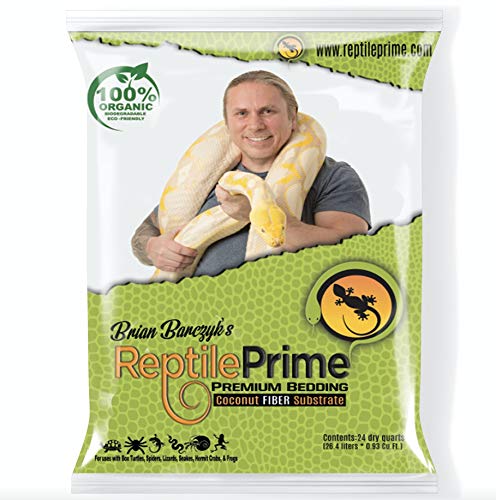
Reptile Prime Coconut Fiber Substrate
Natural coconut fiber that holds moisture without molding quickly, ideal for filling humid hides.
- check_circleExcellent moisture retention
- check_circleNatural and biodegradable
- check_circleHolds shape when damp
Coconut fiber is the standard filling for a humid hide because it holds moisture for days without molding quickly. Reptile Prime coconut fiber is finely milled and expands from a compressed brick, so one bag lasts months when you are only filling a single hide. Dampen it until it clumps in your hand without dripping, then refresh it every one to two weeks or whenever it dries out.
Note that this coconut fiber is for inside the humid hide only. It is not our recommendation for the main floor of the enclosure, especially for a new keeper. Start the main floor with paper towel, as covered in the budget section below.
Supplements: Calcium with D3

Zoo Med Repti Calcium with D3
Phosphorus-free calcium supplement with vitamin D3 for geckos kept without UVB lighting. A trusted staple for dusting feeder insects.
- check_circlePhosphorus-free precipitated calcium carbonate
- check_circleIncludes vitamin D3 for non-UVB setups
- check_circleUltra-fine powder adheres well to insects
Feeder insects alone do not provide enough calcium, and without supplementation leopard geckos develop metabolic bone disease, a progressive and painful skeletal condition. Zoo Med Repti Calcium with D3 is the standard answer. Lightly dust feeder insects with it at most feedings, and keep a small dish of plain calcium in the enclosure so your gecko can self-regulate.
One jar typically costs around $8-12 and lasts a single gecko the better part of a year, which makes supplements the best value item on this list. Many keepers also add a reptile multivitamin once every one to two weeks. If your leopard gecko shows signs of illness, consult a reptile veterinarian. This guide is for informational purposes and does not replace professional veterinary advice.
What Should You Feed a New Leopard Gecko?

Live Dubia Roaches (Medium)
High-protein, low-fat staple feeder insects. Quiet, odorless, easy to gut load, and they cannot climb smooth surfaces or jump.
- check_circleStrong protein-to-fat nutrition profile
- check_circleNo noise and minimal smell
- check_circleEasy to gut load before feeding
Dubia roaches are the feeder we recommend first. They are nutritious at roughly 23% protein, they cannot climb smooth surfaces or jump, they are quiet, and they live for months without smelling the way a bin of crickets does. One important caveat: dubia roaches are illegal to own in a few states, including Florida and Hawaii, so check your state's rules before ordering.
If dubia roaches are not available to you, crickets and mealworms are both workable alternatives sold at nearly every pet store. Crickets are nutritious but loud and short-lived. Mealworms are convenient but fattier, so treat them as part of a rotation rather than the whole diet. Whatever you feed, gut-load the insects with fresh vegetables for 24-48 hours before offering them.
Items to Buy Cheap or Repurpose
Not everything in a leopard gecko starter kit needs a specialty reptile label. A digital thermometer and hygrometer combo from any general retailer works exactly as well as the reptile-branded version at typically around $10-15, and you want at least one probe reading the warm-side floor. For dishes, any shallow, heavy ceramic dish holds water, and a plastic bottle cap makes a perfectly good calcium dish.
Plain paper towel is the best first substrate for a new keeper. It costs almost nothing, makes it easy to monitor droppings during the stressful first weeks, and carries zero impaction risk for a juvenile. You can move to a more natural substrate later once your gecko is established. Finally, a pair of soft-tipped feeding tongs costs a few dollars and keeps your fingers out of strike range during feeding time.
How Much Does a Full Setup Cost?
Here is how the two realistic paths add up. Both include every one of the eight categories. The difference is the enclosure choice and how many items you repurpose versus buy new.
- check_circleBudget tier, typically around $250 total: 20-gallon boxed kit ($100-120), under-tank heat mat ($25-35), BN-LINK thermostat ($20-35), digital thermometer and hygrometer ($10-15), one purchased humid hide plus two repurposed hides ($15-25), paper towel substrate and one brick of coconut fiber ($10-15), calcium with D3 ($8-12), starter insects with repurposed dishes and basic tongs ($25-35)
- check_circleComfort tier, typically around $400-450 total: 36-inch front-opening enclosure ($200-250), under-tank heat mat ($25-35), BN-LINK thermostat ($20-35), digital thermometer and hygrometer ($15-20), three purchased hides including warm cave and humid shelter ($45-60), substrate and coconut fiber ($15-20), calcium with D3 plus a multivitamin ($15-20), dubia roach starter supply with dishes and tongs ($35-45)
After setup, plan on roughly $20-40 per month for feeder insects and supplement refills. The up-front cost is the big hurdle. Ongoing leopard gecko care is one of the cheapest commitments in the reptile hobby.
What Should You NOT Buy?
Pet store shelves are full of products that range from useless to actively dangerous for leopard geckos. Skip every item on this list, no matter how prominently it is displayed next to the reptile tanks.
- check_circleHeat rocks: they develop hot spots that cause serious belly burns, and no thermostat setup makes them safe enough to recommend
- check_circleRed night bulbs: leopard geckos can see red light, and they do not need any light at night; the bulb disrupts their day-night cycle
- check_circleCalcium sand: marketed as digestible, but it clumps in the gut and is a well-known impaction risk, especially for juveniles
- check_circleSponge or moss ball "humidity" products: a proper humid hide with damp coconut fiber does the job; these gimmicks do not raise humidity meaningfully and grow bacteria
- check_circleCohabitation setups (two geckos, one tank): leopard geckos are solitary, and pairs housed together commonly end in bullying, dropped tails, or injuries; one gecko per enclosure
- check_circleAnalog stick-on thermometers: they can read 10°F (5-6°C) or more off from the actual floor temperature, which is exactly where accuracy matters most
warningThe Most Common Beginner Mistake
The number one starter kit mistake is buying the heat mat but skipping the thermostat and trusting the mat to regulate itself. Heat mats do not self-regulate. Plugged straight into the wall, a mat can exceed 100°F (38°C) at the glass and burn a gecko resting on it. Every heat source in the enclosure needs to run through a thermostat from day one, before your gecko ever touches the warm side.
Setup Order: What to Do Before Your Leopard Gecko Comes Home
Set up the full enclosure 1-2 weeks before your gecko arrives. That buffer gives you time to dial in temperatures and fix problems while the stakes are zero. Follow this order:
- check_circle1. Place the enclosure away from windows, vents, and direct sunlight, then attach the heat mat under one end
- check_circle2. Connect the mat to the thermostat, tape the probe to the glass above the mat, and set the target to 90°F (32°C)
- check_circle3. Lay down paper towel substrate and position the three hides: warm hide over the mat, cool hide on the far side, humid hide with damp coconut fiber near the warm side
- check_circle4. Add the water dish, the calcium dish, and the thermometer probe on the warm-side floor
- check_circle5. Run the system for several days and verify a stable warm side of 88-92°F (31-33°C) and a cool side of 70-77°F (21-25°C)
- check_circle6. Order or buy feeder insects a few days before pickup so food is ready on arrival
When your leopard gecko arrives, resist the urge to handle it for the first week or two. Let it eat, hide, and learn the enclosure. A calm start pays off for years.
Leopard Gecko Starter Kit FAQ
How much does a leopard gecko starter kit cost?expand_more
What size tank does a leopard gecko need?expand_more
Do leopard geckos need a heat lamp or a heat mat?expand_more
Can I skip the thermostat if I check temperatures daily?expand_more
What is the best substrate for a new leopard gecko?expand_more
Are dubia roaches legal in my state?expand_more
Final Thoughts on Your Leopard Gecko Starter Kit
A complete leopard gecko starter kit comes down to eight purchases: enclosure, heat mat, thermostat, thermometer, three hides, substrate, supplements, and feeding supplies, for a total of typically around $250-450. Spend real money on the enclosure and never skip the thermostat. Save money on dishes, the cool hide, and substrate, where household items work fine. Set everything up 1-2 weeks early, confirm a warm side of 88-92°F (31-33°C), and your new gecko will walk into a home that is ready on day one. Buy it once, buy it right, and the equipment on this list will outlast a 15-20 year friendship.