Leopard Gecko Startup Cost: Full Setup Budget Breakdown (2026)
A realistic startup budget for a new leopard gecko, with line-item costs for the enclosure, heating, hides, substrate, supplements, feeders, and the gecko itself.
Leopard Geckos Reptiles Team
Published · Last updated
infoDisclosure: This post contains affiliate links. As an Amazon Associate we earn from qualifying purchases, at no extra cost to you.
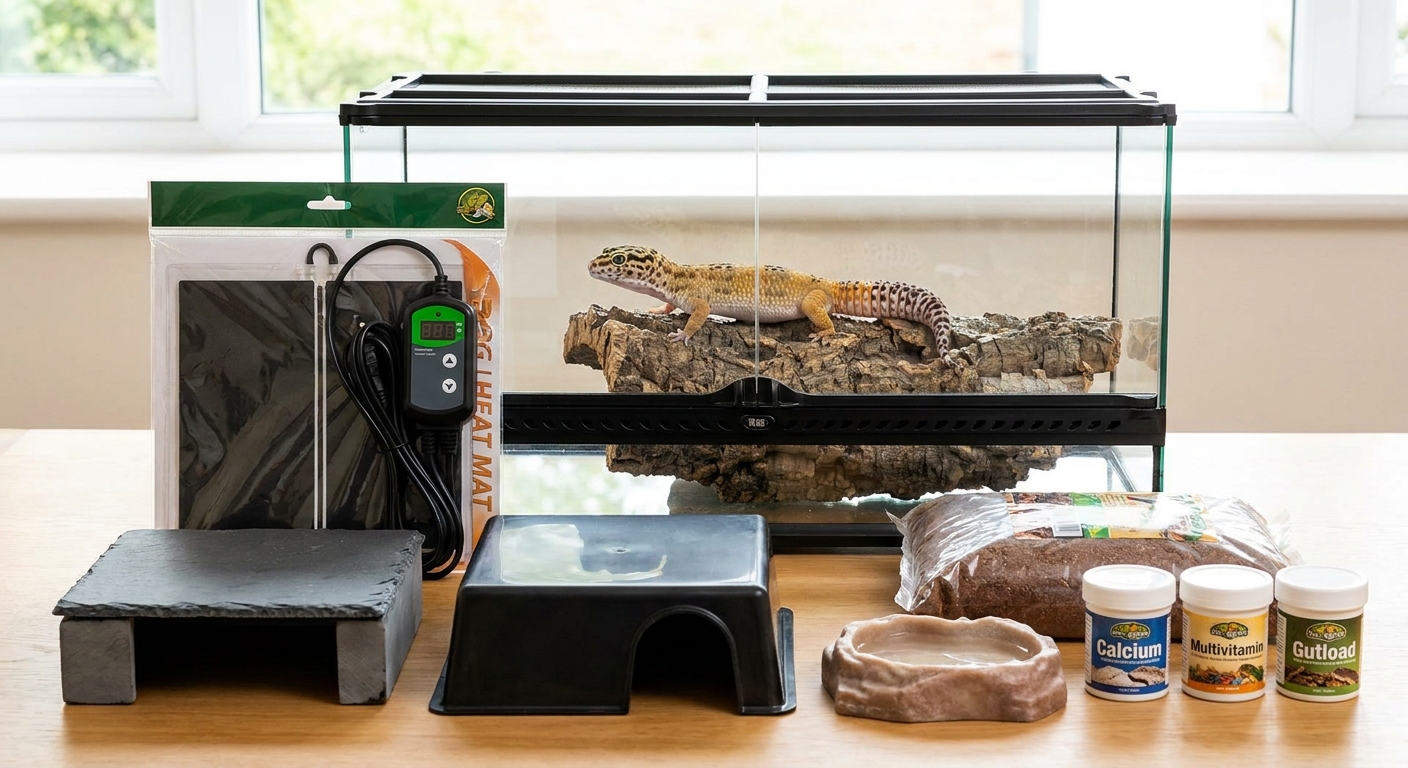
A complete first-time leopard gecko setup costs between $250 and $650 depending on enclosure size and whether you buy new or used equipment. The gecko itself is typically the cheapest line item, often $30 to $80 for a healthy normal morph. Heating, the enclosure, and the initial feeder supply are where most of the budget goes. This guide breaks down every expected cost so a new keeper can budget honestly before bringing a gecko home.
infoQuick Answer
Budget-friendly setup: about $250 total. Mid-range setup (recommended for a 20+ year pet): about $400. Premium setup with a 36x18x18 inch enclosure and high-end thermostat: about $650. Add $30-$80 for the gecko. Ongoing monthly costs after setup are roughly $20-$40 for feeders, supplements, and electricity.
Enclosure: $80-$280
The enclosure is the largest single startup expense and the place where buying once and buying right pays the most dividends. A 20-gallon long is the absolute minimum for a single adult, but the modern recommendation is 36x18x18 inches (about 50 gallons) for proper thermal gradient and enrichment. Cheap kits often skimp on door access, ventilation, or screen quality, which costs more to fix later.
- check_circle20-gallon long glass tank: $40-$60 (minimum legal-care size, fine for a juvenile but tight for adults)
- check_circle36x18x18 inch front-opening glass terrarium: $150-$220 (recommended adult size)
- check_circle36x18x18 inch PVC enclosure: $200-$280 (better insulation, holds heat with less wattage)
- check_circleUsed enclosure from local classifieds: $40-$120 for any of the above (clean thoroughly with reptile-safe disinfectant)
- check_circleScreen lid (if not included): $15-$30
Heating and Thermostat: $50-$140
Leopard geckos are ectothermic and need a basking surface around 88-92°F (31-33°C) with a cool side around 72-78°F (22-26°C). The current best-practice heat source is an overhead deep-heat-projector or low-wattage halogen flood, controlled by a dimming or pulse-proportional thermostat. Heat mats are still common but increasingly out of favor due to thermal-burn risk and lack of belly-warmth coverage in deeper enclosures.
- check_circleDeep heat projector or halogen flood bulb: $20-$45
- check_circleCeramic dome lamp fixture rated for the bulb wattage: $15-$30
- check_circleDimming or pulse-proportional thermostat (mandatory): $35-$80
- check_circleDigital thermometer with probe (or a temperature gun): $15-$30
- check_circleOptional 6-percent UVB tube with hood: $50-$90 (recommended for long-term bone health)
Hides, Substrate, and Decor: $40-$100
Three hides are the minimum: a warm hide on the basking side, a humid hide for shedding, and a cool hide on the cool side. Substrate options range from cheap and safe (paper towel, slate tile) to bioactive (loose substrate plus cleanup crew, $100+ extra). Most beginners do well with paper towel for the first 60 days and switch to a non-particle option once the gecko is settled.
- check_circleThree hides (warm, humid, cool): $20-$45 total
- check_circleSubstrate (paper towel for first 60 days, then slate tile or stone-print mat): $0-$25
- check_circleWater dish and feeding dish: $5-$15
- check_circleClimbing decor (cork bark, branches, leafy plants): $15-$40
- check_circleBioactive setup (drainage layer, soil mix, cleanup crew): $80-$150 additional, optional
Initial Feeder and Supplement Supply: $35-$70
A new keeper needs a starter supply of insects, supplements, and gut-load. Buying feeders weekly from a pet store is more expensive than ordering monthly from a feeder breeder online, but a first-timer typically buys local for the first month while figuring out feeding routine.
- check_circleFirst month of feeders (crickets or dubia roaches): $15-$30
- check_circleCalcium with vitamin D3: $8-$12 (lasts 6-12 months)
- check_circleMultivitamin (Repashy Calcium Plus or equivalent all-in-one): $12-$18
- check_circleFeeder gut-load food: $5-$10 (lasts 2-3 months)
- check_circleFeeder bin and ventilated lid: $5-$15
The Gecko Itself: $30-$300+
Leopard gecko prices vary enormously by morph and breeder reputation. Normal and high-yellow morphs from a pet store run $30-$80 and are perfectly good first geckos. Designer morphs from established breeders can run $200-$3,000+, but no keeper buying their first gecko should spend that much. Pay for breeder reputation and verified health, not for an exotic morph.
- check_circleNormal or high-yellow morph from pet store: $30-$80
- check_circleTangerine, mack snow, or simple combo morph from a breeder: $80-$150
- check_circleAlbino, blizzard, or eclipse morph: $120-$300
- check_circleDesigner morphs (black night, white knight, raptor, etc.): $300-$3,000+
- check_circleAdoption from rescue: $30-$75 (often includes some setup gear)
Three Sample Budgets
Most new keepers fit one of three budget profiles: bare-minimum, recommended mid-range, or premium long-term. All three can produce a healthy gecko with a long, comfortable life. The mid-range setup is the recommended starting point for a 15-20 year pet, especially given how much rework is involved if the bare-minimum kit needs to be upgraded later.
- check_circleBare-minimum (~$250): 20-gallon long, deep heat projector, thermostat, 3 hides, paper towel, water dish, starter feeders, supplements, normal morph from pet store
- check_circleRecommended mid-range (~$400): 36x18x18 glass terrarium, halogen + UVB tube, thermostat, 3 hides, slate tile, decor, starter feeders, supplements, mid-tier morph from breeder
- check_circlePremium long-term (~$650): 36x18x18 PVC enclosure, deep heat projector, UVB, premium thermostat, bioactive substrate, multiple hides, climbing decor, breeder gecko, 3-month feeder supply
Hidden and Easy-to-Forget Costs
Beyond the obvious line items, a few smaller costs surprise first-time keepers. None are individually expensive, but together they typically add $40-$80 to the real first-month total.
- check_circleReptile-safe enclosure cleaner or 50-percent vinegar solution: $5-$10
- check_circleQuarantine tub for new geckos before introducing to the main enclosure: $15-$25
- check_circleSpare bulb in case the primary heat source fails: $20-$45
- check_circleBackup thermostat or thermometer: $15-$35
- check_circleTravel container for vet visits: $10-$20
- check_circleFirst-year vet wellness check: $50-$120
Frequently Asked Questions
What is the absolute cheapest you can start a leopard gecko for?expand_more
Are pet store starter kits a good deal?expand_more
How much should I budget per month after the initial setup?expand_more
Is buying used equipment safe?expand_more
Should I save money by skipping the thermostat?expand_more
Buy Once, Buy Right
The right leopard gecko startup budget is the one that does not need to be spent twice. A $250 bare-minimum setup gets the gecko home, but a $400 mid-range setup is what most keepers end up at within 12 months anyway. Spend the extra $150 upfront on a properly sized enclosure, a real thermostat, and quality hides, and the next 15-20 years of ownership are simpler and cheaper than the alternative.