Best Hides for Leopard Geckos: Warm, Cool & Humid (2026)
Every leopard gecko needs at least three hides. Here are the best warm, cool, and humid hides, plus exactly where to place each one.
Leopard Geckos Reptiles Team
Published
infoDisclosure: This post contains affiliate links. As an Amazon Associate we earn from qualifying purchases, at no extra cost to you.
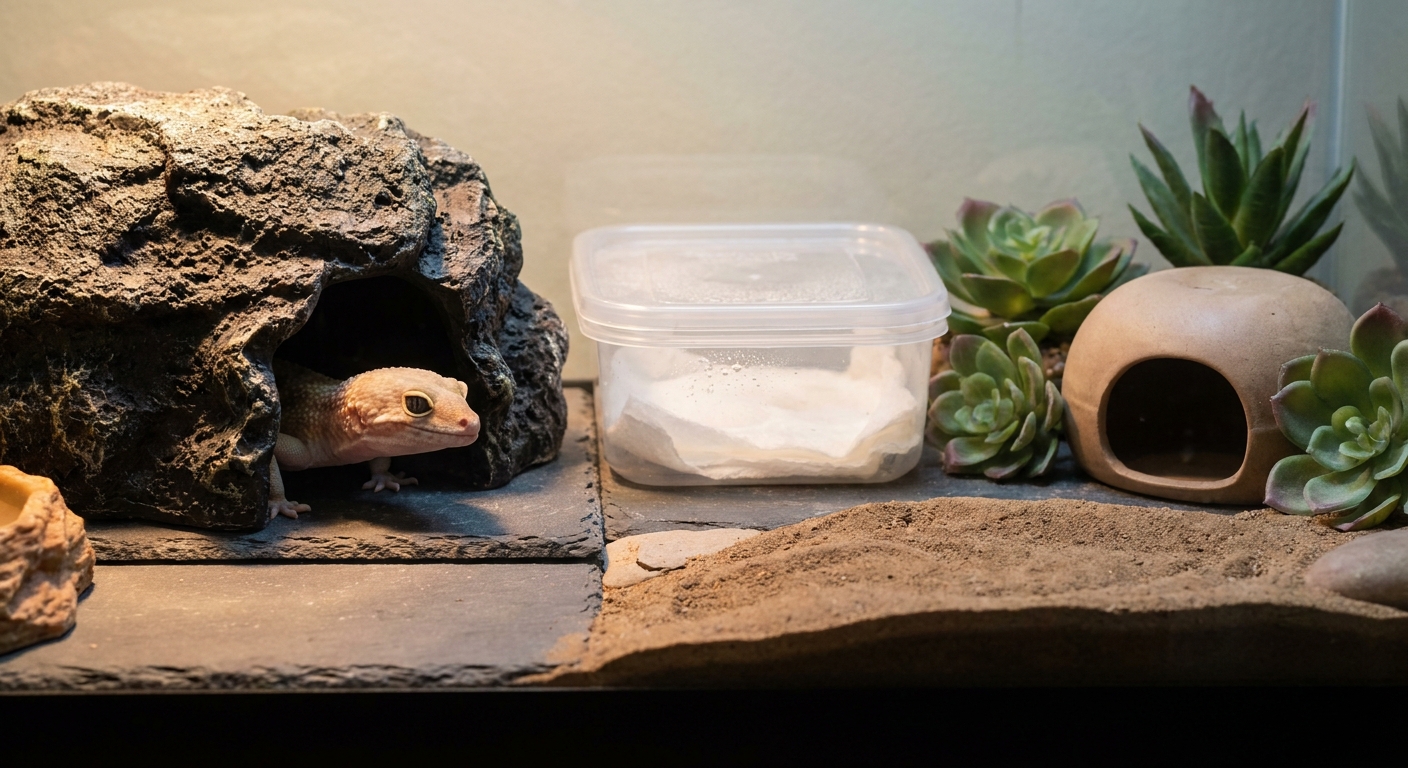
Every leopard gecko needs a minimum of three hides: a warm hide over the heat zone, a cool hide on the opposite end, and a humid hide for shedding. For most keepers, the best leopard gecko hides are the Exo Terra Gecko Cave for the warm side and the Zoo Med Repti Shelter for the humid hide. Both are dark, snug, and easy to clean, which covers the three things a hide actually has to do. In this guide we compare the top options for each zone, explain where to place them, and show you how to set up a humid hide that holds 70-80% humidity inside the box.
infoQuick Answer
A leopard gecko needs at least three hides: a warm hide with a surface temperature of 88-92°F (31-33°C), a cool hide at 70-77°F (21-25°C), and a humid hide at 83-90°F (28-32°C). Our top warm hide is the Exo Terra Gecko Cave, and our top humid hide is the Zoo Med Repti Shelter filled with damp coconut fiber.
This article contains affiliate links. We may earn a commission if you purchase through our links, at no extra cost to you. This helps support our content.
How Many Hides Does a Leopard Gecko Need?
A leopard gecko needs a minimum of three hides: one on the warm side, one on the cool side, and one humid hide. This is often called the 3-hide rule, and it exists because leopard geckos regulate their body temperature by moving between zones rather than by generating their own heat. Your gecko might need to sit at 90°F (32°C) to digest a meal in the morning, then retreat to 75°F (24°C) in the afternoon.
Here is the problem the 3-hide rule solves. Leopard geckos are prey animals, and cover matters to them as much as temperature does. If there is only one hide in the enclosure, your gecko is forced to choose between feeling safe and being warm. A gecko faced with that choice will often choose safety, park itself in the single hide on the cool side, and end up too cold to digest its food properly. Chronic low temperatures lead to regurgitation, slow growth, and a weakened immune system.
With a hide available in every temperature zone, your gecko never has to make that trade. It can thermoregulate freely while staying under cover the entire time. Three hides is the minimum, not the target. Larger enclosures of 40 gallons or more benefit from four or five hiding spots, and extra cover is one of the cheapest upgrades you can make to any setup.
Best Warm Hide: Exo Terra Gecko Cave

Exo Terra Gecko Cave (Medium)
Natural-looking resin cave that gives leopard geckos the snug, dark refuge they need on the warm side of the enclosure.
- check_circleNaturalistic rock texture
- check_circleStable, coated resin construction
- check_circleSnug interior geckos prefer
The Exo Terra Gecko Cave is our pick for the warm side. It is a heavy resin cave with a smooth interior, a single low entrance, and a naturalistic rock finish that blends into most setups. The weight is a genuine advantage: leopard geckos dig and push against decor, and lightweight plastic hides get shoved around or flipped. The smooth, sealed interior wipes clean in seconds and will not absorb waste or bacteria the way porous decor can. It typically runs around $10-20 depending on size.
Placement is what makes a warm hide work. Set it directly over or immediately beside your heat zone so the floor inside the hide reaches a surface temperature of 88-92°F (31-33°C), and verify that number with a digital probe or infrared thermometer rather than guessing. Sizing matters too, and snug beats spacious. A leopard gecko feels most secure when its back and sides make contact with the hide walls, so choose a size your gecko can just turn around in. The medium fits most adults, while hatchlings and juveniles do better in the small.
Best Humid Hide: Zoo Med Repti Shelter

Zoo Med Repti Shelter 3-in-1 Cave (Medium)
Purpose-built humid hide with a removable lid, making it easy to refresh damp moss or coconut fiber for healthy sheds.
- check_circleRemovable lid for easy substrate changes
- check_circleHolds humidity effectively
- check_circleMedium size fits adult leopard geckos
The Zoo Med Repti Shelter is our pick for the humid hide, and it is one of the most widely used pieces of leopard gecko equipment for good reason. It is a deep resin basin with a removable lid and a single top-side entrance, purpose-built to hold a layer of damp substrate. The removable lid is the feature that matters most in daily use. You can lift it to check on your gecko or remoisten the substrate without dismantling the hide, and the whole unit rinses clean easily. The 3-in-1 design also works for other small reptiles, so it will not go to waste if your collection grows.
A humid hide is not optional equipment. It is the single most important tool for healthy shedding, because leopard geckos loosen old skin by resting in a humid microclimate before and during a shed. A gecko without one is far more likely to retain shed on its toes and eyelids, and retained toe shed can cut off circulation and cost a gecko its toes. Place the humid hide on the warm side or in the middle of the enclosure where temperatures run 83-90°F (28-32°C). Warmth drives the evaporation that keeps the inside of the box at 70-80% humidity while the rest of the enclosure stays at a healthy 30-40% ambient. A humid hide parked on the cool side stays clammy instead of humid and often gets ignored.
Best Humid Hide Filler: Reptile Prime Coconut Fiber
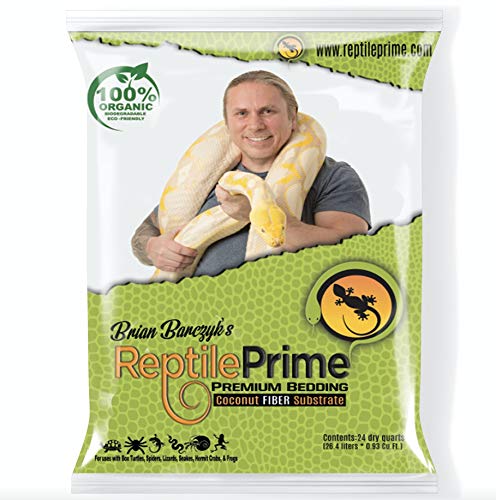
Reptile Prime Coconut Fiber Substrate
Natural coconut fiber that holds moisture without molding quickly, ideal for filling humid hides.
- check_circleExcellent moisture retention
- check_circleNatural and biodegradable
- check_circleHolds shape when damp
A humid hide only works if there is something inside it holding moisture. Reptile Prime Coconut Fiber is our preferred filler because it retains water well, resists mold better than moss, and is inexpensive enough that replacing it regularly is painless. Add a layer about one to two inches deep, then mix in water until the fiber feels like a wrung-out sponge: clearly damp, but not dripping when squeezed. Plain paper towel is a perfectly good alternative, especially for juveniles or quarantine setups, since it is easy to swap and lets you monitor waste. Whichever filler you choose, remoisten it every 1-2 days, and replace coconut fiber entirely every few weeks or sooner if you see mold or waste.
What Makes a Good Cool Hide?
The cool hide is where you can save money, because it has the simplest job: provide dark, snug cover on the unheated end of the enclosure. There is no heat exposure to worry about and no moisture to manage, so budget options work just as well as commercial caves. An upturned plastic container with a doorway cut in the side, a curved piece of cork bark, or a simple DIY box all do the job. Plenty of keepers use a second Exo Terra Gecko Cave here for a consistent look, but nothing about the cool side requires it.
Whatever you use, apply the same checklist as any other hide. It should be dark inside, snug enough that your gecko touches the walls, limited to one entrance so it feels like a burrow rather than a tunnel, and easy to lift out and clean. Smooth any cut plastic edges, and skip anything with a rough interior. Leopard geckos often sleep in the cool hide through the warmest part of the day, so do not be surprised if it becomes the most used spot in the enclosure.
Where Should You Place Each Hide?
Placement decides whether your three hides actually create usable options. Map each hide to a temperature zone and confirm the numbers with a probe thermometer at floor level:
- check_circleWarm hide: directly over or beside the heat zone, with a surface temperature of 88-92°F (31-33°C) inside
- check_circleHumid hide: on the warm-to-middle zone at 83-90°F (28-32°C), so evaporation keeps the interior at 70-80% humidity
- check_circleCool hide: on the far unheated end at 70-77°F (21-25°C), giving your gecko a true retreat from the heat
Check these temperatures at least twice after any change to your setup, once shortly after the lights come on and once in the evening, because room temperature swings shift the whole gradient. Every heat source should run on a thermostat, and the thermostat probe belongs inside or directly under the warm hide, since that is the surface your gecko actually rests on. If the warm hide overshoots 95°F (35°C) your gecko will abandon it, and if it never reaches 88°F (31°C) digestion suffers even though the gecko looks perfectly comfortable.
In a standard 36-inch enclosure, this layout usually means the warm hide sits above the heat mat on the far left or right, the humid hide sits a few inches inward from it, and the cool hide sits against the opposite wall. Avoid placing any hide directly under a bright basking lamp entrance-first, since a gecko exiting into harsh light may stop using it. Small adjustments of a few inches can change interior temperatures by several degrees, so treat placement as something you tune, not something you set once.
lightbulbAdd Cover Between the Hides
Hides are destinations, but your gecko still has to cross open floor to reach them. Add clutter such as cork bark, fake plants, and low branches between the hides so your leopard gecko can move across the enclosure while feeling covered. A gecko that feels exposed in transit will explore less and spend more time hiding.
warningTwo Hides to Avoid
Skip resin hides with rough, sharply textured interiors. Abrasive surfaces can scrape a leopard gecko's belly and snout, especially during shedding when skin is fragile. And never use a heat rock as a warm hide substitute. Heat rocks are known to develop hot spots that cause serious thermal burns, and leopard geckos absorb belly heat safely from a thermostat-controlled heat mat or overhead source instead.
Frequently Asked Questions
How many hides does a leopard gecko need?expand_more
Does a leopard gecko really need a humid hide all the time?expand_more
What should I put inside a leopard gecko humid hide?expand_more
Can I use the same hide for the warm and cool sides?expand_more
Why does my leopard gecko stay in one hide all day?expand_more
How big should a leopard gecko hide be?expand_more
Final Verdict: The Best Leopard Gecko Hide Setup
The best leopard gecko hides are the ones that let your gecko stay hidden at every temperature it needs. For a complete setup, pair the Exo Terra Gecko Cave over the heat zone at 88-92°F (31-33°C), the Zoo Med Repti Shelter filled with damp Reptile Prime coconut fiber in the warm-to-middle zone, and a simple budget hide on the cool end at 70-77°F (21-25°C). Together the three typically cost less than a single premium decor piece, and they solve security, digestion, and shedding in one pass. Add some clutter between them, verify your temperatures with a probe, and your gecko gets the one thing every hide is really for: the freedom to feel safe anywhere in its enclosure.