Leopard Gecko Humid Hide: Setup Guide & Best Practices (2026)
Create the perfect humid hide for your leopard gecko with our complete setup guide covering materials, placement, and maintenance.
Leopard Geckos Reptiles Team
Published
infoDisclosure: This post contains affiliate links. As an Amazon Associate we earn from qualifying purchases, at no extra cost to you.
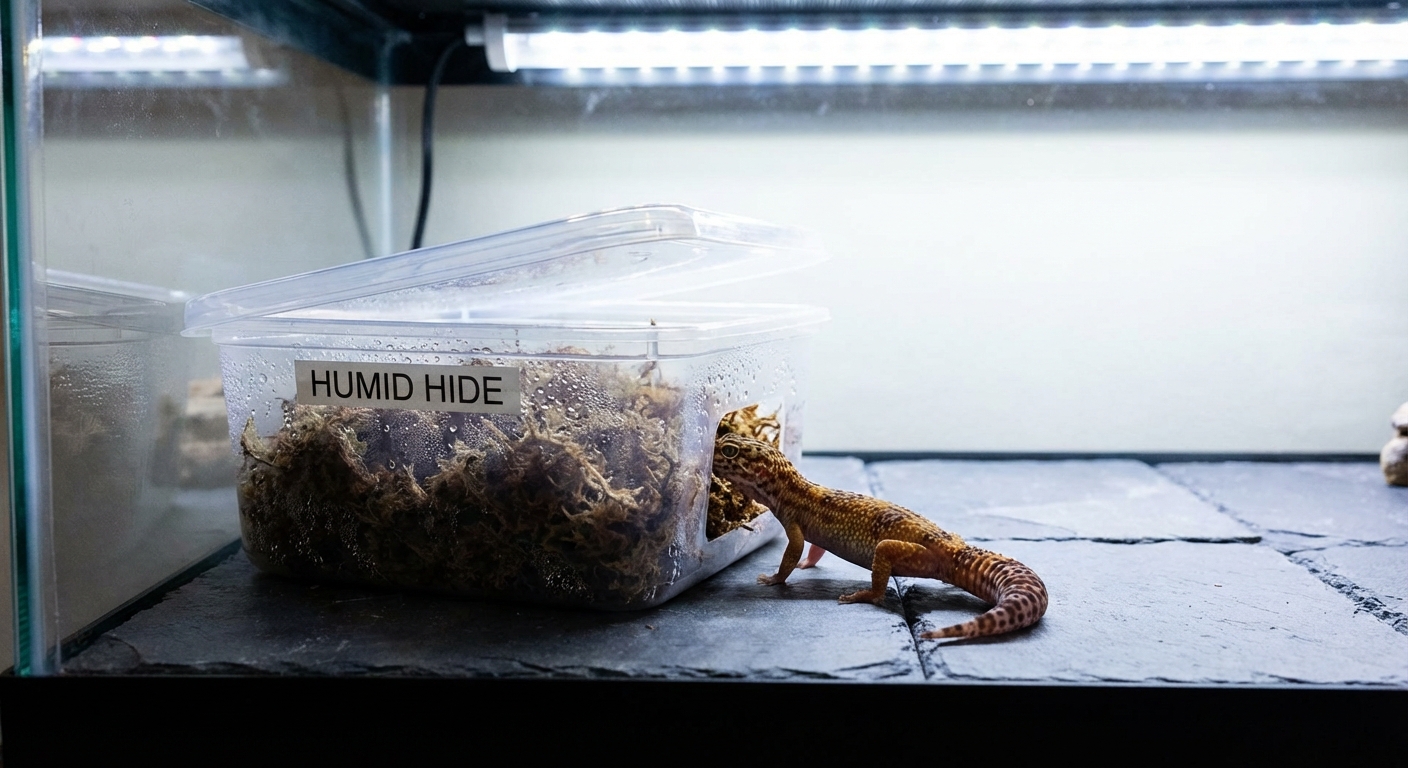
A humid hide is essential equipment for every leopard gecko enclosure. This enclosed space with moist substrate provides the localized humidity needed for proper shedding while keeping the rest of the enclosure appropriately dry. Without a humid hide, leopard geckos often experience stuck shed, especially on toes and tail tips.
infoQuick Setup Guide
Use a hide with a single entrance, fill with damp (not soaking) sphagnum moss or paper towels, place on the warm side of the enclosure. Re-moisten every 2-3 days or when dry. Your gecko will use it primarily before and during shedding, but may also use it for cooling or egg-laying.
Why Leopard Geckos Need a Humid Hide
Leopard geckos come from arid environments but utilize humid microclimates in the wild, such as moist rock crevices or burrows. These areas provide temporary high humidity that helps soften old skin during shedding. In captivity, we recreate this with a humid hide.
The humid hide is especially critical because leopard gecko enclosures should be kept relatively dry (30-40% ambient humidity). Without a humid retreat, the dry environment leads to incomplete sheds and stuck skin, particularly on toes, tail tips, and around the eyes.
Humid Hide Container Options
Commercial Reptile Hides

Zoo Med Repti Shelter 3-in-1 Cave (Medium)
Purpose-built humid hide with a removable lid, making it easy to refresh damp moss or coconut fiber for healthy sheds.
- check_circleRemovable lid for easy substrate changes
- check_circleHolds humidity effectively
- check_circleMedium size fits adult leopard geckos
Many commercial reptile hides work well for humid hides. Look for hides with a single entrance and a solid top that traps humidity. Avoid mesh or heavily ventilated designs. Some reptile-specific humid hides have built-in moss compartments.
DIY Options
Plastic food containers make excellent humid hides. Cut an entrance hole in the side (smooth edges with sandpaper or a lighter), fill with substrate, and you have a functional humid hide for a few dollars. Opaque containers work best as geckos prefer darkness inside their hides.
- check_circleGladware or Tupperware containers (cut entrance hole)
- check_circlePlastic plant saucers with an overturned container
- check_circleCommercial reptile caves with sealed tops
- check_circleCeramic or resin hides with minimal ventilation
Best Humid Hide Substrates
Sphagnum Moss (Top Choice)
Long-fiber sphagnum moss is the best humid hide substrate. It holds moisture well, resists mold with its natural antimicrobial properties, and is safe if accidentally ingested. Keep it damp but not soaking wet.
Other Options
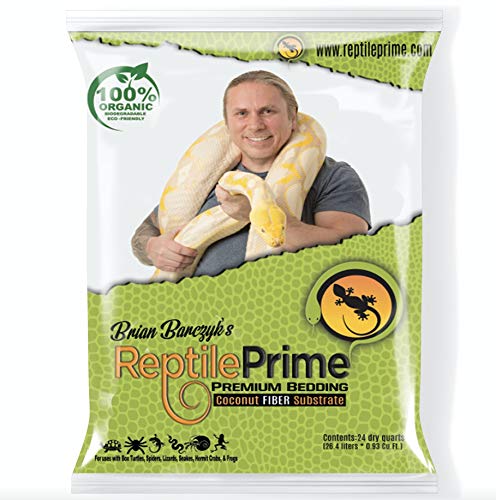
Reptile Prime Coconut Fiber Substrate
Natural coconut fiber that holds moisture without molding quickly, ideal for filling humid hides.
- check_circleExcellent moisture retention
- check_circleNatural and biodegradable
- check_circleHolds shape when damp
- check_circleEco-earth/coco fiber: Holds moisture well, affordable, but can get compacted
- check_circlePaper towels: Budget option, easy to replace, but dries out quickly
- check_circlePeat moss: Works but less attractive and can be messy
- check_circleAvoid: Vermiculite alone (better for egg incubation), fabric (toe snags)
Where to Place the Humid Hide
Place the humid hide on the warm side of the enclosure. The warmth helps maintain humidity inside the hide and encourages evaporation that creates the humid microclimate. On the cool side, the hide would stay too wet and promote mold growth.
lightbulbThe Three-Hide Rule
Every leopard gecko enclosure needs at least three hides: one on the warm side, one on the cool side, and one humid hide. The humid hide counts as the third hide and should be placed on the warm side to function properly.
Maintenance Schedule
- check_circleCheck moisture every 1-2 days, more often in dry climates
- check_circleRe-moisten substrate when it feels dry (should be damp, not wet)
- check_circleReplace substrate completely every 2-4 weeks
- check_circleClean container monthly or whenever soiled
- check_circleWatch for mold, white fuzz indicates too wet, replace substrate
Frequently Asked Questions
How wet should the humid hide be?expand_more
My gecko never uses the humid hide. Is that okay?expand_more
Can I have too much humidity in the enclosure?expand_more
Simple But Essential
A properly maintained humid hide prevents most shedding problems and contributes to overall gecko health. The setup is simple: an enclosed space with damp substrate on the warm side. Check moisture regularly, replace substrate monthly, and your gecko will have the humid retreat it needs for healthy sheds throughout its life.