Mack Snow Leopard Gecko: Morph Guide & Genetics (2026)
Mack snow leopard geckos hatch with striking black-and-white banding and follow simple co-dominant genetics. Here is how the morph, the super snow, and pricing work.
Leopard Geckos Reptiles Team
Published
infoDisclosure: This post contains affiliate links. As an Amazon Associate we earn from qualifying purchases, at no extra cost to you.
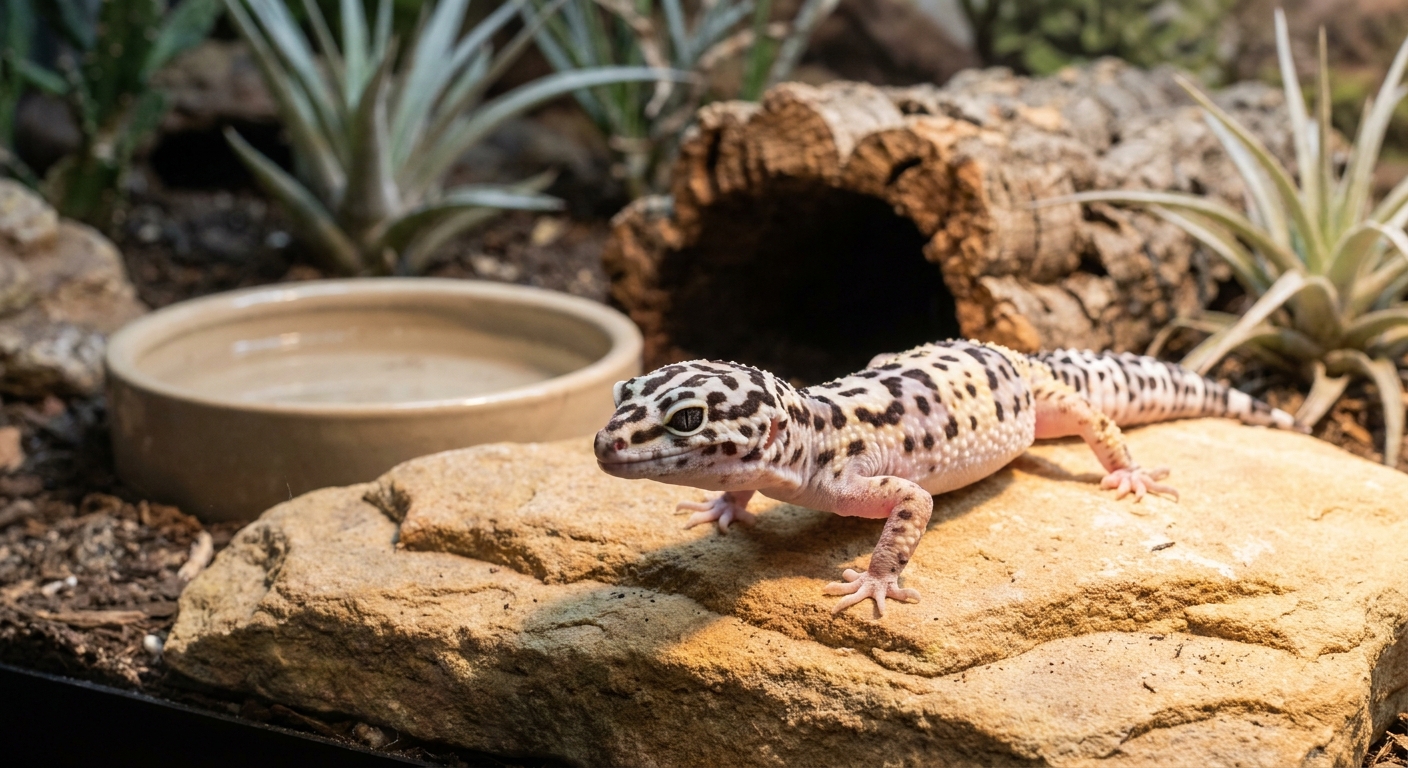
A mack snow leopard gecko is a co-dominant morph that reduces the yellow pigment normal leopard geckos display, producing hatchlings with crisp black-and-white banding. One copy of the gene makes a mack snow; two copies make the more dramatic super snow, with solid dark eyes and dense black speckling on a white body. Mack snows typically cost $100-$250, follow simple and predictable genetics, and need no special care compared to a normal morph.
infoQuick Answer
Mack snow is a co-dominant (incomplete dominant) morph: one gene copy reduces yellow and produces black-and-white banded hatchlings, while two copies produce the super snow with solid eyes and high-contrast speckling. Pairing two mack snows yields on average 25 percent super snow, 50 percent mack snow, and 25 percent normal offspring. Prices typically run $100-$250 for mack snows, with super snows costing more. Care matches a standard leopard gecko in every respect.
What Is a Mack Snow Leopard Gecko?
The mack snow morph originated in the early 2000s from the Mack family's breeding projects, which is where the name comes from. The gene suppresses much of the yellow pigment that gives normal leopard geckos their ground color. Hatchling mack snows emerge with clean white bands separated by bold black bands, one of the most recognizable baby patterns in the hobby.
As the gecko matures, the black bands break apart into spotting the way they do on a normal morph, and the white ground color often warms slightly. Adults read as a pale, low-yellow version of a normal leopard gecko, usually white to cream with black spotting. The amount of yellow that returns with age varies between individuals and lines, which matters if you are buying specifically for the icy look.
What sets mack snow apart from most well-known morphs is its inheritance. Albino strains and blizzard are recessive, and tangerine is line-bred. Mack snow is co-dominant (more precisely, incomplete dominant), so a single copy of the gene visibly changes the animal. That single-copy visibility makes the morph easy to work with and easy to verify compared to line-bred traits.
Mack snow is also not the only snow in the hobby. Other snow projects exist, including line-bred snows and separate gene-based lines, and they do not all behave the same way genetically. When a listing simply says "snow," ask which type it is. Mack snow is by far the most common, but the answer changes what breeding outcomes you can expect.
How Do Mack Snow Genetics Work?
Because mack snow is co-dominant, the number of gene copies determines the appearance. Zero copies is a normal leopard gecko. One copy is a mack snow. Two copies is a super snow, a visually distinct animal rather than just a stronger mack snow. This one-gene, three-appearance pattern is the textbook example of incomplete dominance in leopard gecko breeding.
Pair two mack snows together and the expected odds for each egg are 25 percent super snow, 50 percent mack snow, and 25 percent normal. Pair a mack snow to a normal and you expect 50 percent mack snows and 50 percent normals. Pair a super snow to a normal and every offspring is a mack snow, since the super parent always passes exactly one copy.
- check_circleMack snow x mack snow: 25 percent super snow, 50 percent mack snow, 25 percent normal
- check_circleMack snow x normal: 50 percent mack snow, 50 percent normal
- check_circleSuper snow x normal: 100 percent mack snow
- check_circleSuper snow x mack snow: 50 percent super snow, 50 percent mack snow
- check_circleSuper snow x super snow: 100 percent super snow
These are per-egg probabilities, not guarantees for a clutch. Leopard geckos lay clutches of two eggs, so a small season can easily miss the 25 percent super snow odds entirely. Breeders who want supers reliably pair super to super or super to mack snow.
What Does a Super Snow Leopard Gecko Look Like?
The super snow is one of the most distinctive leopard geckos in the hobby. Instead of the banded-then-spotted pattern of a mack snow, a super snow displays a white to pale gray body densely covered in crisp black speckling, with the pattern often merging into bold markings along the back. The contrast is noticeably sharper than a mack snow at every age.
The eyes are the giveaway. Super snows have solid dark eyes, fully black in appearance without the patterned iris of a normal leopard gecko. This eye trait comes with the two-copy form and makes a super snow identifiable at a glance, even as a hatchling. Super snows behave normally, hunt normally, and show no documented vision problems tied to the eye color itself.
Popular Mack Snow Combinations
Because a single copy of the gene shows visibly, mack snow stacks neatly onto nearly every other morph, and it is one of the most widely used ingredients in designer breeding. The snow gene mutes yellow tones in whatever combination it joins, shifting the whole animal toward white, silver, and pastel shades.
- check_circleMack snow albino: combines snow with any of the three albino strains for a pale pink-and-white animal with reduced yellow
- check_circleSnow eclipse combinations: pair snow with the eclipse eye gene for solid or partially solid eyes on a snowy body
- check_circleSuper snow albino combinations: two-copy snow stacked with recessive albino genes, producing some of the palest patterned geckos available
- check_circleSnow with line-bred traits: snow crossed into hypo or striped lines produces high-contrast pattern variants
- check_circleMulti-gene designers: many popular multi-morph projects include one or two copies of snow as the base that cools down the color palette
When buying a combo, remember that only the recessive and co-dominant parts of the label are testable through breeding outcomes. Ask the seller which genes are proven versus assumed, especially on animals carrying three or more traits.
How Much Does a Mack Snow Cost?
Mack snow leopard geckos typically cost $100-$250 from breeders. The morph has been established for over two decades, so single-gene mack snows are widely available and affordable. Super snows typically run higher, often in the $250-$450 range, because they require either lucky odds from mack snow pairings or dedicated super-to-super projects.
- check_circleMack snow (single gene): typically $100-$250
- check_circleSuper snow: typically $250-$450
- check_circleMack snow albino and similar two-gene combos: typically $200-$400
- check_circleMulti-gene super snow designers: typically $400 and up depending on the genes involved
As with any morph, unusually cheap animals deserve extra scrutiny of health and lineage rather than a fast purchase. Females of proven breeding quality and animals with documented multi-gene backgrounds sit at the top of each range.
Do Snow Morphs Need Special Care?
No. Mack snows and super snows need standard leopard gecko husbandry: a warm side of 88-92°F (31-33°C), a cool side of 72-78°F (22-26°C), 30-40 percent ambient humidity with a humid hide, and a calcium-dusted insect diet. Lifespan is the usual 15-20 years, and there are no health conditions linked to the snow gene in either its single or double form.
The one thing to set expectations on is color drift. Many mack snows regain some yellow as they mature, especially through the first 12-18 months, so the stark black-and-white hatchling rarely stays that stark. This is normal and not a sign of a mislabeled animal. If holding a white ground color matters to you, super snows and animals from lines selected for low yellow hold the cool tones far better.
Mack Snow Buying Checklist
Snow morphs are easy to evaluate because the traits are visible and the genetics are simple. Run through this list before committing to a purchase.
- check_circleConfirm the eyes match the label: solid dark eyes indicate super snow, patterned eyes indicate mack snow or normal
- check_circleAsk for recent photos in neutral lighting, since cool-toned editing can exaggerate how white an animal looks
- check_circleCheck for a thick tail, clear eyes, and clean toes free of retained shed
- check_circleAsk whether the animal is eating readily and which feeder insects it currently takes
- check_circleRequest hatch date and current weight to confirm steady growth toward the adult range of 45-65 grams
- check_circleFor combos, ask which genes are proven through breeding records and which are assumed from the pairing
- check_circleFor hatchlings sold as mack snow, ask about the parents; a super snow parent guarantees the gene, while mack snow pairings can produce normals that look similar early on
Frequently Asked Questions
What is the difference between a mack snow and a super snow?expand_more
Is mack snow dominant, co-dominant, or recessive?expand_more
How much does a mack snow leopard gecko cost?expand_more
Do mack snow leopard geckos stay black and white?expand_more
Do super snow eyes cause vision problems?expand_more
A Predictable Morph With Standout Looks
The mack snow leopard gecko pairs one of the cleanest looks in the hobby with the most predictable genetics you will find. One gene copy gives you the banded snow, two copies give you the solid-eyed super snow, and the 25-50-25 odds from a snow-to-snow pairing are simple enough to plan around. With typical prices of $100-$250, no extra care requirements, and the same 15-20 year lifespan as any leopard gecko, a mack snow is an easy morph to recommend to keepers at any experience level.