Albino Leopard Gecko: Morph Guide, Care & Price (2026)
Albino leopard geckos come in three distinct genetic strains with different eye colors, sensitivities, and price points. Here is what to know before buying one.
Leopard Geckos Reptiles Team
Published · Last updated
infoDisclosure: This post contains affiliate links. As an Amazon Associate we earn from qualifying purchases, at no extra cost to you.
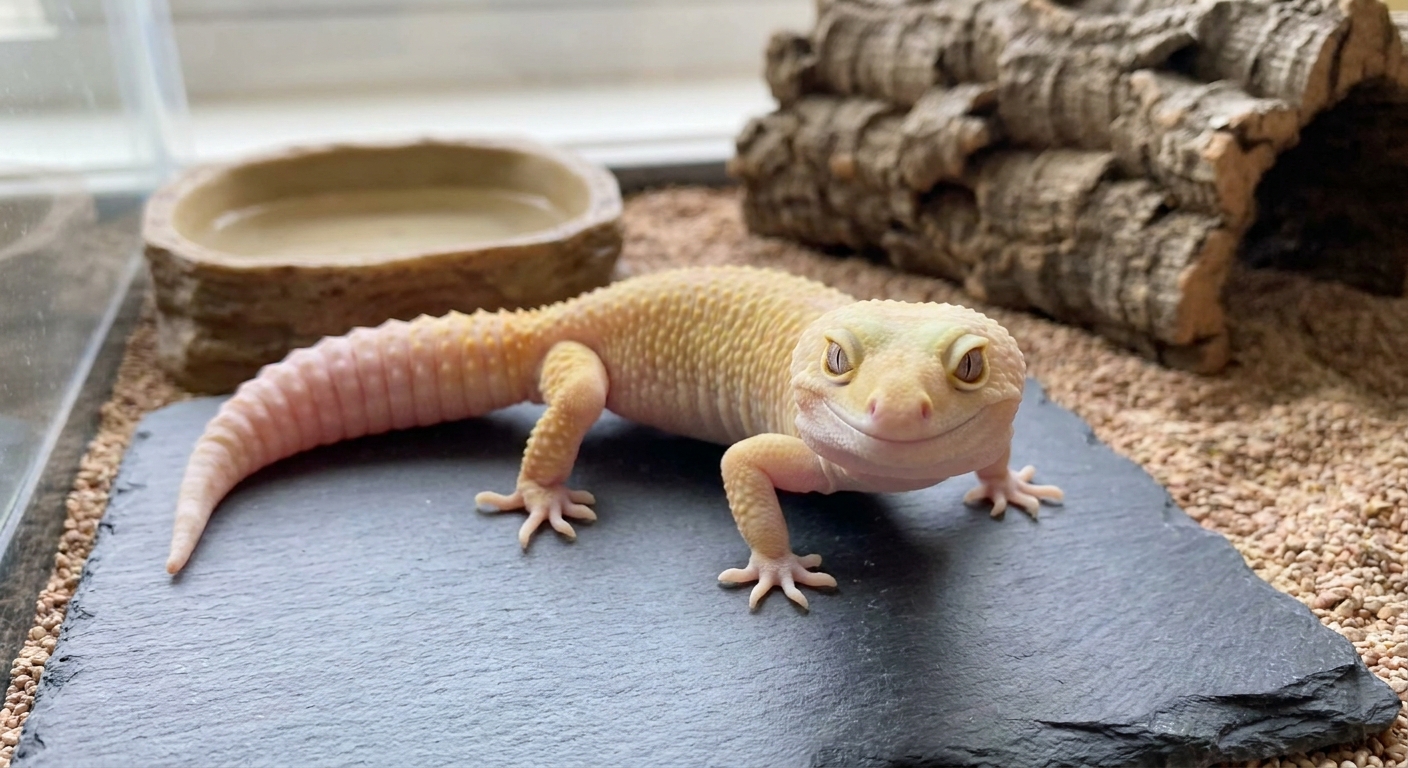
An albino leopard gecko lacks the dark melanin pigment that gives normal morphs their black markings, leaving the gecko in shades of yellow, pink, and white with red, pink, or burgundy eyes depending on strain. Three genetically distinct albino strains exist (Tremper, Bell, and Rainwater) and they do not interbreed to produce albino offspring. Albino geckos are one of the most popular morphs because of how striking they look, but they have specific lighting and care considerations that owners of normal morphs do not face.
infoQuick Answer
Albino leopard geckos cost $120-$300 depending on strain and breeder. The three strains (Tremper, Bell, Rainwater) are genetically incompatible, so two albinos of different strains will not produce albino offspring. All albinos are light-sensitive and need lower-wattage UVB and dimmer enclosure lighting than normal morphs. Care otherwise matches a standard leopard gecko: 88-92°F (31-33°C) basking, 72-78°F (22-26°C) cool side, 30-40 percent humidity.
The Three Albino Strains
All three strains are recessive and produce a similar yellow, pink, and white appearance with reddish eyes, but they sit on different genes. A Tremper albino bred to a Bell albino will produce 100 percent normal-looking offspring (heterozygous for both genes), not albinos. This non-allelic relationship is why all three strains continue to exist commercially today.
- check_circleTremper albino: discovered 1996, the most common strain, dark red eyes, often the warmest yellow body color
- check_circleBell albino: discovered 1996, lighter pinkish eyes, often shows lavender or pink tones in the body, can have purple shadowing
- check_circleRainwater (Las Vegas) albino: discovered 1998, the lightest of the three, very pale yellow and pink, eyes a softer red-burgundy
- check_circleDesigner combos: each strain combines with patterns and other base morphs to produce raptors, blazing blizzards, super hypos, and dozens of other lines
Appearance and How It Changes With Age
Hatchling albinos look very different from adults. They emerge with light banded patterns in pink and pale yellow, often almost white in the case of Rainwaters. As the gecko ages, the bands break up into spots and the body color either intensifies (Tremper) or stays pale (Bell, Rainwater). Adults reach 7-10 inches in length, the same range as normal morphs.
Eye color also changes with age. Most hatchling albinos have very dark red eyes that lighten as adults, becoming the burgundy or pink-red color most adult albinos display. The eclipse gene crossed with albino produces solid black eyes (raptor) that look dramatic against the albino body color.
Eye Sensitivity and Lighting Needs
The lack of melanin extends to the iris, which is why albino eyes look red (you are seeing through the eye to the blood vessels behind it). This means albino geckos have less natural protection against bright light. They typically squint, retreat to hides, or stay buried in cool side decor when lighting is too intense. Husbandry needs to account for this.
- check_circleUse a 6-percent UVB tube (not the high-output 12-percent or 14-percent tubes designed for desert lizards)
- check_circleKeep daytime ambient lighting to a moderate level rather than the brightest available bulbs
- check_circleProvide deep, well-shaded hides on both warm and cool sides so the gecko can self-regulate
- check_circleAvoid direct overhead lighting that the gecko cannot escape from; offset light sources to one end of the enclosure
- check_circleSwitch to a red, blue, or moonlight bulb (or none at all) overnight to provide a true day-night cycle
- check_circleIf the gecko consistently squints or hides during the day, dim the lighting or move the bulb further away
Price Range and Buying
Albino leopard gecko prices have stabilized over the last decade as the morph became more common in the hobby. Tremper is the most affordable strain because it is the most widely bred. Rainwater commands a slight premium for its softer pastel coloration. Bell prices fall in the middle.
- check_circleTremper albino from a breeder: $120-$200
- check_circleBell albino from a breeder: $150-$250
- check_circleRainwater albino from a breeder: $180-$300
- check_circleDesigner combos (raptor, blazing blizzard, etc.): $250-$800
- check_circlePet store albino: $80-$150 (often unverified strain, sometimes hybrid het animals miscategorized as albino)
Always buy from a breeder who can verify which strain the gecko is. A miscategorized albino is fine as a pet but creates breeding surprises later, since strains do not cross to produce albino offspring. Reputable breeders provide a lineage on request.
Care Differences From Normal Morphs
Outside of lighting, albino care closely mirrors a standard leopard gecko. The main practical differences come down to environmental sensitivity and a slight tendency toward food selectivity in some lines.
- check_circleLighting: lower-output UVB and dimmer ambient bulbs as described above
- check_circleHeating: identical to normal morphs, 88-92°F (31-33°C) warm side
- check_circleHumidity: 30-40 percent ambient, with a humid hide spiking to 70-80 percent during shed
- check_circleDiet: same insect-based diet as normal morphs (crickets, dubia roaches, mealworms), no morph-specific issues
- check_circleHandling: same patient bonding timeline; albinos are not measurably different in temperament
- check_circleLifespan: 15-20 years, no documented difference from normal morphs
Health Considerations
Albino leopard geckos are not inherently less healthy than normal morphs. The recessive albino gene is not linked to any known disorder. However, some keepers report mild eye discharge or squinting when lighting is set up incorrectly, and a small percentage of geckos with certain combo lines (notably enigma combinations) display neurological wobble unrelated to the albino gene itself.
- check_circleInspect eyes for clarity and absence of stuck shed during purchase
- check_circleAvoid enigma-cross albinos if neurological issues concern you (enigma syndrome is not albino-related but is sometimes paired in designer lines)
- check_circleProvide a proper humid hide; albino skin is sometimes harder to read for retained shed under the body color
- check_circleConfirm the breeder has tested for crypto in the lineage, especially when buying combo morphs
Frequently Asked Questions
What is the difference between Tremper, Bell, and Rainwater albino?expand_more
Can albino leopard geckos see properly?expand_more
How much does an albino leopard gecko cost?expand_more
Do albino leopard geckos need special UVB?expand_more
Are albino leopard geckos harder to care for?expand_more
A Striking Morph With a Few Easy Adjustments
Albino leopard geckos pair dramatic visual appeal with care that is almost identical to a standard leopard gecko. The lighting adjustment is small (a 6-percent UVB tube and slightly dimmer ambient bulbs) and the lifespan, temperament, and diet match any normal morph. For a first-time keeper who wants something more striking than a normal but does not need a designer-tier price tag, a Tremper or Bell albino at $150-$250 hits a satisfying middle ground.