Leopard Gecko Lighting: Do They Need UVB? Complete Guide (2026)
Discover the truth about leopard gecko lighting needs, including the UVB debate, proper light cycles, and equipment recommendations for optimal health.
Leopard Geckos Reptiles Team
Published
infoDisclosure: This post contains affiliate links. As an Amazon Associate we earn from qualifying purchases, at no extra cost to you.
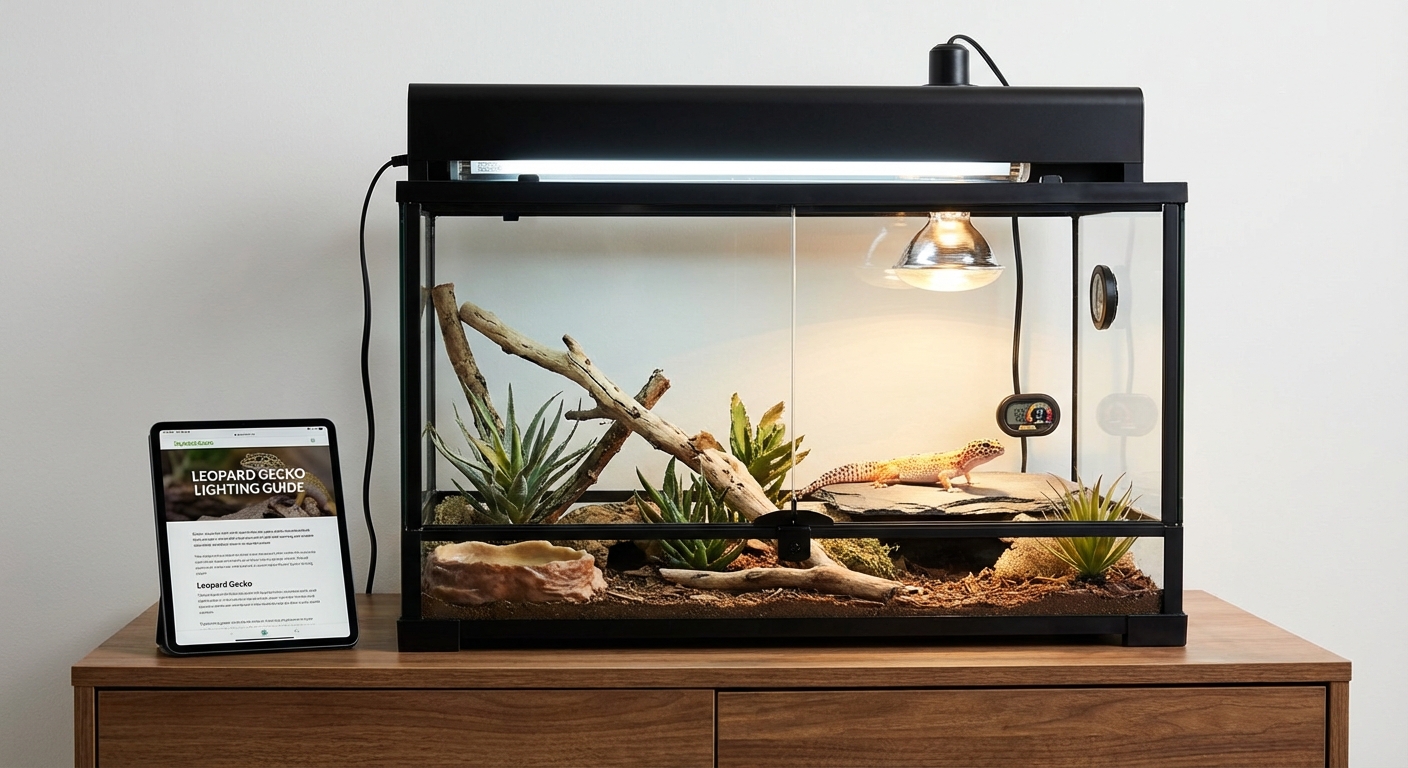
Leopard gecko lighting is one of the most debated topics in the reptile hobby. For decades, the common advice was that these crepuscular geckos do not need special lighting. Modern research and keeper experience suggest that while leopard geckos can survive without UVB, they may benefit from low-level exposure. This guide covers everything you need to know about lighting your leopard gecko enclosure for health and natural behavior.
infoQuick Answer: Lighting Needs
Leopard geckos need a consistent day/night cycle (12 hours light, 12 hours dark). UVB lighting is optional but beneficial at low levels (2-5% shade-dweller bulbs). They do not need bright basking lights. Never use colored bulbs (red/blue) at night.
Leopard Geckos in the Wild: Natural Light Exposure
In the wild, leopard geckos inhabit rocky deserts and grasslands of Afghanistan, Pakistan, and India. They are crepuscular, meaning they are most active at dawn and dusk when light levels are low. During the day, they hide in rocky crevices and burrows, emerging to hunt when the sun is low or absent.
However, wild leopard geckos do receive some UV exposure. Morning and evening sunlight contains UVB rays, and even in shaded areas, some UV penetrates. This natural incidental exposure is quite different from zero UV in a captive enclosure. This understanding has shifted recommendations in modern husbandry.
The Importance of Day/Night Cycles
Regardless of whether you provide UVB, leopard geckos need a consistent photoperiod (light cycle) to maintain normal behavior and circadian rhythms. Light exposure during the day signals activity time, while darkness at night allows proper rest and stimulates natural nighttime behaviors like hunting and exploring.
- check_circleStandard cycle: 12 hours light, 12 hours dark (works year-round)
- check_circleSummer cycle: 14 hours light, 10 hours dark (optional for breeding stimulus)
- check_circleWinter cycle: 10 hours light, 14 hours dark (optional for brumation)
- check_circleUse timers: Automatic timers ensure consistent cycles without daily adjustment
Ambient room lighting can provide this cycle if your enclosure is in a room with natural light patterns and you do not use blackout curtains. However, many keepers prefer dedicated enclosure lighting for control and consistency, especially in rooms with irregular lighting.
The UVB Debate: Do Leopard Geckos Need UVB?
The short answer: leopard geckos can survive without UVB if they receive adequate vitamin D3 through dietary supplementation. However, growing evidence suggests they benefit from low-level UVB exposure, and it may improve overall health, activity levels, and coloration.
How UVB Works
UVB radiation allows reptiles to synthesize vitamin D3 in their skin, which is essential for calcium absorption and bone health. Without adequate D3 (from either UVB or dietary supplements), leopard geckos develop metabolic bone disease (MBD), a painful and often fatal condition.
The Case for UVB
- check_circleNatural D3 synthesis may be more effective than dietary D3
- check_circleSome studies show improved bone density with UVB exposure
- check_circleKeepers report better activity levels and coloration with low-level UVB
- check_circleAllows more natural behavior and self-regulation of D3 levels
- check_circleMay support immune function and overall well-being
The Case Against UVB
- check_circleLeopard geckos are cryptic sun avoiders and hide during peak UV hours
- check_circleGenerations of captive geckos have thrived without UVB with proper D3 supplementation
- check_circleIncorrect UVB levels (too high) can cause eye damage and skin problems
- check_circleAdditional cost and complexity for new keepers
- check_circleLow-quality bulbs can emit dangerous levels or degrade quickly
lightbulbOur Recommendation
Low-level UVB (shade-dweller 2-5% bulbs) is beneficial but not strictly required if you supplement properly. If you choose not to provide UVB, use a quality calcium plus D3 supplement at every feeding. If you provide UVB, you can reduce D3 supplementation to avoid overdose.
How to Set Up UVB for Leopard Geckos
If you choose to provide UVB, proper setup is crucial. Too much UVB causes problems, while too little provides no benefit. Leopard geckos need shade-dweller or forest-level UVB, not desert-strength bulbs used for bearded dragons or tortoises.
Recommended UVB Bulbs

Arcadia ShadeDweller ProT5 UVB Kit (7%)
Low-output T5 UVB kit designed specifically for crepuscular, shade-dwelling species like leopard geckos. Provides Ferguson Zone 1 UVB for natural vitamin D3 synthesis.
- check_circleDesigned for shade-dwelling species
- check_circle7% UVB T5 lamp with reflector included
- check_circleCompact 8W fixture with mounting hardware
- check_circleArcadia ShadeDweller Pro T5 (2.4% UVB): Designed specifically for crepuscular species. Our top choice.
- check_circleArcadia Forest 6% T5: Suitable when mounted with appropriate distance for lower UV index.
- check_circleZoo Med ReptiSun 5.0 T5 HO: Acceptable option, widely available in pet stores.
- check_circleAvoid: 10.0/Desert bulbs, compact/coil UVB bulbs, and mercury vapor bulbs.
Placement and Distance
UVB intensity decreases rapidly with distance. Mount the fixture inside the enclosure or directly on top of a mesh screen. For shade-dweller bulbs, place 6-12 inches from the basking area. Use a UV index meter (Solarmeter 6.5) to measure actual exposure if you want precision. Target UV index of 1.0-2.0 at basking level.
Provide shade zones where your gecko can completely escape UV exposure. This allows natural self-regulation. Never cover the entire enclosure with UVB. Position the bulb over one area, with hides and the cool side offering UV-free retreats.
Lighting Without UVB
If you choose not to provide UVB, you still need to address photoperiod and supplementation. Any white light source that does not produce significant heat can serve for day/night cycles. LED aquarium lights, ambient room lighting, or even a simple daylight LED bulb on a timer work fine.
Without UVB, dietary D3 supplementation becomes critical. Use a calcium powder with D3 (such as Repashy Calcium Plus or Rep-Cal with D3) at every feeding for juveniles and every other feeding for adults. Never skip D3 supplementation in a no-UVB setup.
Lighting to Avoid
warningNever Use These
Colored bulbs (red, blue, purple): These are not invisible to geckos and disrupt sleep cycles. Bright basking bulbs: Leopard geckos hide from bright light. Compact/coil UVB: These have been linked to eye damage. Leaving lights on 24/7: Disrupts natural rhythms and causes stress.
The myth that red or blue lights are invisible to reptiles has been thoroughly debunked. Leopard geckos can see these colors, and constant colored light at night disrupts their circadian rhythm. If you need to view your gecko at night, use brief periods of dim white light or observe with minimal disturbance.
Frequently Asked Questions
Do leopard geckos need light at night?expand_more
Can leopard geckos see in the dark?expand_more
Will bright lights stress my leopard gecko?expand_more
How often should I replace UVB bulbs?expand_more
Can I use a window for natural light?expand_more
Lighting Recommendations Summary
Leopard gecko lighting requirements are simpler than many reptiles. Provide a consistent day/night cycle of approximately 12/12 hours. Low-level UVB (shade-dweller bulbs) is beneficial but optional with proper D3 supplementation. Never use colored night bulbs. Ensure adequate shade and hiding spots. With these basics covered, lighting becomes one of the easier aspects of leopard gecko care.