Leopard Gecko Body Language: Reading Tail, Eye, and Posture Signals
Leopard geckos communicate everything through posture, tail movement, and eye behavior. Here is how to read every common signal so you know when to handle, feed, or back off.
Leopard Geckos Reptiles Team
Published · Last updated
infoDisclosure: This post contains affiliate links. As an Amazon Associate we earn from qualifying purchases, at no extra cost to you.
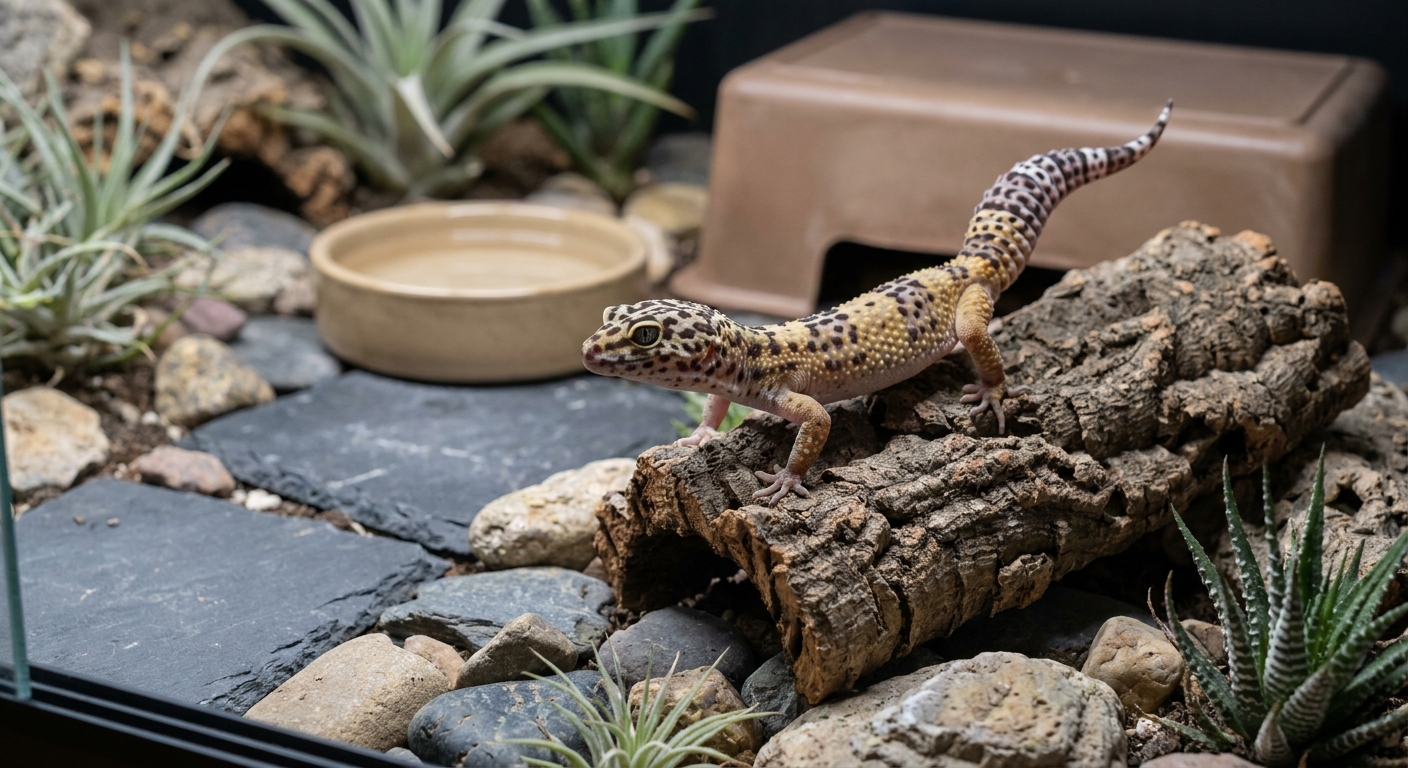
Leopard geckos cannot vocalize beyond an occasional chirp, so almost everything they communicate happens through body language. Reading tail, eye, and posture signals correctly turns guesswork into informed care. Most behavioral mysteries (why the gecko is hiding more, why it stopped eating, why it suddenly bit the tongs) become obvious once you can interpret the four or five postures and tail movements that cover 95 percent of leopard gecko communication.
infoQuick Answer
A relaxed leopard gecko has a flat tail, half-closed eyes, and slow exploratory movement. A slow tail wag means hunting focus or curiosity. A fast tail rattle means defensive warning, back off. Glass surfing or pacing means stress, usually environmental. Tail held high and stiff means high alert. Gaping or hissing means extreme fear, end any handling immediately.
Tail Signals: The Single Most Important Cue
A leopard gecko tail communicates more than any other body part. Tail position, movement speed, and rigidity together signal stress, hunting focus, breeding interest, or readiness to drop the tail in self-defense. Learning to distinguish between a slow hunting wag and a fast defensive rattle is the single most useful skill in reading gecko body language.
- check_circleFlat, relaxed tail held against the substrate: calm and content
- check_circleSlow, side-to-side wag with lifted tail: hunting focus, the gecko has spotted prey
- check_circleSlow wag during introduction to another gecko: social or breeding interest
- check_circleRapid, vibrating rattle (similar to a rattlesnake): defensive warning, often precedes a bite or flee response
- check_circleTail held high and stiff above the body: high alert, gecko is assessing a threat
- check_circleTail tucked tightly under body: extreme fear, common in new geckos before they settle
- check_circleWiggling tip while body is still: prey-mimicry hunting display, especially in juveniles
Tail Rattling vs. Tail Wagging: Critical Difference
New keepers commonly confuse the slow hunting wag with the fast defensive rattle, and the response should be opposite for each. The hunting wag is a positive signal that means the gecko is engaged and ready to strike at prey. The defensive rattle is a clear back-off warning, and continuing to interact through it will likely result in a bite or a tail drop.
Speed is the giveaway. A hunting wag has a deliberate, slow rhythm of roughly one cycle per second. A defensive rattle is fast, vibratory, and visibly higher-pitched in motion (often producing a faint sound against the substrate). When in doubt, freeze and let the gecko decide what happens next.
Eye Behavior and Pupil Cues
Leopard gecko eyes provide a quick read on alertness and stress. Unlike many lizards, leopard geckos have eyelids and blink, which gives keepers a useful set of additional cues to work with.
- check_circleHalf-closed or fully closed eyes: relaxed, sleepy, or comfortable
- check_circleWide-open and staring: alert, hunting, or assessing a perceived threat
- check_circleConstricted vertical pupils in low light: heightened arousal or stress
- check_circleFrequent blinking or slow blinks: comfortable, can be a relaxed acknowledgment
- check_circleOne eye held closed in normal lighting: possible eye irritation or shed stuck on eyelid, inspect closely
- check_circleCloudy gray eyes 1-3 days before a shed: normal pre-shed condition, do not handle
Posture and Body Position
Whole-body posture rounds out the picture that tail and eye signals start. A relaxed gecko looks soft and low. A stressed or alert gecko looks tense and elevated.
- check_circleBelly flat against substrate, legs tucked: relaxed, often basking
- check_circleBelly slightly elevated, legs out, alert eyes: exploring or moderate interest
- check_circleStanding tall on stiff legs with arched back: high alert, often during territorial encounters
- check_circleFrozen completely still, head down: prey-detection hunting posture
- check_circleHead bobbing (males): territorial display or breeding interest
- check_circleSlow, deliberate stalk with lowered body: hunting in progress, do not interrupt
- check_circleGlass surfing (climbing along the glass repeatedly): chronic environmental stress
Stress Signals: When to Back Off
Stress in leopard geckos shows up in a few specific behaviors. The earlier you catch them, the easier the fix. Persistent stress for more than a few days suggests a husbandry problem, not a temperament issue.
- check_circleGlass surfing: usually wrong temperatures, too small enclosure, or new-gecko adjustment
- check_circleRefusing food for 5+ days in a healthy adult: stress, illness, or seasonal slowdown
- check_circleHiding 24 hours per day for several days: enclosure may feel exposed or temperatures may be off
- check_circleTail rattling at the keeper repeatedly: handling too soon or too often, slow down
- check_circleDefecating during handling: high stress response, end the session
- check_circleDropping the tail (autotomy): extreme stress event, expect 2-4 weeks of recovery
Positive Signals: A Calm, Trusting Gecko
Recognizing what a happy gecko looks like is just as important as spotting stress. A bonded, well-acclimated gecko gives consistent, low-key signals that read as boredom rather than excitement, and that is exactly what you want.
- check_circleApproaching the front glass when you walk by, especially around feeding time
- check_circleEating from tongs without flinching at hand movement
- check_circleSitting calmly on a hand during handling, occasionally walking
- check_circleSleeping or basking with eyes half-closed in plain view
- check_circleSlow, exploratory movement around the enclosure during dawn and dusk
- check_circleDrinking from the water dish without scanning constantly for threats
Differences Between Males and Females
Sex affects a few specific behaviors but not the core stress signals. Males display some signaling that females rarely show, especially during breeding season or when housed near another male.
- check_circleMales head-bob more frequently, especially around mirrors or other males
- check_circleMales may tail-wag socially when introduced to females (do not house unsupervised)
- check_circleFemales lay infertile eggs without males present and may show pre-lay restlessness
- check_circleBoth sexes glass surf, refuse food, and tail rattle for the same stress reasons
- check_circleTwo males in one enclosure will fight; do not interpret early displays as bonding
Frequently Asked Questions
Why is my leopard gecko wagging its tail at me?expand_more
My leopard gecko keeps glass surfing. Is it stressed?expand_more
What does it mean when my leopard gecko closes one eye?expand_more
Is head bobbing in leopard geckos normal?expand_more
How can I tell if my gecko is happy versus just tolerating me?expand_more
Read the Whole Animal, Not Just the Tail
No single body language signal tells the whole story. A flat tail with wide-open eyes during handling means something different than a flat tail with half-closed eyes during basking. Read posture, tail, and eye signals together, factor in the husbandry context, and trust the consistent patterns more than one-off moments. A keeper who reads body language well rarely has a stressed gecko, because the small signs get acted on before they become big problems.