How to Handle a Leopard Gecko: Taming & Handling Guide (2026)
Build trust and safely handle your leopard gecko with our complete guide to taming, proper handling technique, and creating a bond with your pet.
Leopard Geckos Reptiles Team
Published
infoDisclosure: This post contains affiliate links. As an Amazon Associate we earn from qualifying purchases, at no extra cost to you.
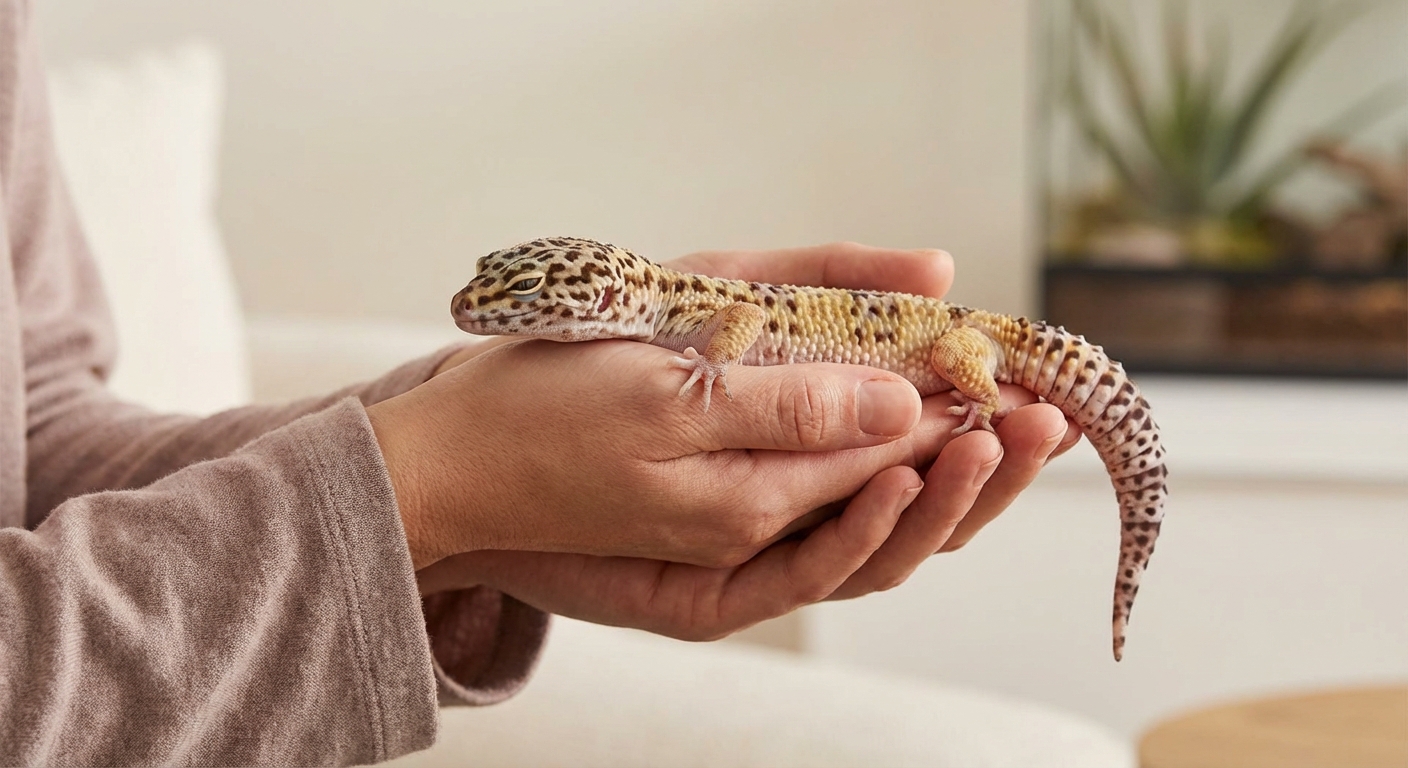
Leopard geckos are one of the most handleable reptiles, known for their docile temperament and tolerance of human interaction. However, proper handling requires patience, technique, and respect for your gecko boundaries. Rushing the process or using improper methods can damage trust and make your gecko defensive. This guide covers everything from initial taming to advanced handling.
infoQuick Handling Guidelines
Wait 1-2 weeks after bringing home a new gecko before handling. Start with 5-minute sessions, building to 10-15 minutes maximum. Support the body from below, never grab from above. Handle close to soft surfaces in case of drops. Wash hands before and after handling.
When NOT to Handle Your Leopard Gecko
Before covering how to handle, it is essential to know when handling should be avoided. Respecting these times builds trust and prevents stress-related health issues.
- check_circleFirst 1-2 weeks in a new home: Allow acclimation to new environment
- check_circleDuring or immediately after shedding: Skin is sensitive and handling causes discomfort
- check_circleAfter eating: Wait 24-48 hours for digestion before handling
- check_circleWhen showing stress signs: Vocalizing, tail waving, attempting to flee
- check_circleDuring brumation: Geckos in winter slowdown need rest, not stimulation
- check_circleWhen ill or injured: Stress from handling can worsen health conditions
Building Trust Before Handling
Taming begins before you ever pick up your gecko. The goal is to teach your gecko that your presence is not threatening and may even be associated with positive experiences like food.
Week 1: Presence Conditioning
Spend time near the enclosure without reaching in. Talk quietly to your gecko. Perform normal maintenance (feeding, water changes) calmly. Let your gecko observe you and learn you are not a predator. Avoid sudden movements or loud noises near the enclosure.
Week 2: Hand Introduction
Place your hand flat on the enclosure floor, palm down, without reaching toward your gecko. Let the gecko approach and investigate on its own terms. Do not grab or chase. Remove your hand slowly after a few minutes. Repeat daily, building the association that your hand is safe.
Week 3: First Touches
When your gecko willingly approaches your hand, gently touch its side with one finger. If it remains calm, you can try encouraging it to walk onto your palm. Always let the gecko walk onto your hand rather than grabbing it. End sessions on a positive note, before stress signs appear.
lightbulbFood Association
Hand-feeding insects with feeding tongs creates positive associations with your presence. Many geckos become excited to see their owner because they associate handling time with treats. Use this to accelerate the taming process.
Proper Handling Technique
How you physically handle your gecko matters greatly for safety and trust. Improper handling can injure your gecko or cause defensive behaviors like tail dropping.
How to Pick Up Your Gecko
- check_circleApproach from the side or front, not from above (above mimics predator attack)
- check_circleSlide your hand under the gecko body from the side
- check_circleSupport the full body including legs and tail
- check_circleScoop up rather than grab or pinch
- check_circleKeep your hand flat and let the gecko balance itself
- check_circleMove smoothly and avoid jerky motions
During Handling
Keep handling sessions short (5-10 minutes for beginners, up to 15 minutes for well-adjusted geckos). Sit on the floor or over a soft surface like a bed in case of jumps or falls. Let your gecko walk from hand to hand as it explores. Avoid restraining it tightly. Never grab or hold the tail.
warningNever Grab the Tail
Leopard geckos can drop their tails as a defense mechanism. While the tail regrows, the regenerated tail never looks the same as the original. Avoid grabbing, restraining, or putting pressure on the tail.
Recognizing Stress During Handling
Learning to read your gecko body language helps you end handling sessions before stress escalates. Watch for these signs and return your gecko to its enclosure when they appear.
- check_circleVocalizing (squeaking or chirping): Distress signal, stop handling immediately
- check_circleTail waving or rattling: Warning sign, similar to rattlesnake behavior
- check_circleAttempting to run or jump away: Gecko wants to escape
- check_circleGaping mouth or biting: Defensive behavior indicating high stress
- check_circleFreezing completely: Fear response, often precedes flight attempt
- check_circleDefecating: Stress response to empty weight for escape
Children and Leopard Gecko Handling
Leopard geckos can be appropriate pets for children with proper supervision. However, young children should always be supervised during handling, and expectations should be set about gentle, calm interaction.
- check_circleChildren under 6: Observation only, no direct handling recommended
- check_circleChildren 6-10: Supervised handling while seated on the floor
- check_circleChildren 10+: Can learn proper techniques with initial supervision
- check_circleAll ages: Wash hands before and after, no kissing or face contact
- check_circleTeach: Gentle handling, recognizing stress signs, respecting the gecko
Common Handling Mistakes to Avoid
- check_circleGrabbing from above: Triggers predator response, use side approach
- check_circleHandling too soon: New geckos need 1-2 weeks to acclimate first
- check_circleSessions too long: 15 minutes maximum, less for new geckos
- check_circleForcing interaction: Let the gecko choose to engage
- check_circleHandling after feeding: Wait 24-48 hours for digestion
- check_circleIgnoring stress signs: Continuing handling when gecko is distressed
- check_circleHandling while shedding: Uncomfortable and damages trust
- check_circleSqueezing or restraining: Causes panic and potential injury
Frequently Asked Questions
How long does it take to tame a leopard gecko?expand_more
My leopard gecko bites me. What should I do?expand_more
Can I handle my leopard gecko every day?expand_more
My leopard gecko runs away when I try to pick it up. Is this normal?expand_more
Should I handle my leopard gecko at night when it is most active?expand_more
Building a Lasting Bond
Handling should be a positive experience for both you and your gecko. Take the time to build trust gradually, use proper technique, respect your gecko signals, and keep sessions appropriately brief. With patience, most leopard geckos become calm, tolerant, and even seem to enjoy interaction with their owners. The bond you build through respectful handling makes leopard geckos one of the most rewarding reptiles to keep.