How to Bond With a Leopard Gecko: Trust-Building Guide (2026)
Leopard geckos do not bond like dogs, but they absolutely learn to recognize and trust their keepers. Here is the patient, science-based way to build that relationship.
Leopard Geckos Reptiles Team
Published · Last updated
infoDisclosure: This post contains affiliate links. As an Amazon Associate we earn from qualifying purchases, at no extra cost to you.
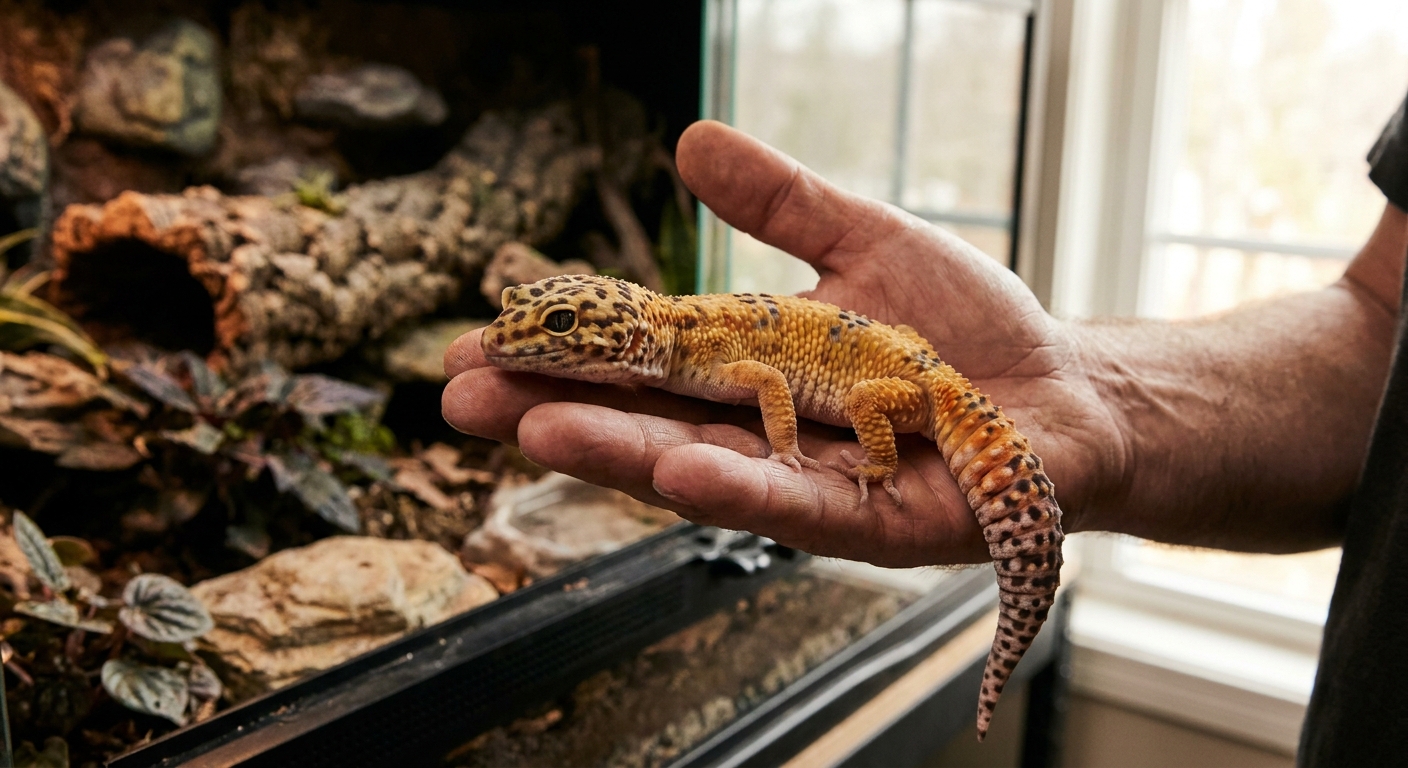
Leopard geckos can absolutely bond with their keepers, just not in the way a dog or a cat does. They learn to recognize the smell, sight, and routine of a familiar caretaker, and a properly tamed gecko will come to the front of the enclosure at feeding time, sit calmly during handling, and show none of the stress signals (tail rattling, glass surfing, refusing food) of an untamed animal. The path to that calm, trusting state is straightforward but requires patience: most healthy adult geckos take 3 to 6 weeks to fully acclimate, and some shy individuals take 2 to 3 months.
infoQuick Answer
To bond with a leopard gecko, give the new gecko 7-14 days of zero handling to settle in, then start with brief enclosure visits (hand resting in tank, no contact). Add hand-feeding with feeding tongs at week 2-3. Begin short handling sessions of 5-10 minutes at week 3-4 once the gecko approaches your hand without fleeing. Keep a consistent daily routine, never grab from above, and let the gecko set the pace.
Do Leopard Geckos Actually Bond With Their Owners?
Leopard geckos do not feel affection or attachment in the mammalian sense. Their brains lack the limbic structures that produce social bonding chemicals like oxytocin in dogs and cats. What they do have is excellent associative learning. A gecko learns very quickly that a specific person, scent, or routine reliably brings food, warmth, and no danger. That recognition produces behavior that looks remarkably like trust.
In practical terms, a bonded gecko will track your movements through the glass, walk onto your hand voluntarily, eat from feeding tongs without flinching, and remain calm during handling. An unbonded gecko will hide, drop its tail when grabbed, refuse food in your presence, or display defensive behaviors like tail rattling and gaping. The behavioral difference is real even if the underlying emotion is not.
Week 1: Settle-In Period (No Handling)
The single biggest mistake new keepers make is handling a fresh gecko too soon. A leopard gecko being moved from a breeder or pet store to a new enclosure has just experienced the most stressful event of its life. Cortisol levels stay elevated for roughly 7 to 10 days. Handling during this window cements the association of humans with stress and adds weeks to the bonding timeline.
- check_circleSet up the enclosure fully before the gecko arrives, including correct temperatures, hides, and water
- check_circlePlace the gecko gently inside and close the lid; do not stare or hover
- check_circleLimit interaction to spot-cleaning and feeding for the first 7 days
- check_circleDrop feeders into the enclosure rather than offering by hand at this stage
- check_circleExpect reduced appetite for 3-7 days; this is normal acclimation, not illness
- check_circleWatch for healthy signs: alert eyes, normal poop, exploring at night, basking on the warm side
Weeks 2-3: Presence and Hand-Feeding
Once the gecko is eating consistently and settled into a routine, the next step is associating your presence with positive experiences. The goal here is not to handle the gecko, just to teach it that the giant warm shape that opens the lid is a source of food, not a predator.
- check_circleOpen the enclosure slowly and rest your hand inside, palm down, for 30-60 seconds without moving toward the gecko
- check_circleRepeat this 1-2 times per day for several days; let the gecko approach or ignore on its own terms
- check_circleOnce the gecko stops fleeing your hand, switch to hand-feeding with soft-tipped feeding tongs
- check_circleOffer one mealworm or dubia roach at a time, holding it 4-6 inches from the gecko
- check_circleStay still while the gecko approaches and takes the food; do not move the tongs toward the gecko
- check_circleHand-feeding 2-3 times per week is the single fastest way to build trust
Weeks 4+: Short Handling Sessions
Once the gecko reliably approaches your hand for feeding, you are ready to begin gentle handling. The goal of early handling sessions is to keep them short, low-stress, and predictable. A 5-minute session that ends with the gecko calm is worth more than a 20-minute session that ends with a tail drop.
- check_circleAlways approach from the side, never from directly above (this triggers a predator response)
- check_circleSlide one hand under the gecko from below; let it walk onto your palm voluntarily
- check_circleKeep your hand low to the substrate so a startled jump is only a few centimeters
- check_circleLimit the first session to 2-5 minutes; build up to 10-15 minutes over 2-3 weeks
- check_circleSit on the floor over a soft surface (a bed or carpet) so any drop is safe
- check_circleEnd the session before the gecko gets stressed; pre-empt fight or flight
Stress Signals to Watch For
A bonded gecko looks bored. A stressed gecko gives clear behavioral signals, and learning to read them is the difference between trust-building and trust-breaking. Stop handling immediately and return the gecko to its enclosure if you see any of the following.
- check_circleTail rattling or wagging vigorously: defensive warning, often before a bite
- check_circleTail held high and stiff above the body: heightened alert
- check_circleGaping mouth or hissing: extreme fear or aggression
- check_circleFrantic running or jumping: flight response, gecko is overstimulated
- check_circleGlass surfing for hours after handling: chronic stress from over-handling
- check_circleRefusing food for more than 5 days after handling: stop handling for 2 weeks and reset
- check_circleTail drop attempts: never grab the tail; always support from below
Will My Gecko Recognize Me?
Yes. Leopard geckos use sight, scent, and routine to differentiate between caretakers. Studies on similar lizard species show they can distinguish between individual humans by visual silhouette and chemical cues from skin. Many keepers report their geckos behaving differently around strangers, often hiding more or rejecting food when handled by an unfamiliar person.
You can reinforce recognition by being the consistent caretaker for at least the first 2-3 months. Wearing the same general type of clothing during handling sessions, using the same hand, and keeping a consistent routine all help the gecko build a reliable mental model of safe human presence.
When to Take a Hands-Off Approach
Some geckos never become handling-loving and that is fine. Shy individuals, juveniles under 6 months, gravid females, and geckos in shed all benefit from minimal handling. A gecko can have a wonderful 15-20 year life as a calm display animal that you observe and feed without ever sitting in your palm. The friendliest relationship is sometimes the most respectful one.
Frequently Asked Questions
How long does it take to bond with a leopard gecko?expand_more
Can I bond with my leopard gecko if I got it as an adult?expand_more
My leopard gecko ignores me. Did I do something wrong?expand_more
Should I let my gecko explore outside the tank to bond?expand_more
Can two people bond with the same gecko?expand_more
Patience Is the Whole Strategy
Bonding with a leopard gecko is mostly an exercise in restraint. Give the new gecko time to settle, build positive associations through hand-feeding, keep handling sessions short and predictable, and read the body language honestly. The result is a calm, recognizable, trusting animal that will share your home for 15 to 20 years. The keepers whose geckos seem the friendliest are almost always the ones who handled them the least in the first month.