Why Is My Leopard Gecko Glass Surfing? Causes & Solutions
Understand why your leopard gecko is glass surfing and learn how to identify and fix the underlying causes of this behavior.
Leopard Geckos Reptiles Team
Published
infoDisclosure: This post contains affiliate links. As an Amazon Associate we earn from qualifying purchases, at no extra cost to you.
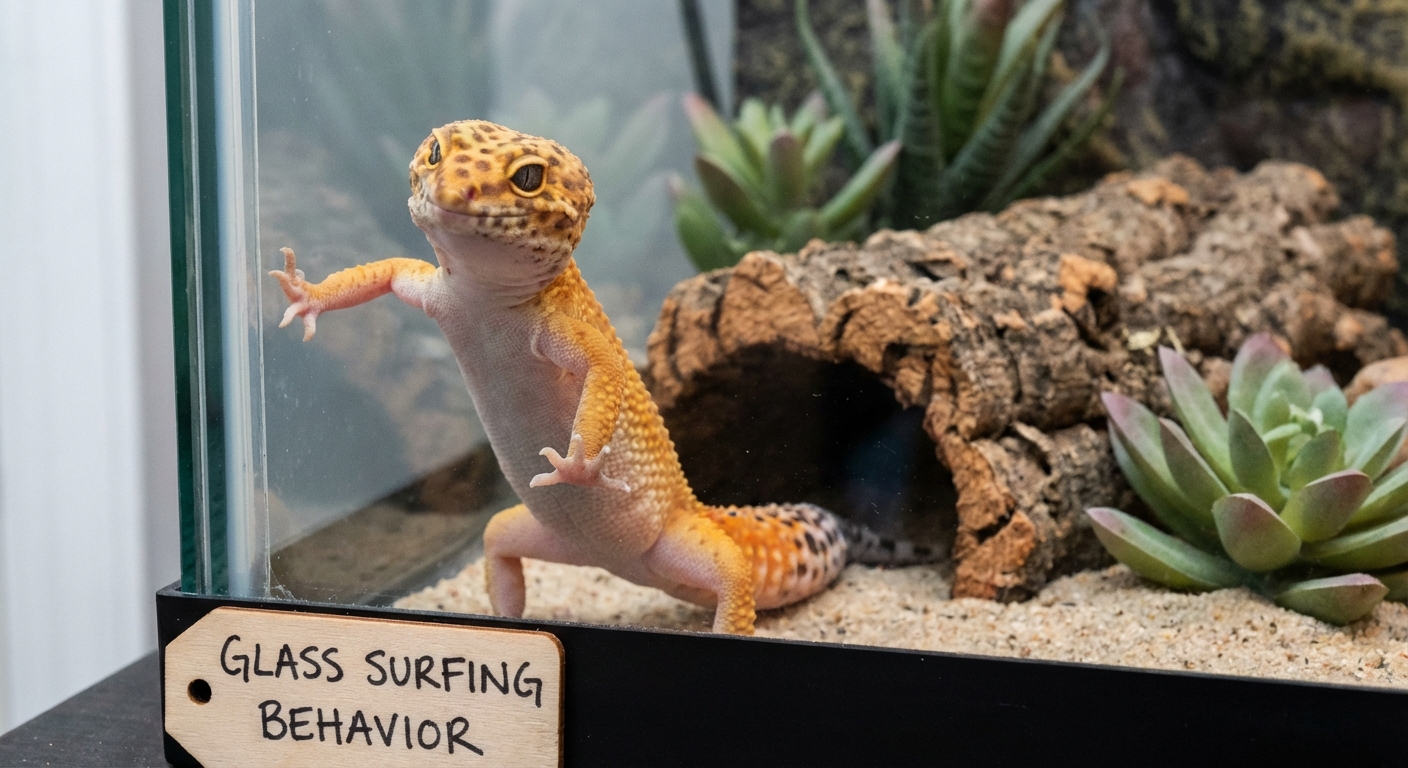
Glass surfing is when your leopard gecko repeatedly climbs, scratches, or pushes against the glass walls of the enclosure. Occasional exploration is normal, but persistent glass surfing indicates something is wrong. This guide explains the common causes and how to resolve them.
infoQuick Answer
Leopard geckos glass surf due to: enclosure too small, incorrect temperatures, stress, seeing their reflection, wanting to explore, or hormonal/breeding behavior in females. Check husbandry first (temps, tank size), then consider environmental factors and stress sources.
Common Causes of Glass Surfing
Enclosure Too Small
Geckos in tanks that are too small often glass surf because they want more space. A 10-gallon tank is insufficient for adults. Upgrade to at least 20 gallons, ideally 40 gallons, and glass surfing often stops.
Temperature Problems
If the tank is too hot, the gecko tries to escape. If too cold, it may seek warmth outside the tank. Verify temperatures with digital thermometers. Basking should be 88-92°F, cool side 75-80°F.
Seeing Reflection
Some geckos see their reflection in the glass and think it is another gecko invading their territory. Adding backgrounds to the back and sides of the tank eliminates reflections and often stops this behavior.
New Environment Stress
New geckos often glass surf while adjusting to their environment. This typically resolves within 2-4 weeks as they acclimate. Minimize handling during this period and ensure husbandry is correct.
Breeding Hormones (Females)
Female leopard geckos, especially in spring, may glass surf due to hormonal drives to find mates or lay eggs. This is normal seasonal behavior. Ensure she has a proper lay box with moist substrate even if she has never bred.
Desire to Explore
Some geckos are simply curious and want to explore beyond their enclosure. This is more personality than problem. Occasional supervised out-of-tank time can help satisfy this drive, but never free-roam unsupervised.
How to Stop Glass Surfing
- check_circleVerify temperatures are correct with digital thermometers
- check_circleUpgrade to a larger enclosure if currently undersized
- check_circleAdd background to tank sides to eliminate reflections
- check_circleAdd more hides and enrichment to make the enclosure more engaging
- check_circleEnsure adequate hiding spots (minimum 3 hides)
- check_circleProvide a lay box for females even without breeding
- check_circleBe patient with new geckos during acclimation period
- check_circleConsider supervised exploration time if gecko is curious personality
When Glass Surfing Is Normal
Brief, occasional glass surfing is not concerning. Geckos naturally explore their environment. Concern arises when the behavior is constant, frantic, or accompanied by other stress signs. A few minutes of exploration at dawn or dusk is typical gecko behavior.
Frequently Asked Questions
Does glass surfing hurt my leopard gecko?expand_more
My gecko only glass surfs at night. Is that normal?expand_more
Will a bigger tank stop glass surfing?expand_more
Addressing the Root Cause
Glass surfing is a symptom, not a problem in itself. By identifying and addressing the underlying cause, you can help your gecko settle into comfortable, relaxed behavior. Start with husbandry basics (temperature and tank size), then consider environmental factors like reflections and enrichment. Most glass surfing resolves once the cause is identified and corrected.