Can Leopard Geckos Swim? (And Should They?)
Leopard geckos can paddle in an emergency, but they are desert animals with no business in deep water. Here is when a shallow soak is appropriate and how to do it safely.
Leopard Geckos Reptiles Team
Published
infoDisclosure: This post contains affiliate links. As an Amazon Associate we earn from qualifying purchases, at no extra cost to you.
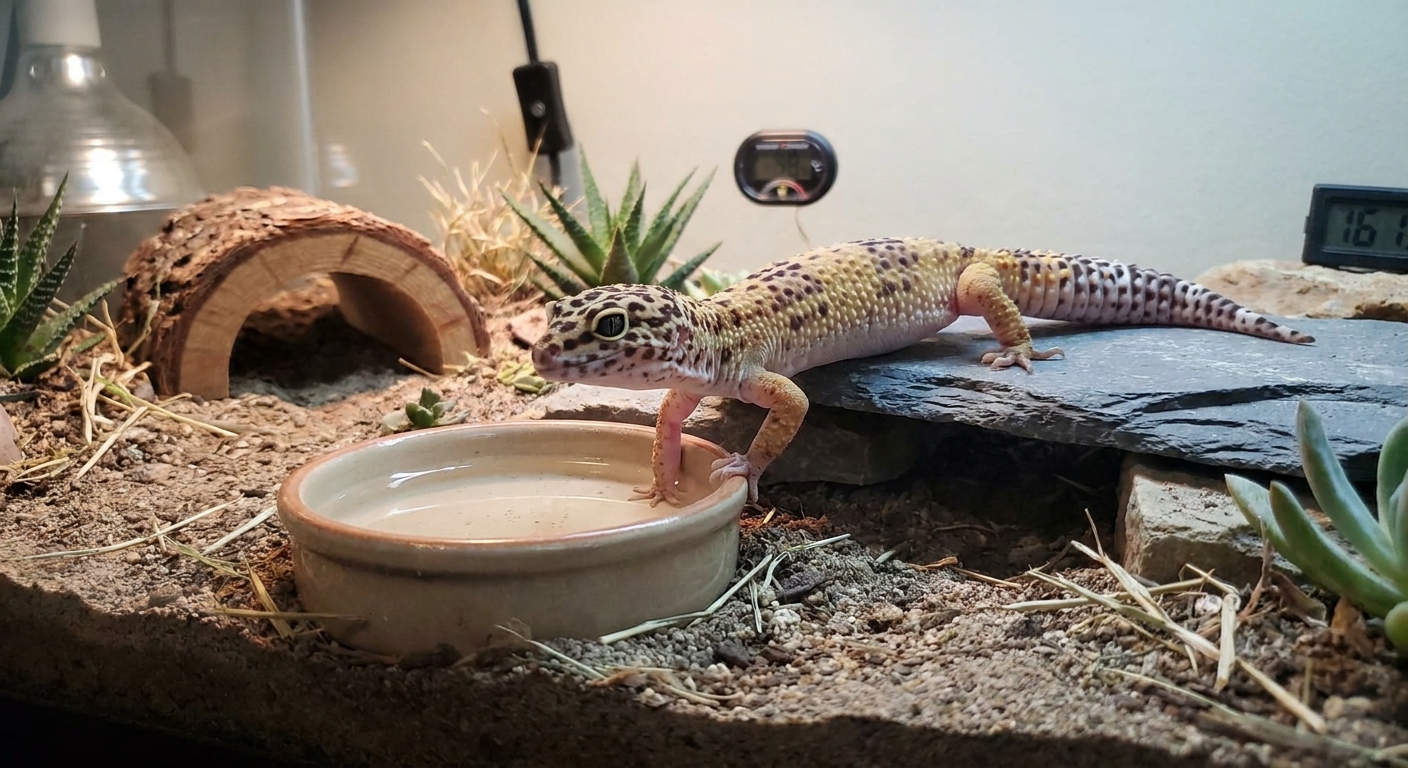
No, leopard geckos cannot swim in any meaningful sense and should never be placed in deep water. They come from arid, rocky habitat in Afghanistan, Pakistan, and northwest India where standing water is rare, and they have no adaptations for swimming. A leopard gecko dropped into water will paddle frantically to survive, but this is a panic response, not swimming, and water deeper than chin height creates real stress and drowning risk. The only appropriate use of water beyond a drinking dish is an occasional shallow, supervised soak to help with stuck shed.
infoQuick Answer
Leopard geckos are not natural swimmers. They can paddle briefly in an emergency, but deep water stresses them and can drown them. Skip baths entirely unless your gecko has stuck shed, then use a shallow, supervised soak in lukewarm 85-90°F (29-32°C) water no deeper than shoulder height for 10-15 minutes.
The Complete Answer
Leopard geckos evolved in dry scrubland and rocky desert, where they get most of their moisture from food, dew, and the occasional shallow puddle. Their bodies reflect that history. They have no webbing between their toes, a dense muscular build with a fat-storing tail that does not help with buoyancy, and no instinct to enter open water.
When a leopard gecko is placed in water deep enough to lift its feet off the bottom, it thrashes and paddles toward anything solid. Keepers sometimes mistake this for swimming or enjoyment. It is neither. It is a panic response that spikes stress, exhausts the animal quickly, and risks water entering the lungs. A tired gecko in deep water can drown in minutes.
For hydration, a leopard gecko needs only a shallow drinking dish and a humid hide. Most leopard geckos go their entire 15-20 year lives without ever needing a bath.
When Is a Shallow Soak Appropriate?
The one situation where water contact genuinely helps is stuck shed, especially on the toes, tail tip, or around the eyes. Retained shed can constrict blood flow and, in bad cases, cost a gecko toes. If a proper humid hide has not loosened the stuck skin, a brief soak can soften it enough to remove gently.
The rules for a safe soak are strict. Use lukewarm water at 85-90°F (29-32°C), never hot and never cold. Keep the depth shallow, no higher than the gecko's shoulders, so it can stand flat on the bottom with its head fully clear of the water. Limit the soak to 10-15 minutes, and stay within arm's reach the entire time. If stuck shed keeps recurring, the real fix is raising enclosure humidity support, not more baths. Persistent shedding problems are also worth a visit to a reptile veterinarian, since this guide is informational and does not replace professional care.
How to Give a Safe Soak
- check_circle1. Fill a small, escape-proof container with lukewarm 85-90°F (29-32°C) water, verified with a thermometer, not your hand
- check_circle2. Keep the water no deeper than the gecko's shoulders, shallow enough that it stands comfortably on the bottom
- check_circle3. Place the gecko in gently and keep one hand nearby, staying present for the entire soak
- check_circle4. Soak for 10-15 minutes, topping up with warm water if it cools
- check_circle5. After soaking, roll a damp cotton swab gently over the loosened shed, never pulling skin that resists
- check_circle6. Dry the gecko by letting it walk onto a paper towel, then return it to its warm enclosure
Common Mistakes
- check_circleDeep water: anything above shoulder height forces the gecko to paddle, which causes panic and drowning risk
- check_circleCold water: water below roughly 80°F (27°C) chills a leopard gecko fast, since reptiles cannot generate their own body heat
- check_circleHot water: anything above 92°F (33°C) risks burns and overheating in a small-bodied animal
- check_circleLeaving the gecko unsupervised: even shallow water is dangerous to an unattended, stressed animal
- check_circleRoutine baths: regular bathing strips natural skin oils, causes chronic stress, and treats a symptom while ignoring the humidity problem underneath
- check_circleForcing shed off: pulling skin that has not fully loosened can tear healthy skin and injure toes
warningNever Leave a Gecko Unattended in Water
A leopard gecko should never be left alone in water for any length of time, even in a shallow dish-depth soak. A startled gecko can flip, climb, or exhaust itself in seconds. Stay present and hands-close for the entire 10-15 minute soak, every time.
Frequently Asked Questions
Do leopard geckos like water?expand_more
How deep should a leopard gecko water dish be?expand_more
Can baby leopard geckos swim?expand_more
Should I give my leopard gecko regular baths?expand_more
My leopard gecko fell in water. What should I do?expand_more
The Bottom Line
So, can leopard geckos swim? They can paddle to survive, but they are desert animals with no real swimming ability, and deep water is a stress and drowning hazard. Keep water in their lives limited to a shallow drinking dish, a humid hide, and the rare 10-15 minute shoulder-deep soak at 85-90°F (29-32°C) for stubborn stuck shed. If shedding problems keep returning, fix the enclosure humidity and consult a reptile veterinarian rather than reaching for the bath.