Leopard Gecko vs Crested Gecko: Which Is Better for Beginners? (2026)
Both species top every beginner reptile list, but they have very different care needs, diets, and personalities. Here is the honest comparison to help you pick.
Leopard Geckos Reptiles Team
Published · Last updated
infoDisclosure: This post contains affiliate links. As an Amazon Associate we earn from qualifying purchases, at no extra cost to you.
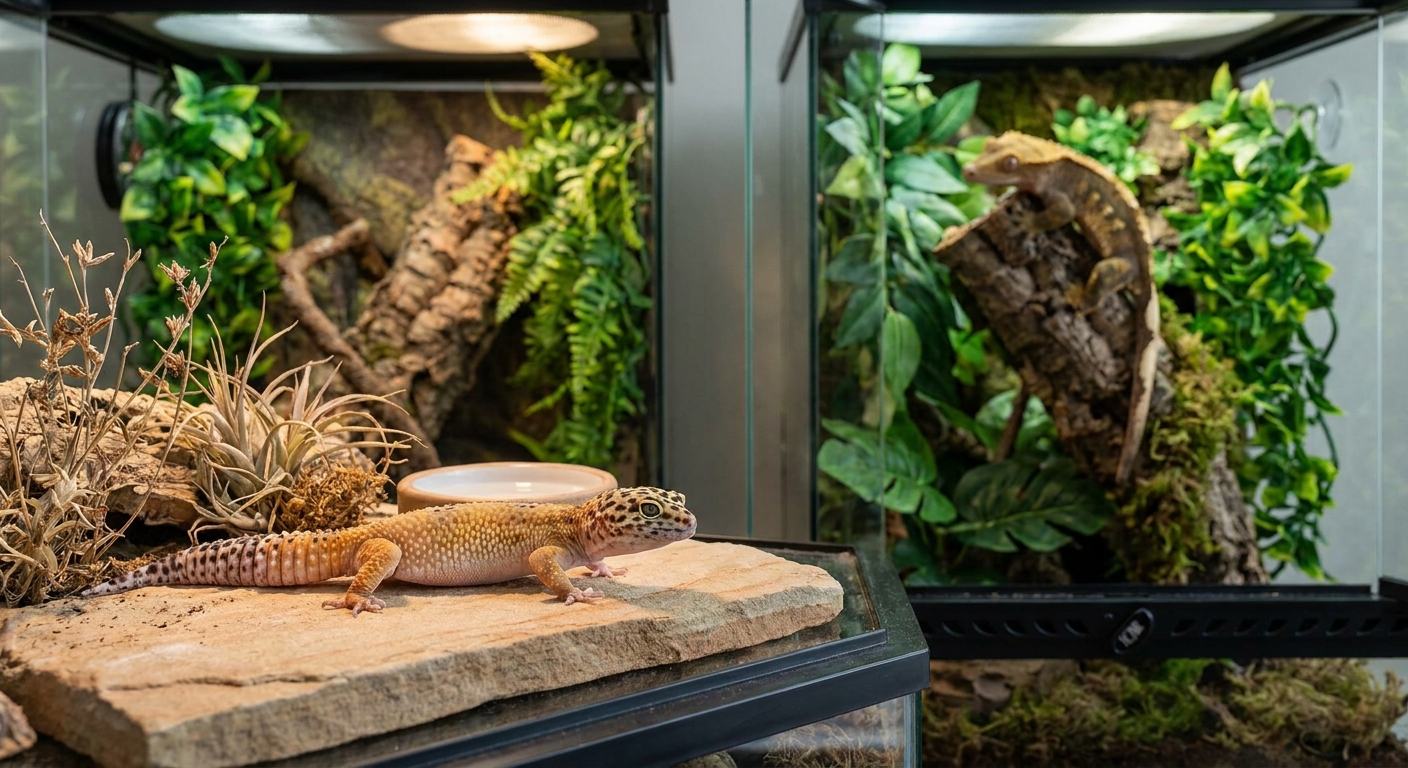
Leopard geckos and crested geckos are the two most popular beginner reptiles in North America, and any honest comparison comes down to a few specific differences in care, diet, and handling rather than one being objectively better. A leopard gecko is the easier pick for keepers who want a ground-dwelling pet that eats live insects and tolerates handling well. A crested gecko is the easier pick for keepers who prefer an arboreal display animal, dislike feeding live insects, and want a lower-temperature setup. Both species live 15 to 20 years with proper care, both stay small (7 to 10 inches), and both have similar startup costs.
infoQuick Answer
Pick a leopard gecko if you want a ground-dwelling, hand-tolerant pet that eats live insects and uses heat-based husbandry. Pick a crested gecko if you want an arboreal display animal that lives off a powdered fruit-and-insect diet, requires no extra heating in most rooms, and is mostly active at night. Both cost $30-$300 from breeders, both live 15-20 years, and both work for first-time reptile keepers.
At a Glance: Key Differences
- check_circleHabitat: leopard gecko needs ground-dwelling 36x18x18 inch enclosure; crested gecko needs vertical 18x18x24 inch enclosure
- check_circleHeating: leopard gecko requires 88-92°F (31-33°C) basking spot; crested gecko thrives at room temperature 72-78°F (22-26°C) with no heat lamp in most rooms
- check_circleDiet: leopard gecko eats live insects only (crickets, dubia roaches, mealworms); crested gecko eats prepared powdered diet (Pangea, Repashy) mixed with water, plus occasional insects
- check_circleHandling: leopard gecko tolerates handling very well, walks slowly on hands; crested gecko is jumpy and faster, more prone to escape attempts during handling
- check_circleActivity: both are crepuscular/nocturnal, most active dawn to dusk
- check_circleLifespan: both 15-20 years with proper care
- check_circleSize: leopard gecko 7-10 inches; crested gecko 7-9 inches including tail
- check_circleLighting: leopard gecko benefits from a 6-percent UVB tube; crested gecko does fine with ambient light, optional low-output UVB
Enclosure: Ground-Dwelling vs Arboreal
The biggest physical difference between these species is how they use space. Leopard geckos are terrestrial. They want floor space and barely climb. Crested geckos are arboreal. They want height, branches, and leafy cover and rarely use the ground. This shapes the enclosure decision before any other variable.
- check_circleLeopard gecko recommended enclosure: 36x18x18 inch front-opening glass terrarium with a long floor footprint
- check_circleCrested gecko recommended enclosure: 18x18x24 inch vertical terrarium with branches, vines, and live or fake plants
- check_circleSubstrate: leopard gecko uses slate tile or paper towel; crested gecko uses bioactive soil or paper towel with leaf litter
- check_circleHides: leopard gecko needs warm hide, cool hide, and humid hide on the ground; crested gecko needs cork bark or leafy cover at multiple heights
- check_circleDecor: leopard gecko enclosures are minimalist with low rocks and small caves; crested gecko enclosures are dense with vertical climbing structures
Diet: Live Insects vs Powdered Diet
Diet is the single biggest practical lifestyle difference. Leopard geckos are obligate insectivores and require a steady supply of live insects for their entire 15-20 year life. Crested geckos eat a commercially prepared powdered fruit-and-insect diet (the two main brands are Pangea and Repashy) mixed with water and offered in a small dish. Many crested gecko keepers go years without ever feeding a live insect.
- check_circleLeopard gecko: 4-7 insects every 2-3 days for adults, dusted with calcium and multivitamin
- check_circleCrested gecko: 1-2 teaspoons of mixed powdered diet 3-4 times per week, plus optional insects monthly
- check_circleFeeder logistics: leopard gecko requires storing live insects (cricket bin or dubia colony); crested gecko keepers store dry powder
- check_circleCost: leopard gecko feeders run $10-$25 per month; crested gecko powdered diet runs $5-$15 per month
- check_circleTravel-friendliness: crested gecko owners can leave for a long weekend with food in the dish; leopard gecko owners need someone to feed insects
Handling and Temperament
Both species are docile and rarely bite, but they handle very differently. Leopard geckos walk slowly across hands, often basking in palm warmth and tolerating long sessions. Crested geckos are faster, jumpier, and more prone to leap from a hand to a nearby surface, which can be risky on hard floors. New keepers often find crested geckos harder to manage during handling even though both species are equally non-aggressive.
- check_circleLeopard gecko handling: slow walking pace, sits calmly on hands, 10-15 minute sessions common
- check_circleCrested gecko handling: fast movement, frequent jumping, shorter sessions over a soft surface recommended
- check_circleTail drop risk: both species can drop their tails; the crested gecko tail does not grow back, the leopard gecko tail does
- check_circleBonding: leopard gecko more reliably learns to recognize its keeper; crested gecko tolerates handling but rarely seems to engage with people
- check_circleBest for children: leopard gecko is easier for supervised kid handling because of the slower pace and lower jump risk
Cost: Startup and Ongoing
Startup costs are similar with one important difference: the crested gecko avoids the largest single line item from leopard gecko setups, which is the heating and thermostat combination. Long-term feeding cost favors crested geckos. Long-term equipment cost favors leopard geckos because the simpler dry enclosure has less to replace.
- check_circleLeopard gecko startup: $250-$650 (enclosure, deep heat projector, thermostat, hides, substrate, feeders, gecko)
- check_circleCrested gecko startup: $200-$500 (enclosure, branches and plants, hides, bioactive substrate, diet, gecko)
- check_circleMonthly ongoing: leopard gecko $20-$40; crested gecko $10-$25
- check_circleAnnual bulb replacement: leopard gecko $20-$45; crested gecko typically none
- check_circleVet costs: similar across both species, $50-$120 for annual wellness visits
Which Is Better for You?
There is no universal answer, but the decision usually breaks down along three lines: how comfortable you are with feeding live insects, how much vertical display space you have, and whether you want a pet that interacts on a hand or one that puts on a show inside its enclosure. Both species reward patient, attentive keepers with 15-20 years of low-drama companionship.
- check_circleChoose leopard gecko if: you want to handle the animal regularly, dont mind feeding live insects, prefer a ground-level horizontal enclosure
- check_circleChoose crested gecko if: you prefer a hands-off display pet, dislike live feeders, have vertical display space, live in a cool home where heating equipment is unwelcome
- check_circleChoose either if: you want a quiet, long-lived first reptile that stays small and works with a moderate startup budget
- check_circleConsider neither if: you want a daytime-active pet (both species are crepuscular and largely nocturnal)
Frequently Asked Questions
Which is easier to care for, a leopard gecko or a crested gecko?expand_more
Can a leopard gecko and crested gecko live together?expand_more
Which one lives longer?expand_more
Which is friendlier with handling?expand_more
Which is cheaper to keep long-term?expand_more
Both Are Excellent First Reptiles
Most experienced reptile keepers keep both species and would not strongly steer a beginner toward one over the other. The right pick depends on your living situation, your comfort with live insects, and whether you want a hand-tolerant ground dweller or an arboreal display animal. Whichever you choose, plan for the full 15-20 year lifespan, budget for the recommended mid-range setup rather than the bare minimum, and enjoy a long, quiet relationship with one of the calmest beginner reptiles in the hobby.