Leopard Gecko for Beginners: First-Time Owner Complete Guide (2026)
Everything first-time leopard gecko owners need to know, from choosing your gecko to setting up the perfect habitat and establishing care routines.
Leopard Geckos Reptiles Team
Published
infoDisclosure: This post contains affiliate links. As an Amazon Associate we earn from qualifying purchases, at no extra cost to you.
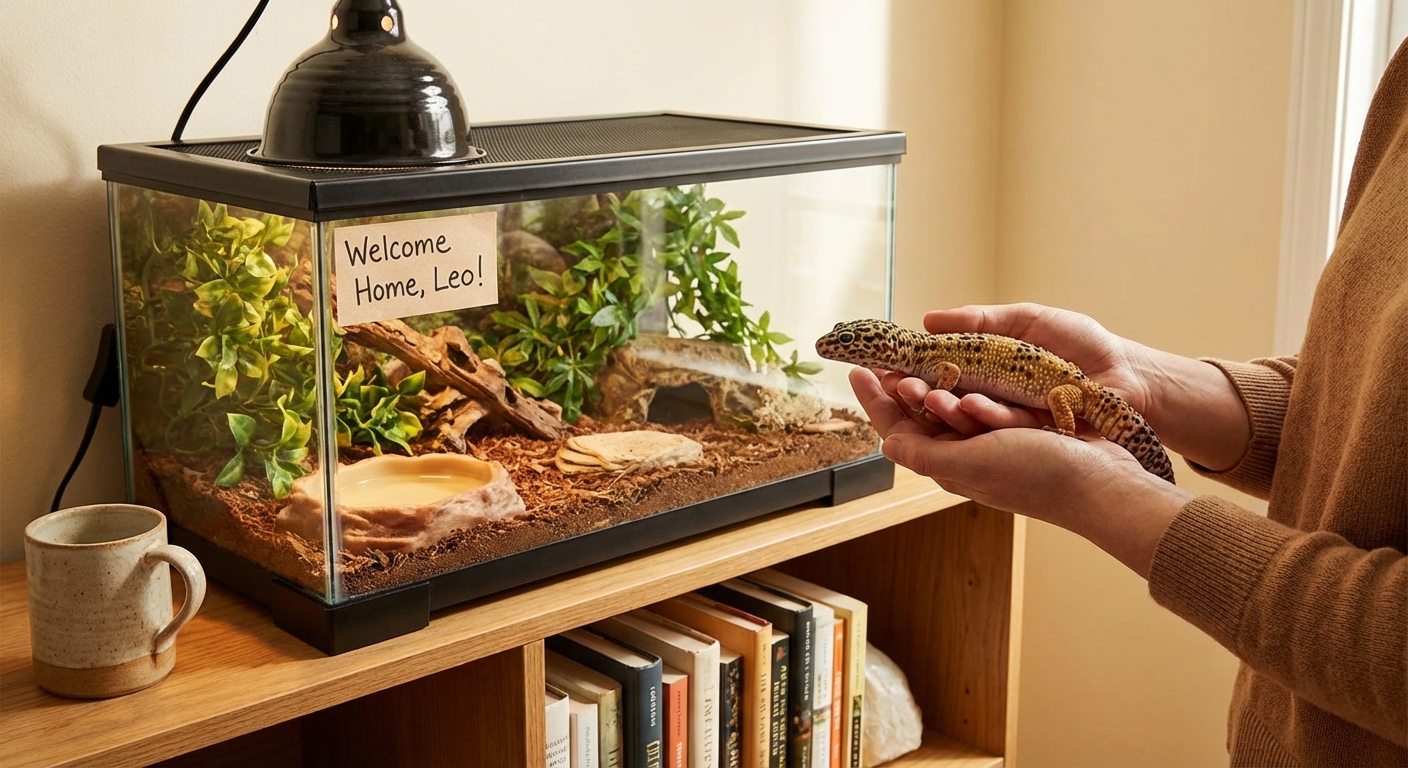
Congratulations on considering a leopard gecko as your first reptile! Leopard geckos are widely regarded as the best beginner reptile due to their docile temperament, manageable size, and relatively simple care requirements. This guide is written specifically for first-time owners, walking you through everything from choosing your gecko to mastering daily care routines.
infoBeginner Quick Facts
Leopard geckos live 15-20 years, grow to 8-10 inches, need a 20-40 gallon tank, eat live insects every 2-3 days (adults), require temperatures of 88-92°F on the warm side, and are primarily active at dawn/dusk. They are handleable, do not require UV lighting (though it helps), and are generally hardy with proper care.
Why Leopard Geckos Are Perfect for Beginners
- check_circleDocile temperament: Rarely bite, tolerate handling well once tamed
- check_circleSmall size: 8-10 inches fully grown, manageable for all ages
- check_circleSimple habitat: Ground-dwelling, no special climbing or misting needs
- check_circleHardy health: Forgiving of minor mistakes, not fragile
- check_circleNo UV required: Survive fine without special lighting (though beneficial)
- check_circleQuiet: No vocalizations, apartment-friendly
- check_circleLong lifespan: 15-20 years with proper care, true companions
- check_circleAffordable: Lower startup and ongoing costs than many pets
Choosing Your First Leopard Gecko
Signs of a Healthy Gecko
- check_circleClear, bright eyes with no discharge or cloudiness
- check_circlePlump tail (main fat storage, should be rounded, not thin)
- check_circleAlert and responsive when awake
- check_circleClean vent area (no stuck feces or discharge)
- check_circleSmooth skin without stuck shed, wounds, or lumps
- check_circleNo visible ribs or hip bones (indicates underweight)
- check_circleActive and curious when handled gently
Age Considerations
Juveniles (2-6 months) require more frequent feeding and are more delicate but tame more easily. Sub-adults (6-12 months) are a good middle ground. Adults (12+ months) have established personalities and are hardiest. For true beginners, a healthy sub-adult or adult is often the best choice for resilience and easier care.
Morph Selection
Normal (wild-type) leopard geckos are the hardiest and most affordable at $30-$50. Fancy morphs look stunning but cost more and some (like Enigma) carry genetic issues. For your first gecko, a normal or high yellow morph gives you a beautiful, healthy pet without premium pricing.
Before Bringing Your Gecko Home
warningCritical: Set Up First, Buy Gecko Second
Have your complete setup running for at least 24-48 hours before bringing home your gecko. This lets you verify temperatures are correct and stable. Never buy the gecko and equipment on the same day.
Essential Equipment Checklist
- check_circle20-40 gallon enclosure (40 gallon recommended, front-opening preferred)
- check_circleUnder tank heater OR overhead heat source (DHP, halogen)
- check_circleThermostat (mandatory for any heat source)
- check_circleTwo digital thermometers (warm side and cool side)
- check_circleInfrared temperature gun (for surface temps)
- check_circleThree hides minimum (warm, cool, humid)
- check_circleWater dish (shallow, sturdy)
- check_circleCalcium dish (small dish with pure calcium)
- check_circleSubstrate (paper towels for beginners, tile for long-term)
- check_circleSphagnum moss for humid hide

Phailozoo 120 Gallon PVC Terrarium (48x24x24)
Spacious 120-gallon PVC enclosure with front-opening doors, excellent ventilation, and stackable design. Perfect for adult leopard geckos who need room to explore.
- check_circleFront-opening sliding doors with handles
- check_circleTop screen ventilation
- check_circlePVC construction for humidity control
The First Week: Acclimation Period
The first week is critical. Your new gecko is stressed from the move and needs time to adjust. Resist the urge to handle, show off to friends, or constantly check on them. Patience now builds trust later.
- check_circleDay 1-3: Do not handle at all. Offer water but do not force food. Let gecko explore and hide.
- check_circleDay 3-5: Offer food (2-3 small insects). Do not worry if refused. Still no handling.
- check_circleDay 5-7: Continue offering food. Brief hand presence in tank (do not grab gecko).
- check_circleWeek 2: If eating well, start brief handling sessions (5 minutes). Build slowly.
lightbulbNormal New Gecko Behavior
It is normal for new geckos to hide constantly, refuse food for up to a week, and seem stressed. This is adjustment, not illness. Provide proper temperatures, fresh water, and privacy. Most geckos settle in within 1-2 weeks.
Daily and Weekly Care Routines
Daily Tasks (5 minutes)
- check_circleCheck temperatures (quick glance at thermometers)
- check_circleSpot clean any feces (leopard geckos usually pick one bathroom corner)
- check_circleRefresh water dish with clean water
- check_circleQuick visual check on gecko if visible (not hiding)
- check_circleFeed if feeding day (every other day for juveniles, every 2-3 days for adults)
Weekly Tasks (15-20 minutes)
- check_circleRe-moisten humid hide substrate
- check_circleDeeper clean of water dish (scrub and sanitize)
- check_circleCheck calcium dish and refill if needed
- check_circleExamine gecko more closely during handling (check toes, tail, body condition)
- check_circleRemove and replace any soiled substrate
Monthly Tasks
- check_circleDeep clean enclosure (remove everything, sanitize surfaces)
- check_circleReplace humid hide substrate entirely
- check_circleCheck heating equipment for proper function
- check_circleWeigh your gecko (optional but useful for health tracking)
- check_circleReview and restock supplies (feeders, supplements)
Feeding Your First Leopard Gecko
Leopard geckos eat live insects only. No fruits, vegetables, or pellet foods. The two most common feeders are crickets and dubia roaches. Both are excellent choices for beginners.
Feeding Schedule
- check_circleJuveniles (under 6 months): Feed daily, 5-7 small insects
- check_circleSub-adults (6-12 months): Feed every other day, 5-7 medium insects
- check_circleAdults (12+ months): Feed every 2-3 days, 5-10 large insects
Supplements
Dust feeder insects with calcium plus D3 powder at every feeding for geckos without UVB lighting. Also provide a small dish of pure calcium (no D3) in the tank for self-regulation. Give a multivitamin dusting once weekly.

Repashy Calcium Plus
All-in-one calcium and vitamin supplement that simplifies your supplementation routine.
- check_circleCalcium and vitamins combined
- check_circleCorrect Ca:P ratio
- check_circleIncludes vitamin D3
Common Beginner Mistakes to Avoid
- check_circleNo thermostat: The most dangerous mistake. Uncontrolled heat sources can burn geckos or start fires. Always use a thermostat.
- check_circleLoose substrate for juveniles: Young geckos are prone to impaction. Use paper towels or tile until 6+ months old.
- check_circleHandling too soon: Wait 1-2 weeks for acclimation. Rushing causes stress and setbacks in taming.
- check_circleWrong temperatures: Too cold causes digestive issues and illness. Verify temps with digital thermometers, not stick-on strips.
- check_circleCohabitation: Leopard geckos are solitary. Housing together causes stress, bullying, and injury. One gecko per tank.
- check_circleFeeding dead insects: Leopard geckos need live prey for nutrition and stimulation. Dead insects lose nutritional value quickly.
- check_circleSkipping supplements: Metabolic bone disease from calcium deficiency is preventable with proper supplementation.
- check_circleToo small tank: Start with at least 20 gallons, preferably 40. Tiny tanks make temperature gradients impossible.
Handling Your Leopard Gecko
Leopard geckos can become quite tame and tolerate regular handling, but it takes patience. The key is building trust gradually and never forcing interaction.
- check_circleWait until week 2-3 before first handling attempts
- check_circleStart with just placing your hand in the tank, palm down
- check_circleLet gecko approach you, do not grab
- check_circleFirst sessions: 5 minutes maximum, close to the ground or over soft surfaces
- check_circleScoop from below, never grab from above (predator trigger)
- check_circleSupport the full body including legs
- check_circleEnd on a positive note, before gecko shows stress
- check_circleGradually increase duration as gecko becomes comfortable
Troubleshooting Common Issues
Gecko is not eating
Check temperatures first (most common cause). Verify warm side is 88-92°F at the floor. New geckos may not eat for a week during adjustment. Try different feeder types. Ensure feeders are appropriately sized (no larger than the space between gecko eyes).
Gecko is hiding all the time
Completely normal. Leopard geckos are crepuscular and hide during the day. You will see more activity at dawn and dusk. Constant hiding in the first weeks is normal adjustment behavior.
Stuck shed on toes
Soak gecko in lukewarm water for 10-15 minutes to soften shed. Gently roll off with a damp cotton swab. Prevent future issues by keeping humid hide properly moist. Check toes after every shed.
Frequently Asked Questions
Are leopard geckos good for kids?expand_more
How often should I clean the tank?expand_more
Can I keep two leopard geckos together?expand_more
How long until my leopard gecko is tame?expand_more
Do leopard geckos need a heat lamp?expand_more
Welcome to Leopard Gecko Keeping
You are about to embark on a rewarding journey with one of the best pet reptiles available. Leopard geckos are forgiving of beginner mistakes, but taking time to learn proper husbandry from the start will give your gecko the best life possible. Set up your enclosure correctly, be patient during acclimation, establish consistent care routines, and you will be rewarded with a fascinating, long-lived companion. Welcome to the hobby!