Leopard Gecko Brumation: Signs, Safety & What to Do (2026)
Brumation is a natural winter slowdown for adult leopard geckos. Learn the signs, how to tell it apart from illness, and how to support your gecko safely.
Leopard Geckos Reptiles Team
Published
infoDisclosure: This post contains affiliate links. As an Amazon Associate we earn from qualifying purchases, at no extra cost to you.
medical_servicesVeterinary Disclaimer: This article is for educational purposes only and is not a substitute for professional veterinary advice. If your leopard gecko shows signs of illness, consult a qualified reptile veterinarian.
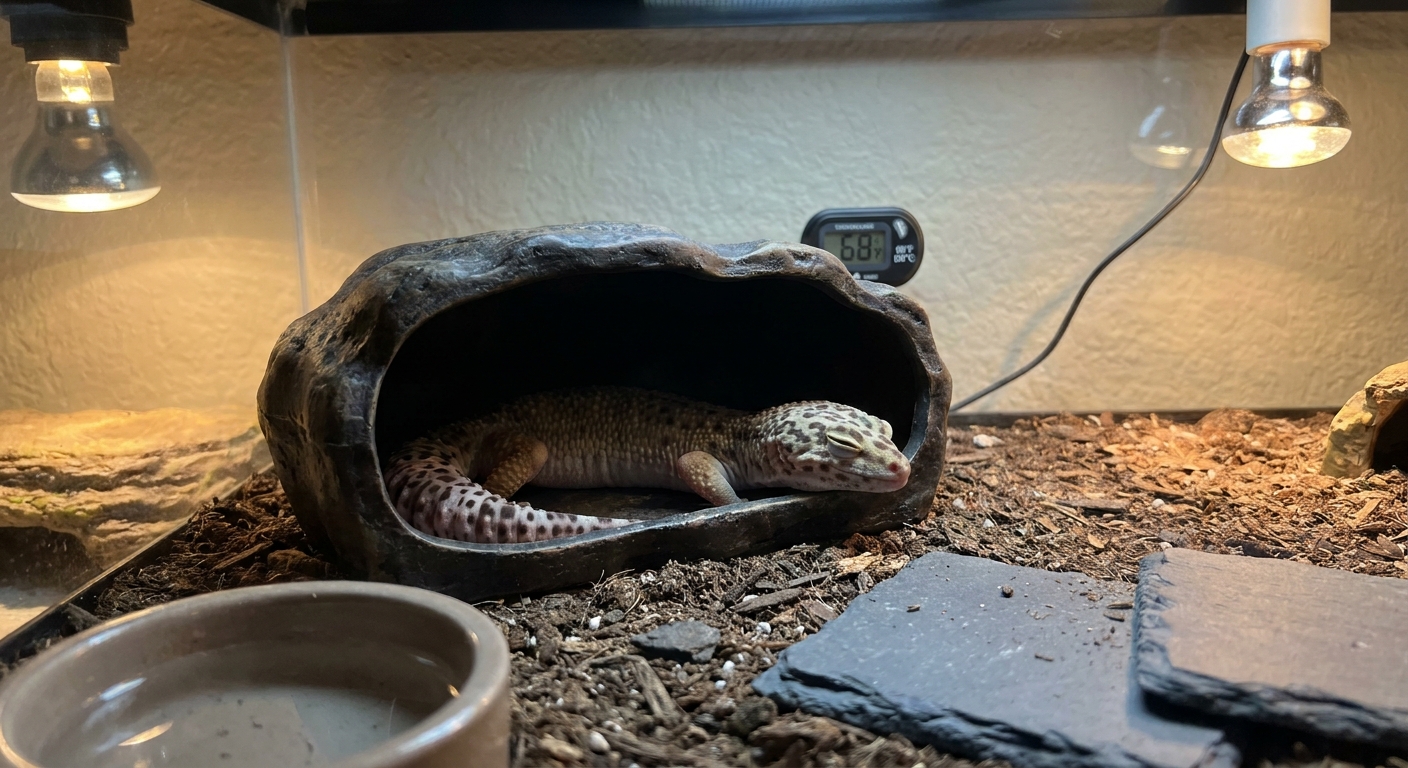
Leopard gecko brumation is a natural winter slowdown, not true hibernation. During brumation, an adult leopard gecko may eat far less, hide for weeks at a time, and spend most of the day asleep, typically between roughly December and February in the Northern Hemisphere. Healthy adults handle this seasonal rest without any problems.
The important exceptions are young and thin animals. Juveniles under one year old and underweight geckos do not have the fat reserves to skip meals safely, so they should be kept warm, fed on their normal schedule, and gently kept awake rather than allowed to slow down. This guide covers what brumation looks like, how to tell it apart from illness, and exactly what to do while your gecko rests.
infoQuick Answer
Brumation is a hibernation-like rest period in which adult leopard geckos become less active and may eat very little for two to eight weeks, usually in winter. Keep temperatures and lighting normal, refresh water daily, weigh your gecko weekly, and offer food every 7-10 days. A brumating gecko holds a stable weight. If your gecko loses more than about 10 percent of its body weight, contact a reptile veterinarian.
What Is Brumation?
Brumation is the reptile version of hibernation. In the rocky scrublands of Afghanistan, Pakistan, and northwest India where leopard geckos originate, winter brings cooler temperatures and fewer insects. Wild geckos respond by retreating into burrows, slowing their metabolism, and living off stored fat until conditions improve.
Unlike a true hibernator, a brumating reptile does not enter a deep, continuous sleep. Your leopard gecko will still wake periodically, shift between hides, and drink water. Its digestion and energy needs simply drop to a fraction of their summer levels, which is why a long stretch with little or no food does not harm a healthy adult.
Captive geckos often show a milder version of this behavior even when their enclosure stays warm. Shorter daylight hours coming through household windows, small seasonal dips in room temperature, and even barometric pressure shifts from winter weather systems can all signal that winter has arrived. Your gecko does not need to experience cold to sense the season.
A typical captive slowdown lasts anywhere from a few weeks to about three months. Some leopard geckos barely change their routine at all, while others refuse nearly every meal from December through February. Both patterns fall within the normal range for healthy adults.
What Are the Signs of Brumation?
Brumation tends to arrive gradually in late autumn or early winter rather than overnight. If your leopard gecko is sleeping a lot this winter, watch for this cluster of signs appearing together.
- check_circleAppetite drops sharply: your gecko may take one insect a week or refuse food entirely for several weeks
- check_circleMore hiding: it spends most of its time tucked into the cool hide or a favorite shelter, often for days at a stretch
- check_circleLess activity: evening exploring, glass climbing, and hunting behavior fade or stop
- check_circleStable weight: body weight holds steady or dips only slightly, because a slowed metabolism burns very little fat
- check_circleNormal hydration: eyes stay full and clear, skin stays supple, and the gecko still drinks occasionally
The last two points matter most. A slow, sleepy gecko that keeps its weight and hydration is almost certainly resting. A slow, sleepy gecko that is visibly shrinking is telling you something different, which brings us to the most important section of this guide.
Timing is a useful clue as well. Brumation behavior usually builds over two to four weeks as autumn ends, then holds steady through the coldest months. A sudden overnight change in appetite or energy in the middle of summer, by contrast, is much more likely to be a husbandry issue or a health problem than a seasonal rhythm.
Brumation or Illness? How to Tell the Difference
This is the question that worries keepers most, and for good reason. Several serious conditions, including internal parasites, impaction, and respiratory infections, can also cause a leopard gecko to stop eating and hide. The difference shows up in body condition, not behavior.
A brumating gecko looks like a healthy gecko that happens to be sleepy. Its tail stays plump, its eyes are bright and fully open when it wakes, its weight stays stable on the scale, and it takes occasional licks of water. It may ignore food, but when it does move, it moves normally.
Illness looks different. Watch for weight loss of more than about 10 percent, a visibly thinning tail, sunken or crusted eyes, and lethargy that continues even when the gecko is warm and awake. Open-mouth breathing, clicking or wheezing sounds, stuck shed on the toes or eyes, unusual droppings, or any swelling are also signals that this is not simple brumation.
A digital kitchen scale that reads in grams is the single most useful tool here. Most healthy adult leopard geckos weigh roughly 45-65 grams, so a 10 percent loss can be as little as five grams, which is far too small to judge by eye. Weekly weigh-ins turn a vague worry into a clear number you can act on.
warningWhen to Call a Reptile Vet
Weight is your red line. If your leopard gecko loses more than about 10 percent of its body weight, or shows sunken eyes, open-mouth breathing, stuck shed, or lethargy even when warm, stop assuming brumation and book an appointment with a reptile veterinarian. This guide is for informational purposes and does not replace professional veterinary advice.
Should You Let Your Leopard Gecko Brumate?
Pet keepers do not need to induce brumation. Deliberate cooling is a breeding technique used to cycle adults before pairing, and it carries risks that offer no benefit to a companion animal. There is no evidence that a pet leopard gecko must brumate to stay healthy or reach its full 15-20 year lifespan.
The practical approach is simple: keep everything normal and let your gecko decide. Maintain your usual warm-side temperatures, your usual 12-hour light cycle, and your usual feeding offers. If your adult gecko chooses to slow down anyway, allow the mild slowdown to happen rather than fighting it with extra heat, handling, or forced meals.
Some geckos should be actively discouraged from slowing down. Juveniles under 12 months old are still growing and need steady meals. Underweight adults, geckos recovering from illness, and females that recently laid eggs also lack the reserves to fast safely. For these animals, keep temperatures fully stable, continue regular feeding, and speak with a reptile veterinarian if appetite does not return.
How to Support a Brumating Gecko
Once you are confident your adult gecko is brumating rather than sick, your job becomes light-touch monitoring. Follow these steps until appetite returns in late winter or early spring.
- check_circleKeep water fresh: wash and refill the water dish daily, since brumating geckos still wake to drink
- check_circleWeigh weekly: record the weight in grams on the same day each week and watch the trend, not single readings
- check_circleOffer food every 7-10 days: present two or three insects in the evening, then remove uneaten prey after 15-20 minutes
- check_circleDo not force-feed: forcing food into a gecko with a slowed digestive system causes stress and can do real harm, so leave assisted feeding to a reptile veterinarian
- check_circleKeep husbandry normal: maintain the usual light cycle, warm hide, humid hide, and clean enclosure so your gecko can warm up whenever it chooses
- check_circleKeep notes: jot down weights, meals taken, and sheds, so you have a clear history if you ever need veterinary help
Resist the urge to dig your gecko out of its hide for daily checks. A quick visual once a day and a gentle weekly weigh-in provide all the information you need while letting the animal rest undisturbed.
lightbulbMake Weigh-In Day a Habit
Pick one day of the week, such as Sunday evening, and weigh your gecko at the same time each week. Consistent timing removes the normal daily variation from meals and droppings, so the trend on your chart reflects real body condition rather than noise.
What Happens When Brumation Ends?
Appetite usually returns gradually between late February and April as days grow longer. Your gecko will start emerging in the evening again, show hunting interest, and accept a few insects at a time. Let it set the pace rather than offering large meals immediately.
Start with smaller feedings every two or three days for the first week or two, then return to your normal schedule once droppings look normal and enthusiasm is back. Many keepers also notice a shed shortly after brumation ends, followed by a stretch of strong appetite as the gecko rebuilds any small reserves it used over winter.
How to Keep Winter Temperatures Stable
Even during brumation, your leopard gecko needs the option to warm up and digest. Keep the warm-side floor at 88-92°F (31-33°C), the cool side around 70-77°F (21-25°C), and avoid letting the enclosure fall below 65°F (18°C) overnight. Winter is when heating equipment works hardest, and when unregulated heat sources are most likely to overshoot or fail.
A thermostat is the piece of equipment that makes winter heating safe. It holds your heat mat or heat lamp at a set temperature around the clock, protects your gecko from burns if the room warms up, and keeps the warm hide usable if the room cools down.

BN-LINK Digital Heat Mat Thermostat
Simple on/off probe thermostat that keeps heat mats in the safe range. An inexpensive safeguard every heat source needs.
- check_circleDigital display with day and night settings
- check_circle40-108°F (4-42°C) control range
- check_circleRemote probe sensor
Place the thermostat probe on the floor of the warm hide, and verify readings occasionally with an infrared temperature gun. If your home drops sharply at night in winter, this setup quietly compensates without any change to your routine.
Leopard Gecko Brumation FAQ
How long does leopard gecko brumation last?expand_more
Do all leopard geckos brumate?expand_more
Is brumation the same as leopard gecko hibernation?expand_more
Should I feed my leopard gecko during brumation?expand_more
When should I worry that it is illness instead of brumation?expand_more
The Bottom Line on Leopard Gecko Brumation
Leopard gecko brumation is a normal seasonal rhythm, not an emergency. A healthy adult that hides more, eats little, and holds a stable weight between December and February is doing exactly what its wild ancestors do every winter. Keep temperatures and lighting normal, refresh the water daily, weigh weekly, and offer food every 7-10 days.
Reserve your concern for the numbers that matter: weight loss beyond about 10 percent, sunken eyes, or lethargy that persists even when your gecko is warm. If your leopard gecko shows signs of illness, consult a reptile veterinarian. This guide is for informational purposes and does not replace professional veterinary advice.