Leopard Gecko vs Ball Python: Beginner Reptile Comparison (2026)
Both are top beginner reptiles but they could not be more different in size, diet, and care. Here is the practical comparison to help you choose.
Leopard Geckos Reptiles Team
Published · Last updated
infoDisclosure: This post contains affiliate links. As an Amazon Associate we earn from qualifying purchases, at no extra cost to you.
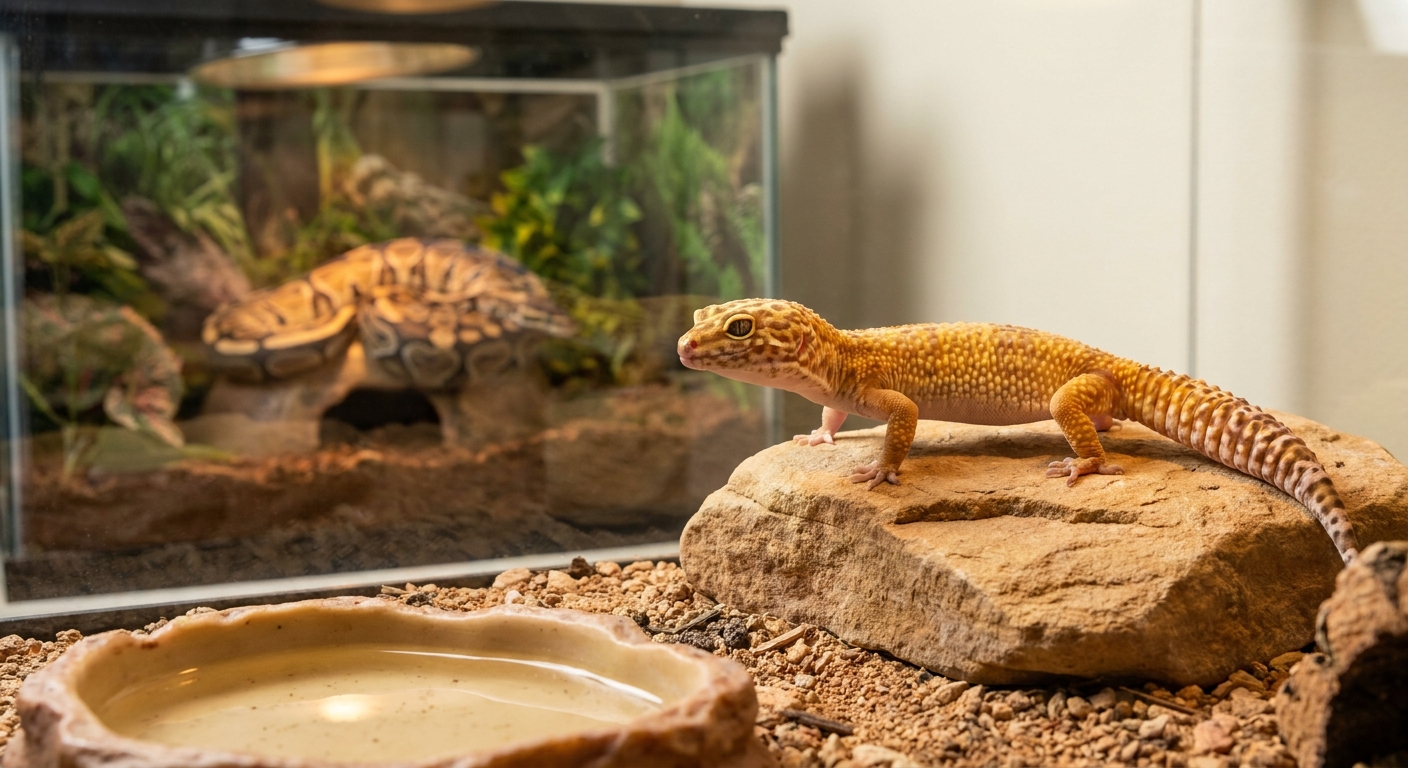
Leopard geckos and ball pythons are both top-tier beginner reptiles, but they are entirely different animals with different care, feeding, and ownership experiences. A leopard gecko is a small, hand-walkable lizard that eats live insects every few days. A ball python is a medium-sized constrictor that eats one frozen-thawed rodent every 1 to 2 weeks. Both live 20 to 30 years with proper care and both rank near the top of the docile-reptile list. The decision usually comes down to comfort with feeding rodents versus comfort with feeding insects, and whether you prefer a lizard that walks on you or a snake that coils on you.
infoQuick Answer
Pick a leopard gecko if you want a small (7-10 inch) lizard that eats live insects, basks on a hand, and is more visually active. Pick a ball python if you want a medium (3-5 foot) snake that eats one frozen-thawed rodent every 1-2 weeks, has a slower lifestyle, and tolerates long calm handling sessions. Both are docile and live 20-30 years. Startup costs are similar at $300-$700.
At a Glance: Key Differences
- check_circleSize: leopard gecko 7-10 inches; ball python 3-5 feet long, can reach 6 feet
- check_circleEnclosure: leopard gecko 36x18x18 inch terrarium; ball python 48x24x16 inch enclosure (4 feet long minimum for adults)
- check_circleDiet: leopard gecko live insects every 2-3 days; ball python one frozen-thawed rodent every 7-14 days
- check_circleHeating: leopard gecko 88-92°F (31-33°C) basking; ball python 88-92°F (31-33°C) warm side with 78-82°F (26-28°C) cool side
- check_circleHumidity: leopard gecko 30-40 percent ambient; ball python 50-60 percent (higher during shed)
- check_circleHandling: leopard gecko walks on hands; ball python coils around forearms and shoulders
- check_circleLifespan: leopard gecko 15-20 years; ball python 20-30 years (often longer)
- check_circleActivity: both crepuscular/nocturnal
Enclosure: Lizard vs Snake Requirements
Ball pythons need significantly more linear floor space than leopard geckos because they are 4-foot snakes that need to stretch out fully. A leopard gecko enclosure fits on a desktop. A ball python enclosure typically lives on the floor or on a sturdy stand. PVC enclosures are the preferred ball python setup for thermal stability; glass terrariums are fine but lose heat and humidity faster.
- check_circleLeopard gecko: 36x18x18 inch front-opening glass terrarium
- check_circleBall python: 48x24x16 inch PVC enclosure minimum for adults (4x2x16 inch high)
- check_circleSetup complexity: ball python needs locking lid (snakes are escape artists); leopard gecko less critical
- check_circleDecor: leopard gecko uses three ground-level hides; ball python needs warm and cool hides plus climbing branches
- check_circleSubstrate: leopard gecko uses tile or paper towel; ball python uses cypress mulch, aspen, or coconut fiber for humidity
Feeding: Insects vs Frozen Rodents
This is the single most polarizing difference between the two species. Leopard geckos eat 4-7 live insects every 2-3 days, which means you keep crickets or dubia roaches at home and dust them with supplements. Ball pythons eat one appropriately sized frozen-thawed rodent (mouse or small rat) every 7 to 14 days, which means you keep frozen rodents in a freezer and thaw them before feeding. Many keepers find one approach much more comfortable than the other.
- check_circleLeopard gecko: 4-7 dusted insects every 2-3 days, ~15-20 feedings per month
- check_circleBall python: 1 frozen-thawed rodent every 7-14 days, 2-4 feedings per month
- check_circleInsect logistics: keep a feeder bin, dust with calcium and multivitamin, gut-load weekly
- check_circleRodent logistics: keep frozen rodents in a freezer (separate from human food if possible), thaw in warm water 30-60 minutes before feeding
- check_circleCost: leopard gecko food $15-$30 per month; ball python food $10-$20 per month
- check_circleSqueamishness factor: many people find frozen mice harder to handle than live crickets; others feel the opposite
Handling and Temperament
Both species are widely considered among the most docile reptiles in the hobby. Ball pythons are slow, calm, and rarely bite when properly socialized. They wrap around forearms and shoulders during handling sessions, providing a unique sensory experience that no lizard delivers. Leopard geckos walk on hands and tolerate longer sessions but offer a more "lizard-y" handling experience without the wrap.
- check_circleBall python: slow, calm, coils gently around the arm; 20-40 minute handling sessions common
- check_circleLeopard gecko: walks on hands at a steady pace, basks on palm warmth, 10-20 minute sessions common
- check_circleBite risk: both very rare; ball python defensive bites usually don't break skin but leave teeth marks; leopard gecko bites are typically startling but harmless
- check_circleTail/body fragility: leopard gecko can drop its tail under stress; ball pythons do not autotomize
- check_circleWrap reflex: ball pythons constrict gently when held; new keepers sometimes find this unsettling
- check_circleChildren: leopard gecko easier for younger kids; ball python suitable for older kids with supervision
Cost: Startup and Long-Term
Startup costs are similar but ball pythons swing higher on enclosure cost (because of the larger PVC enclosure required for adults) and slightly lower on feeding cost (because of the bi-weekly feeding schedule).
- check_circleLeopard gecko startup: $250-$650 total
- check_circleBall python startup: $300-$700 total (the gecko itself is cheaper but enclosure costs more)
- check_circleMonthly ongoing: leopard gecko $20-$40; ball python $15-$30
- check_circleBall python morph pricing: normals $40-$80; designer morphs $200-$5,000+
- check_circleVet costs: roughly equivalent at $50-$120 for wellness visits; ball pythons may need imaging for digestion issues, slightly higher emergency potential
- check_circle15-year total: very similar across both species
Which Should You Pick?
The choice usually comes down to whether you want a lizard or a snake, and whether you are comfortable feeding rodents versus insects. Both species are excellent for first-time keepers, and both are forgiving enough that minor husbandry mistakes do not become emergencies.
- check_circleChoose leopard gecko if: you want a small, hand-walkable lizard, prefer feeding insects to rodents, have limited space, like more visible day-to-day activity
- check_circleChoose ball python if: you want a snake-handling experience, prefer infrequent feeding (every 1-2 weeks), have space for a 4-foot enclosure, value the longer lifespan
- check_circleChoose either if: you want a long-lived, docile reptile that tolerates regular handling
- check_circleConsider neither if: you cannot commit to live or frozen feeders; you want a daytime-active pet (both are nocturnal)
Frequently Asked Questions
Which is easier for a first-time reptile owner?expand_more
Can a leopard gecko and ball python live together?expand_more
Which lives longer?expand_more
Is it cheaper to feed a leopard gecko or a ball python?expand_more
Are ball pythons more dangerous than leopard geckos?expand_more
Two Great Picks, Very Different Experiences
Leopard geckos and ball pythons sit at the top of the beginner reptile list for good reason: both are docile, long-lived, and forgiving of small husbandry mistakes. The choice is more about taxonomic preference (lizard vs snake) and feeding comfort (insects vs frozen rodents) than about one being better than the other. Whichever you pick, plan for a 20-plus year commitment, set the husbandry up correctly, and enjoy one of the calmest pet relationships available in the hobby.