Leopard Gecko Temperament: What Are They Really Like? (2026)
Leopard geckos are docile, tolerant, and among the calmest pet lizards. Learn how their temperament works, how individual personalities vary, and how to read your gecko.
Leopard Geckos Reptiles Team
Published
infoDisclosure: This post contains affiliate links. As an Amazon Associate we earn from qualifying purchases, at no extra cost to you.
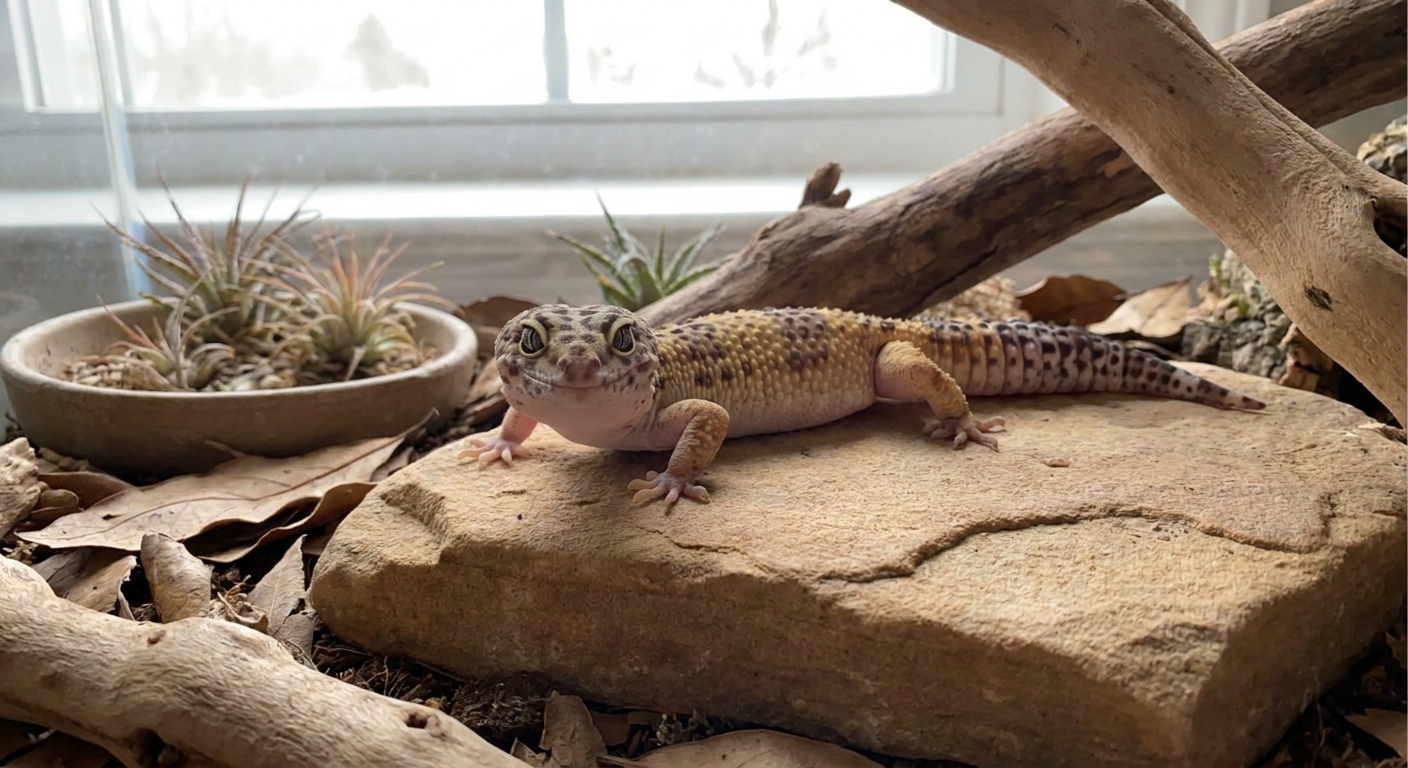
Leopard gecko temperament is docile, tolerant, and predictable, which makes them one of the calmest pet lizards available. Most healthy adults accept gentle handling without biting, tail waving, or attempts to flee. That said, temperament varies from gecko to gecko. Some individuals are bold and curious while others stay shy for their entire 15-20 year lifespan, and age, sex, and husbandry all influence how a particular animal behaves.
This guide breaks down what leopard geckos are really like as companions. You will learn where their calm nature comes from, how personalities differ between individuals, what turns a relaxed gecko defensive, and how to recognize when your gecko feels comfortable around you.
infoQuick Answer
Leopard geckos are docile, slow-moving, and rarely bite, which is why they are widely recommended as a first reptile. They tolerate handling well but do not seek out affection the way mammals do. Expect individual variation: some geckos are outgoing within a week of arriving home, while others need a month or more of patient, consistent interaction before they relax.
What Is the Natural Temperament of a Leopard Gecko?
Leopard geckos are crepuscular, ground-dwelling lizards native to the rocky, arid regions of Afghanistan, Pakistan, northwest India, and Iran. In the wild they spend daylight hours hidden under rocks and in burrows, then emerge at dusk to hunt insects. This lifestyle shaped a temperament built around caution, patience, and energy conservation rather than speed or aggression.
That evolutionary background explains most of what you see in captivity. A leopard gecko's first response to anything unfamiliar is to freeze or retreat to a hide, not to bite. They move deliberately, they lack the sticky toe pads that let other geckos sprint up glass, and an adult tops out around 8-10 inches and 45-65 grams. There is simply not much a leopard gecko can do to hurt you, and they seem to know it, so defensive displays are a last resort rather than a habit.
Captive breeding has reinforced this calm baseline. Leopard geckos have been bred in captivity since the 1970s, which means the geckos in pet stores today are many generations removed from wild animals. Decades of breeders selecting healthy, easygoing animals have produced a lizard that tolerates human presence far better than most wild-caught reptiles ever would.
It helps to compare them with other beginner reptiles. Bearded dragons are similarly calm but need much larger enclosures. Crested geckos are jumpy and quick. Anoles and long-tailed lizards are display animals that rarely tolerate hands at all. Among commonly kept lizards, the leopard gecko sits near the top for handleability, which is a big part of why it has remained one of the most popular pet reptiles for decades.
Do Leopard Geckos Have Individual Personalities?
Yes. Anyone who has kept more than one leopard gecko will tell you that individuals differ noticeably, and reptile behavior research supports the idea that lizards show consistent individual differences in boldness and exploration. In practice, leopard gecko personality falls along a bold-to-shy spectrum.
Bold geckos come to the front of the enclosure when you approach, climb onto an offered hand without hesitation, and explore openly during handling sessions. Shy geckos spend more time in their hides, watch you from cover, and may need weeks of hand-feeding before they voluntarily make contact. Both ends of the spectrum are normal, and neither indicates a problem with your care.
Personality also shows up in small habits: which hide a gecko prefers, how enthusiastically it hunts, whether it licks new objects, and how it reacts to enclosure changes. Getting to know these quirks is one of the quiet pleasures of keeping this species. Work with the personality your gecko has rather than the one you hoped for, and interactions will go far more smoothly.
How Does Age Affect Leopard Gecko Temperament?
Age is the single biggest predictor of how calm a leopard gecko will be. Juveniles under six months old are flighty, quick to bolt, and far more likely to vocalize or drop their tails when startled. This is not bad temperament. It is a sensible survival strategy for a small lizard that, in the wild, is on the menu for snakes, birds, and foxes.
As geckos mature, usually between six and 12 months, that hair-trigger response fades. A gecko that has experienced months of gentle, predictable interaction learns that hands are not a threat, and adults settle into the relaxed, tolerant temperament the species is known for. Many keepers find their gecko's personality shifts noticeably around its first birthday.
If you are starting with a young gecko, keep handling sessions short, low, and infrequent for the first few months. Let the animal grow into its confidence. Senior geckos, those past 10 years or so, often become calmer still, though they may also become less active and less interested in leaving the enclosure at all.
Do Male and Female Leopard Geckos Differ in Temperament?
Toward people, the differences are minor. Both sexes tame down well, tolerate handling, and show the same bold-to-shy personality range. If you are choosing a single pet gecko, individual personality matters far more than sex, and a calm female and a calm male make equally good companions.
The real difference appears between geckos. Males are strongly territorial toward other males and will fight, sometimes seriously, if housed together. Males may also show more restlessness and roaming behavior during breeding season, roughly January through June, and some go off food for weeks during this period. Females can develop and lay infertile eggs even without a male present, which can make them briefly more defensive or withdrawn.
None of this changes the housing advice: leopard geckos should be kept one per enclosure regardless of sex. They are solitary in the wild, and cohabitation adds stress and injury risk without any benefit to the animals.
What Makes a Leopard Gecko Defensive?
A defensive leopard gecko is almost always a stressed leopard gecko. Chirping, screaming, tail waving, hissing, and biting are not signs of a mean animal. They are signals that something in the environment or in your approach feels threatening. Common triggers include:
- check_circleBeing grabbed from above, which mimics a bird strike and triggers an instinctive predator response
- check_circleSudden movements, loud noises, or vibrations near the enclosure
- check_circleIncorrect temperatures, especially a warm side below the 88-92°F (31-33°C) target, which leaves the gecko sluggish and insecure
- check_circleToo few hides, or no hide on the warm side, so the gecko never feels concealed
- check_circleHandling during shedding, when the skin is sensitive and vision may be obscured
- check_circleHandling too soon after bringing a new gecko home, before it has settled in
- check_circleThe scent or presence of other pets such as cats and dogs near the enclosure
- check_circlePain or illness, which can make even a normally calm gecko defensive
Most defensiveness resolves once the trigger is removed. Give a new gecko two weeks to settle before handling, approach from the side at eye level, and double-check your temperatures and hide placement. If a previously calm adult suddenly becomes defensive and nothing in the environment has changed, have a reptile veterinarian rule out illness or injury.
How Can You Tell Your Leopard Gecko Is Comfortable?
A comfortable leopard gecko is easy to read once you know the signals. Look for these signs that your gecko feels secure with you and in its enclosure:
- check_circleComing out of hides while you are in the room, or approaching the glass when you walk by
- check_circleA relaxed, slightly elevated posture with slow, deliberate movement
- check_circleCalm exploration of your hand and arm during handling instead of frantic scrambling
- check_circleSteady eating and a strong feeding response when you offer insects
- check_circleSlow eye blinks and unhurried tongue flicks as it investigates new things
- check_circleSleeping stretched out or with limbs relaxed rather than pressed into a corner
- check_circleNo tail waving, chirping, or freezing when you open the enclosure
Husbandry plays a bigger role in comfort than most new keepers expect. A gecko with a proper warm side of 88-92°F (31-33°C), at least three hides including a humid hide, and a quiet location will show its true temperament. A gecko that is too cold, too exposed, or constantly disturbed will act shy and defensive no matter how calm it really is. Before you label your gecko unfriendly, audit the setup first.
Do leopard geckos like people? They do not form attachments the way a dog does, but they clearly learn to recognize their keepers and associate them with safety and food. A gecko that runs to the front of the enclosure at feeding time and rests calmly on your hand is showing you the reptile version of trust, and that trust is worth protecting.
warningHandling Safety: Two Rules That Protect Trust
Never grab a leopard gecko from above. Overhead reaching mimics a swooping predator and triggers an instinctive panic response, undoing weeks of taming in seconds. Approach from the side and let the gecko walk onto your flat hand instead. And never handle or restrain a leopard gecko by the tail. These geckos can drop their tails as a defense mechanism, and while the tail regrows over several months, the regrown tail never looks the same and the loss costs the gecko its main fat reserve.
Leopard Gecko Temperament FAQs
Are leopard geckos docile?expand_more
Do leopard geckos like people?expand_more
Do leopard geckos bite?expand_more
Why is my leopard gecko so skittish?expand_more
Can a leopard gecko's temperament change over time?expand_more
Leopard gecko temperament is one of the species' strongest selling points. These are calm, tolerant, quietly curious lizards with more individual personality than they usually get credit for. Respect the shy ones, enjoy the bold ones, and give every gecko a secure enclosure, correct temperatures, and predictable gentle handling. Do that, and the calm, confident temperament this species is famous for will follow. For next steps, read our guides on how to handle a leopard gecko and on bonding with your gecko.