Can Leopard Geckos Eat Fruit? The Truth About Gecko Diet (2026)
Discover why leopard geckos cannot eat fruit, what makes them obligate insectivores, and the best foods for their health and longevity.
Leopard Geckos Reptiles Team
Published
infoDisclosure: This post contains affiliate links. As an Amazon Associate we earn from qualifying purchases, at no extra cost to you.
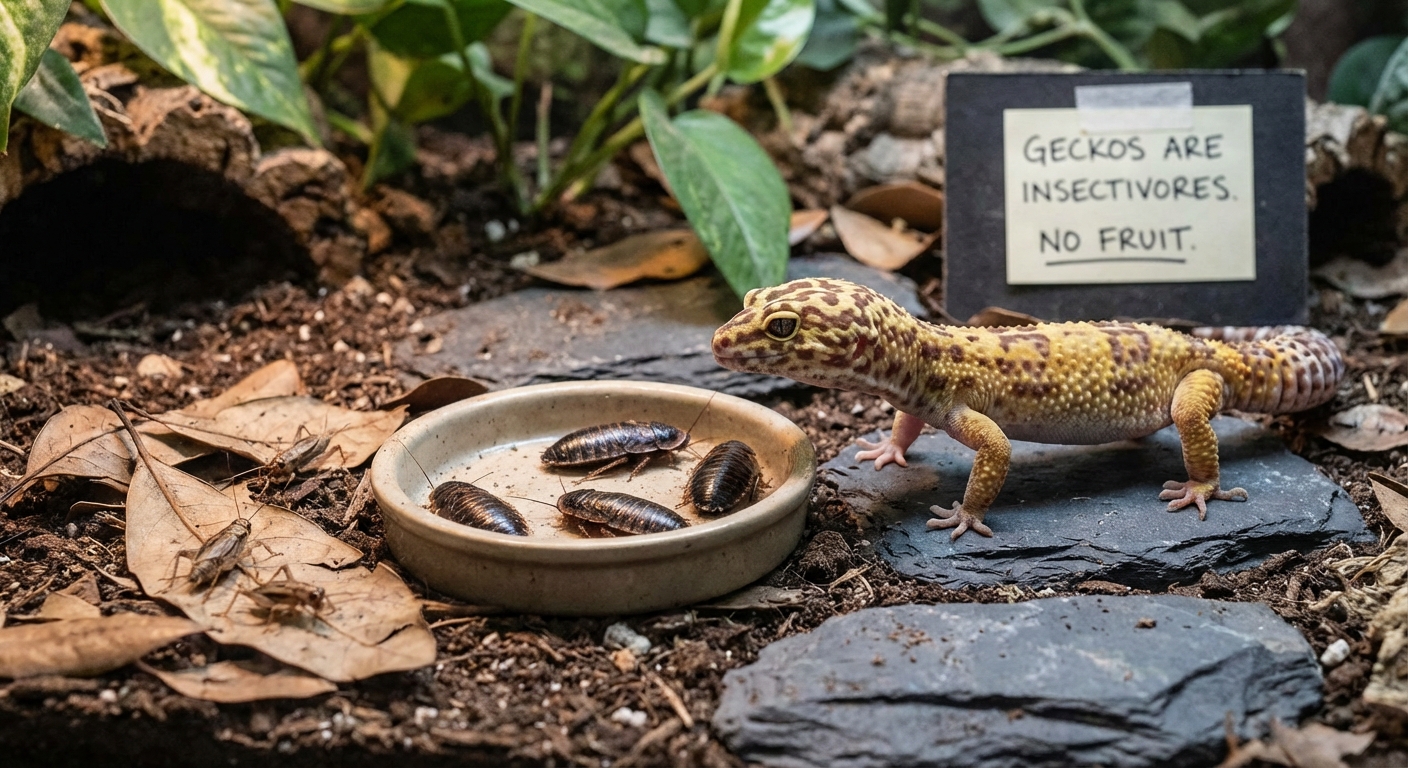
One of the most common questions new leopard gecko owners ask is whether their pet can eat fruit. The short answer is no, leopard geckos should not eat fruit. But understanding why requires knowledge of their unique digestive system and nutritional needs. This guide explains the science behind leopard gecko diet and what they should eat instead.
warningQuick Answer: No Fruit for Leopard Geckos
Leopard geckos are obligate insectivores and cannot digest fruit. Their digestive system lacks the enzymes and gut length needed to process plant matter. Feeding fruit can cause digestive upset, diarrhea, and nutritional imbalances. Stick to live insects for a healthy gecko.
Why Leopard Geckos Cannot Eat Fruit
Leopard geckos are obligate insectivores, meaning their bodies are designed exclusively to digest and derive nutrition from insects. This is not a preference but a biological limitation. Their digestive system has evolved over millions of years to process high-protein, high-fat insect prey.
Digestive System Differences
Herbivores and omnivores have long digestive tracts with specialized bacteria and enzymes to break down plant cellulose. Leopard geckos have short, simple digestive tracts designed for quick processing of easily digestible animal protein. They lack the cecum and other structures needed for plant digestion.
What Happens If You Feed Fruit?
- check_circleDigestive upset: Fruit ferments in the gut, causing gas, bloating, and discomfort
- check_circleDiarrhea: High sugar and fiber content causes loose, watery stools
- check_circleNutritional deficiency: Fruit does not provide the protein and fat geckos need
- check_circleCalcium imbalance: Fruit has poor calcium-to-phosphorus ratios
- check_circleBlood sugar issues: High fructose can affect metabolic function
- check_circleChoking hazard: Geckos may struggle with soft, slippery textures
The Crested Gecko Confusion
Many people confuse leopard gecko dietary needs with crested geckos, which can eat fruit-based diets. These are completely different species with different digestive systems. Crested geckos are omnivores from humid forest environments, while leopard geckos are desert insectivores. What works for one will harm the other.
infoSpecies Matters
Crested geckos can eat fruit and commercial fruit-based diets. Leopard geckos cannot. Day geckos can eat fruit. Leopard geckos cannot. Always research the specific species you own rather than assuming all geckos have the same dietary needs.
What Leopard Geckos Should Eat
A healthy leopard gecko diet consists entirely of live insects, properly gut-loaded and dusted with calcium and vitamin supplements. Variety is important for nutritional balance.
Best Feeder Insects
- check_circleDubia roaches: Excellent nutrition, easy to digest, low odor. Our top recommendation.
- check_circleCrickets: Widely available, good nutrition, more active hunting enrichment.
- check_circleBlack soldier fly larvae (Calciworms): High calcium, good as treats.
- check_circleMealworms: Acceptable staple for adults, higher fat content.
- check_circleSuperworms: Occasional treats for adults only, too large for juveniles.
- check_circleHornworms: Hydrating treats, very soft and easy to digest.
Gut Loading
Gut loading means feeding nutritious foods to insects 24-48 hours before offering them to your gecko. The insects digestive tract contents become part of your gecko nutrition. Feed insects fresh vegetables (carrots, squash, dark leafy greens), commercial gut load, and quality insect food.
Essential Supplements
Even with gut loading, insects do not provide complete nutrition. Calcium and vitamin supplementation is essential to prevent metabolic bone disease and other deficiencies.

Repashy Calcium Plus
All-in-one calcium and vitamin supplement that simplifies your supplementation routine.
- check_circleCalcium and vitamins combined
- check_circleCorrect Ca:P ratio
- check_circleIncludes vitamin D3
- check_circleCalcium with D3: Dust insects at most feedings for geckos without UVB lighting
- check_circleCalcium without D3: Provide in a dish for self-regulation, dust occasionally
- check_circleMultivitamin: Dust once weekly for additional nutrients
- check_circleAll-in-one options: Products like Repashy Calcium Plus combine calcium and vitamins
Frequently Asked Questions
Can leopard geckos eat baby food fruit?expand_more
My leopard gecko licked fruit. Will it be okay?expand_more
Can leopard geckos eat any vegetables?expand_more
What about commercial gecko diets that contain fruit?expand_more
Can baby leopard geckos eat fruit?expand_more
Stick to What Nature Intended
Leopard geckos are beautifully adapted to an insect-based diet. While it might seem limiting, providing variety through different feeder insects, proper gut loading, and appropriate supplements gives your gecko complete nutrition. Avoid the temptation to offer fruit or vegetables. Your gecko digestive system is not equipped for it, no matter how much it might seem interested. A proper insect diet keeps leopard geckos healthy for their 15-20+ year lifespan.