Leopard Gecko vs Bearded Dragon: Full Comparison Guide (2026)
Bearded dragons are bigger, more interactive, and more expensive to set up. Leopard geckos are smaller, quieter, and simpler. Here is the full breakdown.
Leopard Geckos Reptiles Team
Published · Last updated
infoDisclosure: This post contains affiliate links. As an Amazon Associate we earn from qualifying purchases, at no extra cost to you.
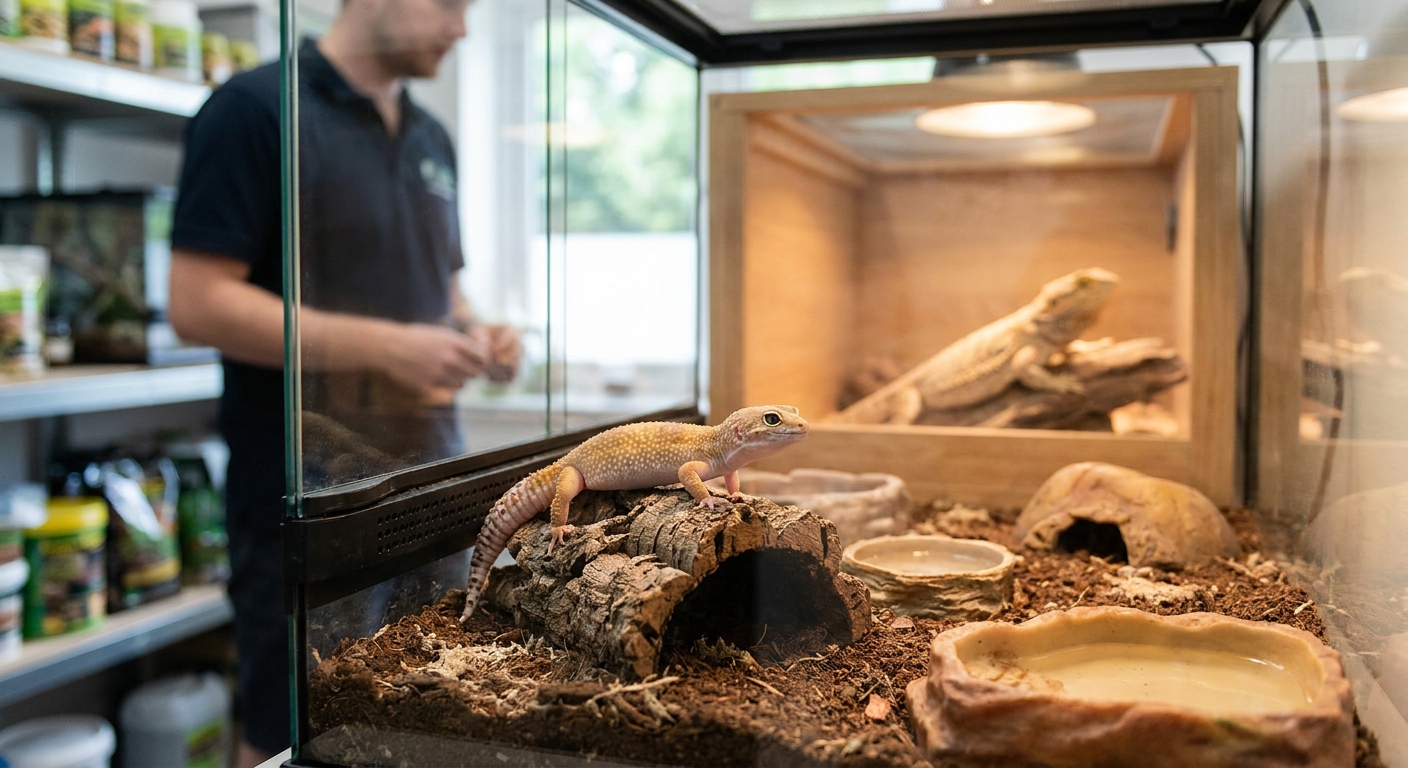
Leopard geckos and bearded dragons are the two most-recommended starter lizards in North America. They suit different keepers. A bearded dragon is bigger, more visually expressive, daytime-active, and more demanding on enclosure size, heating, and UVB. A leopard gecko is smaller, quieter, nocturnal, easier to set up, and far cheaper to keep over its 15 to 20 year lifespan. Neither is the wrong answer for a beginner, but the practical differences in size and energy use determine which one fits a given home.
infoQuick Answer
Pick a leopard gecko if you want a small (7-10 inch), nocturnal, low-energy pet with a sub-$650 setup and roughly $25 monthly ongoing cost. Pick a bearded dragon if you want a larger (16-24 inch), daytime-active, more interactive lizard and can budget $800-$1,500 setup plus $50-$100 monthly. Both live 10-20 years; the bearded dragon lifespan is closer to 10-15 years, the leopard gecko closer to 15-20.
At a Glance: Key Differences
- check_circleSize: leopard gecko 7-10 inches, bearded dragon 16-24 inches
- check_circleEnclosure: leopard gecko 36x18x18 inch (50 gal); bearded dragon 48x24x24 inch (120 gal) minimum
- check_circleHeating: leopard gecko 88-92°F (31-33°C) basking; bearded dragon 95-110°F (35-43°C) basking, hotter and brighter
- check_circleUVB: leopard gecko benefits from 6-percent UVB; bearded dragon requires 10-12-percent UVB, essential not optional
- check_circleDiet: leopard gecko 100-percent insects; bearded dragon mixed insects and greens (more salad than insects as adults)
- check_circleActivity: leopard gecko crepuscular/nocturnal; bearded dragon strictly diurnal (active in daylight)
- check_circleHandling: both very docile; bearded dragons tolerate longer sessions and ride on shoulders
- check_circleLifespan: leopard gecko 15-20 years; bearded dragon 10-15 years (sometimes longer)
- check_circlePower use: leopard gecko ~30-60 watts of heating; bearded dragon ~150-250 watts of heating and UVB
Enclosure and Space Requirements
A bearded dragon enclosure is roughly 2 to 3 times the footprint of a leopard gecko enclosure. This is the single biggest difference in setup cost and the most-overlooked factor by first-time keepers. A 48x24x24 inch enclosure dominates a small bedroom corner. A 36x18x18 inch leopard gecko enclosure fits on most desks or low dressers.
- check_circleLeopard gecko: 36x18x18 inch front-opening terrarium, recommended for the full 15-20 year lifespan
- check_circleBearded dragon: 48x24x24 inch front-opening terrarium minimum; 4x2x2 PVC enclosures preferred for thermal stability
- check_circleFloor space: leopard gecko 4.5 sq ft minimum; bearded dragon 8 sq ft minimum
- check_circleVertical space: both species use some height; bearded dragons climb basking branches more than leopard geckos
- check_circleSubstrate: leopard gecko uses tile or paper towel; bearded dragon uses tile, soil mix (bioactive), or excavator clay
Heating, UVB, and Power Use
Bearded dragons need significantly more intense heating and UVB than leopard geckos because they are full sun-basking desert lizards from Australia, while leopard geckos are crepuscular from rocky grasslands. The practical impact is that a bearded dragon setup uses 3-4 times the electricity and requires more frequent bulb replacement.
- check_circleBasking temperature: leopard gecko 88-92°F (31-33°C); bearded dragon 95-110°F (35-43°C)
- check_circleCool side: both around 72-80°F (22-27°C)
- check_circleUVB: leopard gecko 6-percent tube recommended but not strictly required; bearded dragon 10-12-percent tube is mandatory to prevent metabolic bone disease
- check_circleBulb wattage: leopard gecko basking bulb 35-75 watts; bearded dragon basking bulb 100-150 watts plus 25-40 watts for UVB
- check_circleAnnual bulb replacement: leopard gecko $25-$45; bearded dragon $80-$130 (UVB tubes degrade in 6-12 months)
- check_circleElectricity cost: leopard gecko adds $2-$5 per month; bearded dragon adds $8-$20 per month
Diet and Feeding Logistics
Leopard geckos are obligate insectivores and eat only live insects for their entire life. Bearded dragons are omnivores. Hatchlings and juveniles eat mostly insects with some greens, but adults shift to roughly 70-80 percent vegetables and 20-30 percent insects. This means a bearded dragon owner needs to keep fresh salad ingredients in addition to a feeder colony.
- check_circleLeopard gecko adult: 4-7 insects every 2-3 days, dusted with calcium and multivitamin
- check_circleBearded dragon adult: 5-10 insects 2-3 times per week, plus a daily salad of mixed greens and vegetables
- check_circleFeeder logistics: leopard gecko needs crickets or dubia colony; bearded dragon needs the same PLUS daily produce shopping
- check_circleCost: leopard gecko food $15-$30 per month; bearded dragon food $35-$70 per month
- check_circleTravel-friendliness: bearded dragon is harder because of the daily salad requirement
- check_circleSupplementation: both species need calcium with D3 and multivitamin dusting
Temperament and Interactivity
Bearded dragons are widely considered one of the most interactive pet reptiles. They recognize their keepers, often beg for food, and can sit calmly on a shoulder or a lap for extended periods. Leopard geckos are also docile but less expressive: they recognize their keepers but rarely seek interaction the way a bearded dragon does. If your priority is a reptile that "engages" with you, a bearded dragon delivers more of that.
- check_circleBearded dragon: tolerates 30-60 minute handling sessions, sits on shoulders, often follows movement in the room
- check_circleLeopard gecko: tolerates 10-20 minute handling sessions, walks slowly across hands, less actively seeks attention
- check_circleChildren: both species are kid-safe with supervision; bearded dragons easier for older kids due to size, leopard geckos easier for very young kids due to slow movement
- check_circleBehavior signals: bearded dragons "wave" arm at humans (submission display), beard puff, and head bob; leopard geckos communicate via tail movement and posture only
- check_circleActivity timing: bearded dragons are active when you are awake; leopard geckos are active dawn and dusk
Total Cost: Startup and 10-Year Estimate
Bearded dragons are significantly more expensive to set up and keep than leopard geckos. The differences in enclosure size, heating power, UVB equipment, and food add up to roughly $4,000-$6,000 in lifetime cost difference over a 15-year period.
- check_circleLeopard gecko startup: $250-$650 total
- check_circleBearded dragon startup: $800-$1,500 total
- check_circleMonthly ongoing: leopard gecko $20-$40; bearded dragon $50-$100
- check_circle10-year total: leopard gecko ~$3,000-$5,000; bearded dragon ~$7,000-$12,000
- check_circleVet costs: roughly equivalent at $50-$120 per annual wellness visit, more for emergency care
- check_circleHidden costs: bearded dragons need annual UVB tube replacement (a leopard gecko-specific cost only if you opt into UVB)
Which Should You Pick?
The decision usually comes down to budget, available space, and how much you want a reptile that interacts with you during your normal daytime hours. Both species are tractable for first-time reptile keepers if the husbandry is set up correctly.
- check_circleChoose leopard gecko if: budget is under $700 for setup, space is limited, you want a quiet, nocturnal pet, you prefer fewer feeders and no salads
- check_circleChoose bearded dragon if: budget allows $1,000+ for setup, you have a dedicated 4-foot enclosure spot, you want a daytime-active pet you can shoulder, you enjoy daily salad prep
- check_circleChoose either if: you want a long-lived first reptile, have time for proper husbandry, and want a pet that tolerates handling well
- check_circleConsider neither if: you want a pet that lives less than 10 years, or you cannot commit to live-insect feeding
Frequently Asked Questions
Which is better for a child, a leopard gecko or a bearded dragon?expand_more
Can a leopard gecko and bearded dragon live together?expand_more
Which is friendlier?expand_more
Which lives longer?expand_more
Is a bearded dragon worth the extra cost over a leopard gecko?expand_more
Different Pets, Same Beginner-Friendly Spirit
Leopard geckos and bearded dragons cover most of the beginner reptile market for good reason: both are forgiving, long-lived, docile, and well-documented enough that a first-time keeper can succeed with either. Pick the leopard gecko for budget, space efficiency, and a quieter pet experience. Pick the bearded dragon for size, interactivity, and a daytime companion you can shoulder. Whichever you choose, plan for at least 10 years of commitment and set the husbandry up correctly from day one.