Leopard Gecko vs African Fat-Tailed Gecko: Which Pet Is Right for You?
They look almost identical, but these two geckos come from different habitats and have different care needs. Here is the honest side-by-side comparison.
Leopard Geckos Reptiles Team
Published
infoDisclosure: This post contains affiliate links. As an Amazon Associate we earn from qualifying purchases, at no extra cost to you.
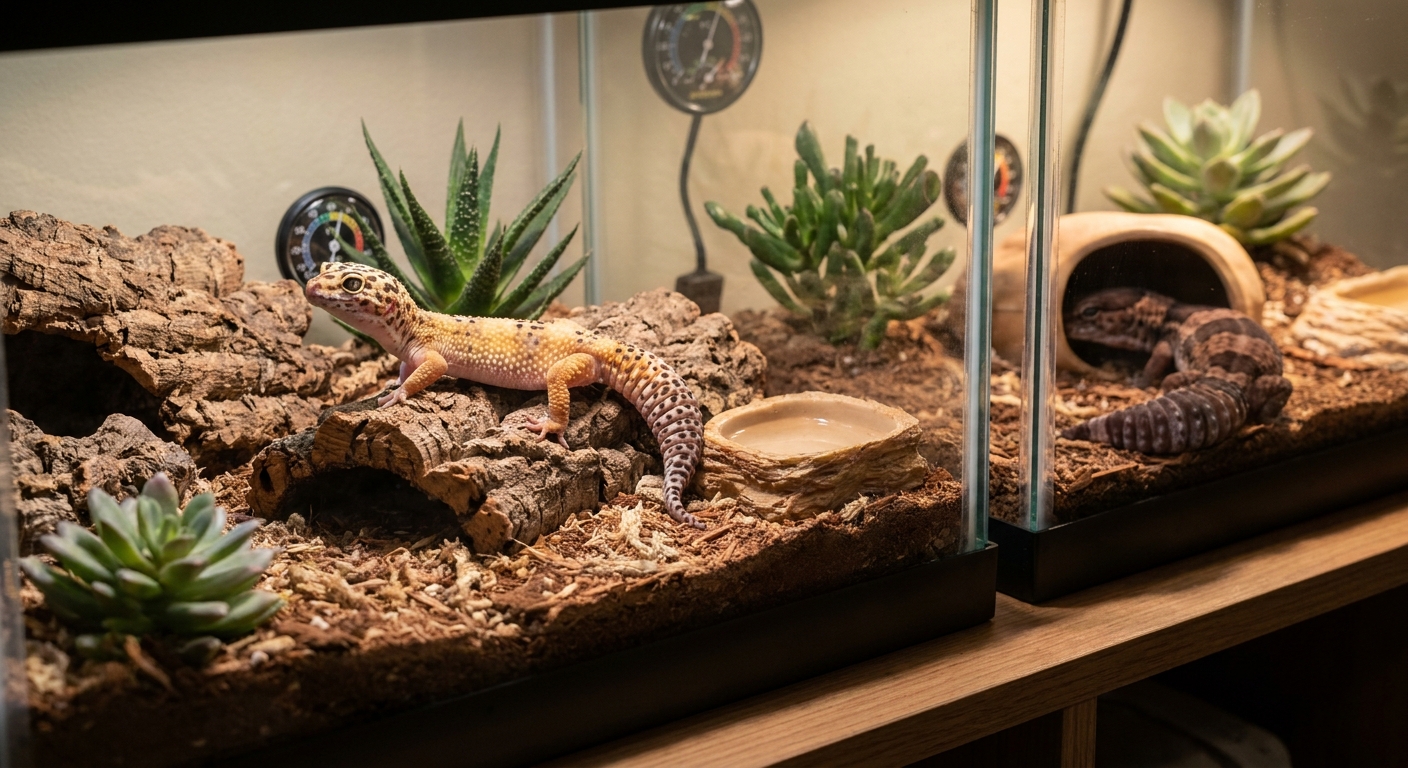
The African fat-tailed gecko is the closest look-alike to the leopard gecko in the entire pet trade, and the comparison between them comes down to humidity, price, and availability rather than size or lifespan. Leopard geckos are the hardier and cheaper choice for most keepers because they thrive at a low 30-40% humidity and cost far less to buy. African fat-tailed geckos need 50-70% humidity, typically cost more, and are harder to find, but they reward keepers with a famously calm, slow-moving temperament. Both species stay in the 7-10 inch range, both eat live insects, and both can live well past 15 years with good care.
infoQuick Answer
Pick a leopard gecko if you want the easier, cheaper, more widely available option. It needs only 30-40% humidity and typically costs $30-$150 from breeders. Pick an African fat-tailed gecko if you can reliably maintain 50-70% humidity and are willing to pay more, typically $150-$500, for a calmer but shier gecko. Size, diet, heating, and enclosure needs are nearly identical between the two species.
At a Glance: Key Differences
- check_circleSize: leopard gecko reaches 7-10 inches; African fat-tailed gecko reaches 7-9 inches with a stockier build
- check_circleLifespan: leopard gecko averages 15-20 years; African fat-tailed gecko averages 10-25 years depending on care quality
- check_circleHumidity: leopard gecko needs 30-40% ambient humidity; African fat-tailed gecko needs 50-70%
- check_circleTemperature: both need a warm side of 88-92°F (31-33°C) and a cool side of 75-80°F (24-27°C)
- check_circleTemperament: both are docile; African fat-tailed geckos are often calmer in hand but shier and more likely to hide
- check_circlePrice: leopard geckos typically cost $30-$150; African fat-tailed geckos typically cost $150-$500
- check_circleAvailability: leopard geckos are sold almost everywhere; African fat-tailed geckos usually require a breeder or reptile expo
- check_circleDiet: both are insectivores eating crickets, dubia roaches, and mealworms dusted with calcium
How Do Leopard Geckos and African Fat-Tailed Geckos Compare in Size?
Size is nearly a tie. Adult leopard geckos measure 7-10 inches from nose to tail tip, with males at the larger end. Adult African fat-tailed geckos measure 7-9 inches and carry a noticeably thicker, blunter tail and a stockier body. Weights overlap heavily, with healthy adults of both species landing in the 45-90 gram range.
Because the two species are so close in size, their enclosure needs match. A 36x18x18 inch front-opening enclosure, or a 40-gallon equivalent, works well for a single adult of either species. If floor space or enclosure cost is your deciding factor, this comparison will not settle it. Neither gecko needs more room than the other.
The visual differences matter more than the measurements. African fat-tailed geckos have velvety skin, bold brown banding, often a crisp white stripe down the spine, and a rounder, gentler-looking face. Leopard geckos show the familiar yellow ground color with black spotting in their normal form, plus hundreds of selectively bred morphs. If appearance is driving your choice, look at photos of adult animals rather than hatchlings, since juvenile banding in leopard geckos fades into spots as they mature.
Which Lives Longer, a Leopard Gecko or an African Fat-Tailed Gecko?
Lifespans overlap so much that longevity should not drive your decision. Leopard geckos reliably reach 15-20 years in captivity, with documented individuals passing 25 years. African fat-tailed geckos are usually quoted at 10-25 years, a wider range that reflects how sensitive they are to husbandry quality, especially humidity.
The honest reading of those numbers is that a well-kept African fat-tailed gecko can match or exceed a leopard gecko, while a poorly kept one tends to fall short sooner. Leopard geckos are more forgiving of beginner mistakes, which is part of why their average captive lifespan is more consistent. Either way, plan for a 15-plus year commitment before bringing home either species.
How Do Humidity Needs Differ?
Humidity is the single biggest care difference between these two species, and it is the reason most keepers should think carefully before choosing the African fat-tailed gecko. Leopard geckos come from arid, rocky scrubland in Afghanistan, Pakistan, and northwest India, and they do well at 30-40% ambient humidity, which matches the natural indoor humidity of most homes. African fat-tailed geckos come from humid West African savanna and need 50-70% ambient humidity to shed properly and stay hydrated.
In practice, keeping an African fat-tailed gecko means monitoring a digital hygrometer daily, misting or adding moisture-retaining substrate, and possibly restricting ventilation to hold humidity. In a dry home or a dry climate, that can mean daily work. Chronic low humidity in this species leads to stuck shed, dehydration, and eye problems. A leopard gecko in the same room usually needs nothing more than a single humid hide with damp sphagnum moss.
To be fair to the African fat-tailed gecko, 50-70% is not extreme. Keepers in naturally humid regions may find it easy to hit without equipment. But for the average keeper, the leopard gecko asks less of you here, and this one dimension is where the hardier reputation of the leopard gecko is earned.
Are Temperature Requirements the Same?
Temperature needs are effectively identical, which makes switching between the species easy on the equipment side. Both want a warm-side surface temperature of 88-92°F (31-33°C), a cool side of 75-80°F (24-27°C), and a nighttime range that can safely drop to around 70°F (21°C). Both are crepuscular ground dwellers that absorb belly heat, so an overhead halogen or deep heat projector on a thermostat serves either species well.
A low-output UVB tube of around 5-6% benefits both species, although both have historically been kept without it. If you already own a properly heated leopard gecko setup, converting it for an African fat-tailed gecko is mostly a matter of raising humidity, not changing heat.
Which Has a Better Temperament?
Temperament is where the African fat-tailed gecko genuinely shines, with one caveat. Fat-tailed geckos are widely described as calmer and slower-moving in hand than leopard geckos. They rarely bite, rarely bolt, and tend to sit quietly during handling sessions. Many keepers who own both report that their fat-tailed gecko is the more relaxed animal to hold.
The caveat is that this calmness comes paired with shyness. African fat-tailed geckos hide more during the day, are slower to warm up to a new keeper, and often show less of the curious, glass-watching behavior that leopard geckos are known for. Leopard geckos are bolder, more visible in the enclosure, and quicker to associate their keeper with food. Neither temperament is better in an absolute sense. If you want a display animal you see often, the leopard gecko usually wins. If you want the calmest possible gecko during handling, the fat-tailed gecko often wins.
Handling technique is the same for both: scoop from below, never grab from above, keep sessions short at first, and never restrain the tail. Both species can drop their tails when frightened, and while the tail regrows in each case, the regrown version never looks the same. Plan on two to four weeks of settling-in time before regular handling with either gecko, and expect the fat-tailed gecko to need the longer end of that range.
Which Costs More to Buy and Keep?
Purchase price is a clear difference. Common leopard gecko morphs typically cost $30-$150 from breeders and pet stores, with designer morphs going higher. African fat-tailed geckos typically cost $150-$500, and uncommon morphs like whiteout and zulu can run well beyond that. The smaller captive breeding pool for fat-tailed geckos keeps prices up.
Setup and ongoing costs are close. Both species use the same enclosure, heating, thermostat, hides, and feeder insects, so expect a similar startup budget in the $250-$650 range and a similar $20-$40 monthly feeding cost. The fat-tailed gecko may add small recurring costs for humidity management, such as sphagnum moss, a quality hygrometer, or a mister, but these are minor next to the purchase price gap.
Which Is Easier to Find?
Leopard geckos are among the most widely bred reptiles on the planet. You can find captive-bred animals at nearly any reptile expo, from hundreds of hobbyist and professional breeders, and in most chain pet stores. That abundance also makes it easy to be selective about health, genetics, and breeder reputation.
African fat-tailed geckos occupy a smaller corner of the hobby. They appear at expos and through specialty breeders, but selection is thinner and you may wait for the morph or sex you want. One caution: some fat-tailed geckos in the trade are wild-caught imports, which tend to carry parasites and adapt poorly to captivity. Ask any seller directly whether the animal is captive-bred, and favor breeders who can show feeding records.
Availability also affects support. Leopard gecko care is documented in enormous depth, with active communities, established care standards, and reptile veterinarians who see the species constantly. African fat-tailed gecko resources are thinner, and some older care sheets still repeat outdated advice, such as keeping them as dry as leopard geckos. If you choose the fat-tailed gecko, lean on recent sources and breeders who keep large, healthy colonies.
Which Should a Beginner Choose?
For most beginners, the leopard gecko is the safer first choice. It tolerates the husbandry wobbles that come with learning, costs less to replace mistakes on, matches typical household humidity, and gives you a huge community of breeders and care resources. Its bolder personality also makes it more rewarding to observe while you are still building handling confidence.
That said, the African fat-tailed gecko is a viable first reptile for the right beginner. If you live in a naturally humid area, or you are comfortable checking a hygrometer daily and adjusting moisture, nothing else about fat-tailed gecko care is harder than leopard gecko care. Beginners who do their humidity homework keep this species successfully all the time.
- check_circleChoose a leopard gecko if: you want the lowest-maintenance option, a bolder and more visible pet, a $30-$150 purchase price, and wide availability
- check_circleChoose an African fat-tailed gecko if: you can hold 50-70% humidity consistently, prefer the calmest handling temperament, and do not mind paying $150-$500 for a captive-bred animal
- check_circleChoose either if: you want a small, quiet, insect-eating gecko with simple heating and a 15-plus year lifespan
- check_circleDo not house them together: despite the resemblance, cohabitation stresses both species and their humidity needs conflict
Frequently Asked Questions
Are African fat-tailed geckos harder to care for than leopard geckos?expand_more
Can a leopard gecko and an African fat-tailed gecko live together?expand_more
How can you tell a leopard gecko from an African fat-tailed gecko?expand_more
Why do African fat-tailed geckos cost more than leopard geckos?expand_more
Do African fat-tailed geckos like being handled more than leopard geckos?expand_more
Two Close Cousins, One Practical Difference
The leopard gecko vs African fat tailed gecko decision is one of the closest calls in the reptile hobby because the two species match on size, diet, heating, and enclosure needs. What separates them is practical: the leopard gecko is cheaper at $30-$150, easier to find, and content at 30-40% humidity, while the African fat-tailed gecko costs $150-$500, needs 50-70% humidity, and offers an exceptionally calm temperament in exchange. Most beginners will be happier starting with a leopard gecko, but a keeper who can hold steady humidity gives up very little by choosing the fat-tailed gecko instead. Whichever you pick, buy captive-bred, set up the enclosure before the animal arrives, and plan for 15 or more years together.